 HSA & FSA accepted; best-value for top quality care
 Same-day mental health, weight loss, and primary care appointments available

 Accept major insurances and cash-payHSA & FSA accepted; best-value for top quality careSame-day mental health, weight loss, and primary care appointments availableAccept major insurances and cash-pay
The Role of Technology in Mental Health Access
Written by Klarity Editorial Team
Published: Jun 27, 2026

Technology is the most significant force expanding mental health access in the United States today. The role of technology in mental health access covers everything from telehealth video visits to AI-powered conversational agents built on cognitive behavioral therapy (CBT) principles. For millions of Americans who face long wait times, geographic barriers, or the stigma of walking into a clinic, digital mental health solutions are not a convenience. They are the only realistic path to care.
What are the primary digital tools reshaping mental health access today?
Four categories of technology now define how people reach mental health support outside a traditional office.
Telehealth platforms connect patients with licensed providers through video or phone. The impact of telehealth on mental care is especially visible for anxiety and depression, where consistent access to a provider matters more than physical proximity. Telehealth removes the commute, reduces scheduling friction, and makes same-day appointments possible.
AI-powered conversational agents use CBT frameworks to guide patients through structured exercises between sessions. A systematic review of 15 RCTs with 1,737 participants found that CBT-based AI agents show a small-to-moderate effect in reducing depressive symptoms. Multi-modal agents, those combining text, voice, and interactive exercises, outperform text-only bots. That gap matters when choosing a digital tool.
IoT devices and wearables add a real-time monitoring layer. Smartwatches and biosensors track sleep patterns, heart rate variability, and activity levels. IoT applications expand mental health monitoring and early intervention, particularly for underserved populations who may not see a clinician regularly. A spike in resting heart rate over several days can flag a developing anxiety episode before the patient even recognizes it.

Mobile apps and online therapy platforms round out the category. These range from mood-tracking journals to full therapy programs with licensed counselors available via text.
| Tool category | Core function | Best use case | Accessibility |
|---|---|---|---|
| Telehealth platforms | Video or phone visits with licensed providers | Ongoing therapy and medication management | High, requires internet |
| AI conversational agents | CBT-guided chat between sessions | Early intervention, symptom tracking | Very high, often 24/7 |
| Wearables and IoT devices | Real-time biometric monitoring | Passive monitoring, crisis prevention | Moderate, requires device |
| Mobile mental health apps | Mood tracking, guided exercises | Homework between sessions | High, smartphone required |
Pro Tip: When evaluating any mental health app, look for human-in-the-loop safety features. Clinical-grade tools include crisis escalation protocols that route users to a real person. Consumer apps often do not.
How effective are technology-driven solutions in improving mental health outcomes?
The evidence base for digital mental health solutions has grown sharply in 2026, and the findings are more nuanced than early enthusiasm suggested.
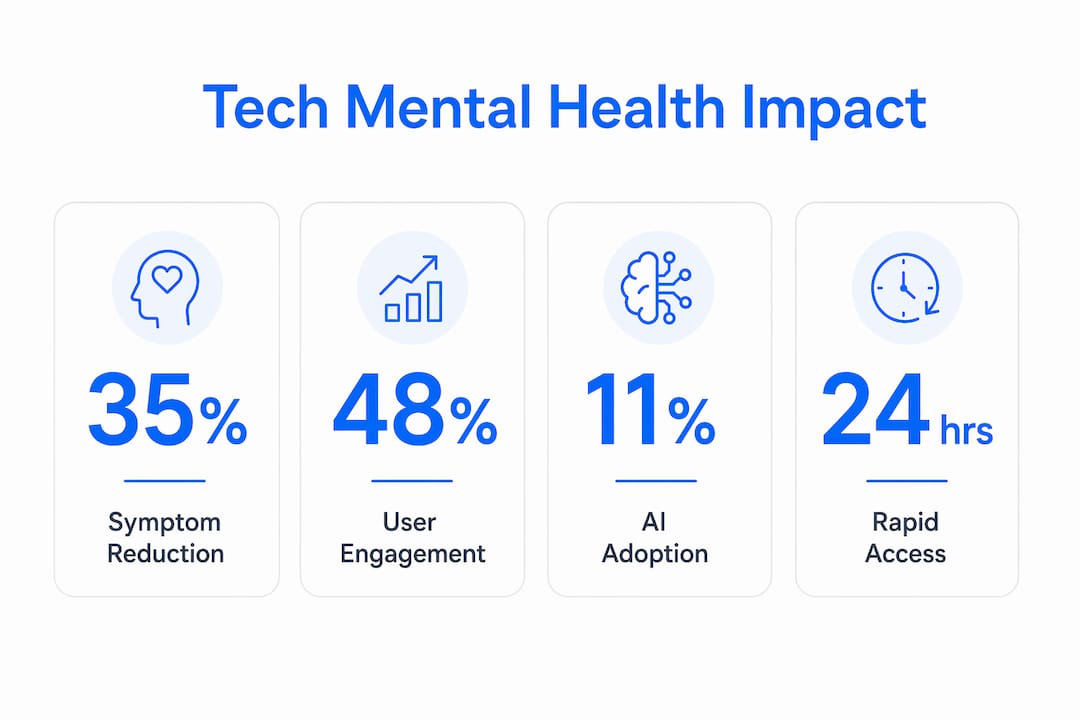
The clearest finding involves AI conversational agents. CBT-based AI agents produce measurable reductions in depressive symptoms across diverse populations. The effect size is modest, not a cure, but meaningful as a first-line or supplemental intervention. Think of it as the difference between doing nothing and doing something structured while waiting for a human therapist appointment.
Digital therapeutic alliance is a less-discussed but critical variable. Research links the perceived warmth and competence of an AI agent directly to user engagement and symptom improvement. Patients who feel the tool “understands” them stay with it longer and report better outcomes. This finding has a practical implication: the design quality of a digital tool affects its clinical value.
Continuous, on-demand AI platforms also offer something weekly therapy cannot. Timely reinforcement between sessions aids symptom reduction in conditions like generalized anxiety disorder. A patient who completes a breathing exercise at 2 a.m. during a panic episode gets real support, not a voicemail.
Limitations exist and deserve honest attention:
- Attrition rates in digital programs are high. Many patients download an app and stop using it within two weeks.
- User adoption remains uneven across age groups, with older adults showing lower engagement rates.
- Digital tools have not yet demonstrated the same depth of therapeutic relationship as long-term human therapy.
Pro Tip: Track your mood in an app for at least two weeks before your next therapy session. Bringing that data to your clinician gives them a clearer picture than memory alone.
| Intervention type | Key finding | Population | Limitation |
|---|---|---|---|
| CBT-based AI agents | Small-to-moderate reduction in depressive symptoms | General adults, 1,737 participants | High attrition rates |
| Digital therapeutic alliance | Positive link to engagement and outcomes | Diverse clinical populations | Depends on tool design quality |
| On-demand AI platforms | Timely reinforcement between sessions | Anxiety and depression patients | Not a replacement for human care |
What are the challenges and limitations in using technology for mental health care?
Technology in therapy carries real barriers that no amount of enthusiasm erases.
Trust and privacy top the list. Only 11% of Americans are open to using AI for mental health care. A full 48% cite data privacy and trust as their primary concern, and only 8% say they trust AI in this context. Those numbers reflect a rational response to genuine risks. Mental health data is among the most sensitive personal information that exists.
Digital equity is the second major barrier. Rural communities and low-income households often lack reliable broadband or the devices needed to access telehealth. Without addressing internet and device disparities, technology-based solutions risk widening the health gap they claim to close. A telehealth platform that requires a stable video connection does nothing for a patient on a rural prepaid phone plan with limited data.
Clinical adoption lags behind the technology itself. Less than 50% of new digital mental health innovations are routinely adopted in clinical settings. Infrastructure gaps, security concerns, and poor workflow integration explain most of that shortfall. Clinicians already managing heavy caseloads are not going to add a new platform unless it fits naturally into their existing systems.
Regulatory and ethical gaps remain unresolved. Algorithmic bias in AI tools can produce recommendations that work well for the populations used to train the model but poorly for others. The FDA regulates some digital therapeutics, but many consumer mental health apps fall outside that oversight.
Patients should proactively ask any digital mental health provider about AI transcription data storage, cloud use, and HIPAA compliance before sharing personal health information.
Practical steps for evaluating a digital tool’s safety:
- Confirm the tool is HIPAA-compliant before entering any personal information.
- Check whether the platform has published a clinical validation study.
- Ask if a licensed clinician reviews AI-generated recommendations.
- Verify the app has a clear crisis escalation protocol.
How can individuals and clinicians integrate technology into mental health care?
The most effective model is blended care. Blended care means digital tools work alongside human therapists, not instead of them. AI tools are a complement to human therapists, not replacements. Ethical use requires clinical oversight, especially for patients with complex or severe presentations.
Here is a practical framework for getting the most from digital mental health resources:
- Start with a licensed provider. Use a telehealth platform to establish care with a real clinician. Apps and AI tools work best as supplements to that relationship, not as your first point of contact.
- Use apps for between-session work. Mood tracking, journaling, and CBT exercises completed between appointments give your clinician better data and reinforce what you discuss in sessions. Best digital integration involves patients using apps to track progress and complete therapy homework reviewed collaboratively with clinicians.
- Verify clinical validation. Before committing to any app, check whether it has been tested in a peer-reviewed study. A polished interface does not equal clinical effectiveness.
- Ask about clinician dashboards. Some platforms give your provider a real-time view of your mood logs and app activity. That visibility improves the quality of your sessions.
- Revisit your tools regularly. What works in month one may not work in month six. Discuss your digital tools in every session and adjust based on what your clinician observes.
Pro Tip: If you are using a telehealth platform for the first time, check whether it offers same-day mental health care. Waiting weeks for a first appointment is one of the most common reasons people abandon the process entirely.
Technology also reduces clinician burnout when integrated thoughtfully. Automated intake forms, AI-assisted note-taking, and digital progress tracking free up time for the work that only a human can do. That productivity gain is real, but it requires careful setup and ongoing supervision to avoid errors.
Key Takeaways
Technology expands mental health access most effectively when digital tools are used alongside licensed clinicians, not as standalone replacements.
| Point | Details |
|---|---|
| AI agents show real but modest results | CBT-based AI tools reduce depressive symptoms, but work best as early intervention or supplements to therapy. |
| Trust is the biggest adoption barrier | Only 11% of Americans are open to AI mental health care, primarily due to data privacy concerns. |
| Digital equity gaps are real | Rural and low-income populations face device and internet barriers that limit access to telehealth. |
| Blended care is the gold standard | Combining apps and telehealth with human clinician oversight produces the strongest outcomes. |
| Privacy verification is non-negotiable | Patients should confirm HIPAA compliance and data storage practices before using any digital mental health tool. |
My take on where this is all heading
I have watched the mental health technology space move fast over the past few years, and the optimism is mostly warranted. But there is a pattern I keep seeing that concerns me. People treat a well-designed app as equivalent to clinical care. It is not.
The research is clear that AI requires clinical oversight and carries algorithmic bias risks that are not yet fully understood. A CBT chatbot that works beautifully for a 28-year-old in a major city may produce irrelevant or even harmful prompts for a 60-year-old in a rural community with different cultural context. That is not a hypothetical. It is a documented limitation.
What gives me genuine confidence is the blended care model. When a licensed therapist uses digital tools to extend their reach, track patient progress between sessions, and reduce administrative burden, outcomes improve for everyone. Technology does not replace the therapeutic relationship. It makes that relationship more consistent and better informed.
The equity problem is the one I think about most. Telehealth has expanded access dramatically for people with reliable internet and a smartphone. For the populations who need care most, including rural communities and low-income households, the digital divide in rural healthcare remains a serious obstacle. Solving that requires policy and infrastructure investment, not just better apps.
My honest advice: use technology to get in the door faster and stay engaged between sessions. But make sure a real, licensed human is steering your care.
— Guorui
Helloklarity’s approach to accessible mental health care
Getting connected to a licensed mental health provider should not take weeks. Helloklarity makes that possible with same-day appointments through a network of over 1,000 licensed providers specializing in anxiety, ADHD, depression, and more.
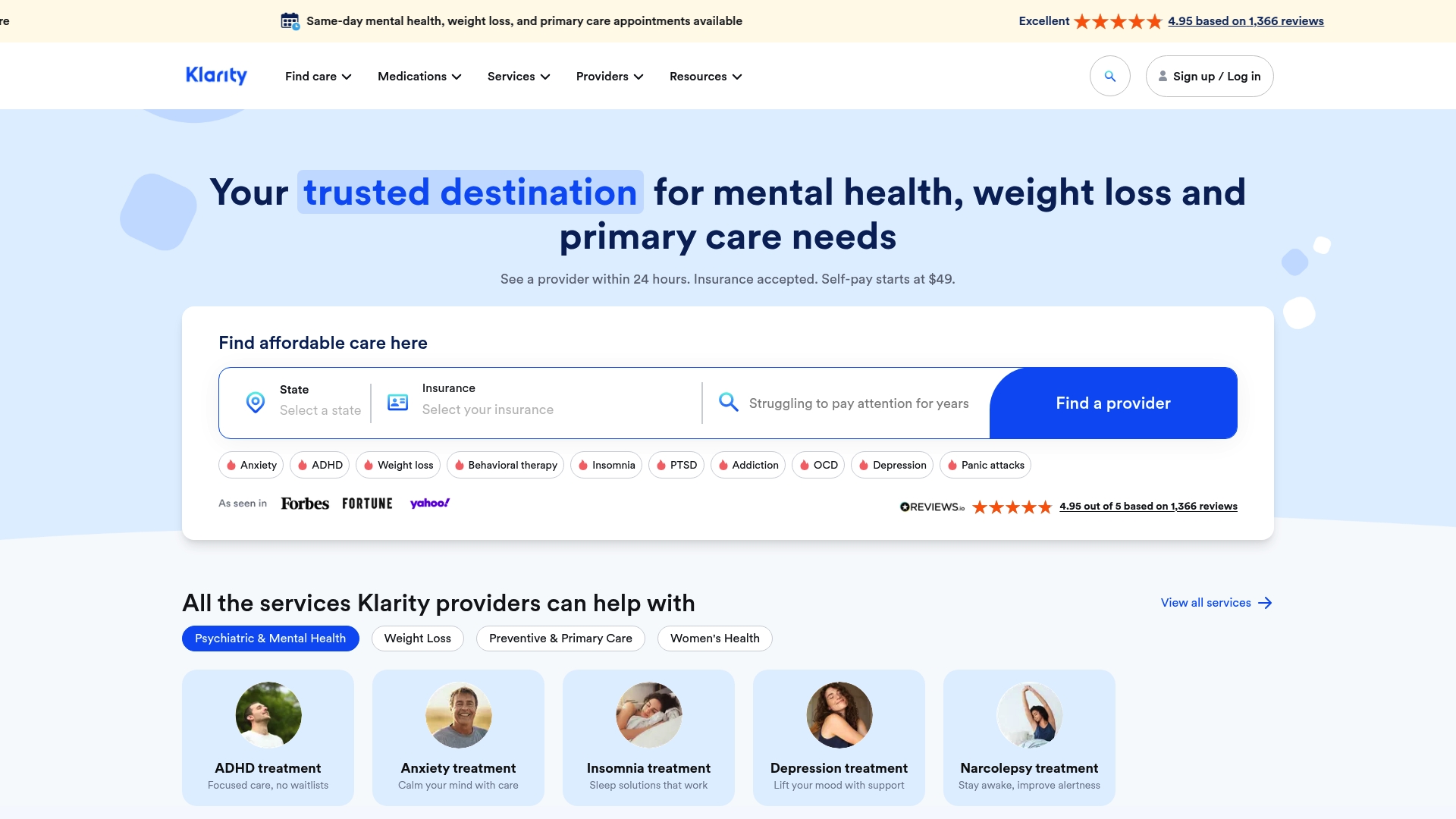
Appointments are available within 24 hours, and self-pay options start at $49. Helloklarity also accepts major insurance and health savings accounts, so cost does not have to be the reason you wait. Whether you are exploring telehealth services online for the first time or looking for a provider who fits your schedule, Helloklarity connects you to care that is affordable, private, and built around your timeline. You can also browse by condition to find providers who specialize in exactly what you are dealing with.
FAQ
What is the role of technology in mental health access?
Technology expands mental health access by removing geographic, scheduling, and cost barriers through telehealth, AI-powered tools, and mobile apps. These digital solutions make care available to people who cannot easily reach a traditional clinic.
Are AI mental health tools safe to use?
Clinical-grade AI tools with human-in-the-loop safety features and HIPAA compliance are generally safe as supplements to professional care. Consumer apps vary widely, so patients should verify clinical validation and crisis escalation protocols before using them.
How effective is telehealth for anxiety and depression?
Telehealth connects patients with licensed providers for the same evidence-based treatments available in person. Consistent access to a provider, which telehealth makes easier, is one of the strongest predictors of positive outcomes for anxiety and depression.
What should I ask before using a digital mental health platform?
Ask whether the platform is HIPAA-compliant, whether a licensed clinician reviews AI recommendations, and how your data is stored. Patients should also confirm the platform has a clear protocol for mental health crises.
Can technology replace a human therapist?
Technology does not replace human therapists. Research confirms that AI tools function best as adjuncts to licensed clinicians, extending care between sessions and improving data quality, but the therapeutic relationship itself remains a human function.
Recommended
- Mental Health Awareness Month 2026: Why More Americans Are Turning To Telehealth For Anxiety And Depression | Klarity Health, Inc
- Wellbutrin Alternatives If Not Eligible | Klarity Health, Inc
- Prozac Alternatives If Not Eligible | Klarity Health, Inc
- Yaz Alternatives If Not Eligible | Klarity Health, Inc
Get expert care from top-rated providers
Find the right provider for your needs — select your state to find expert care near you.
Related posts






— Monday to Friday, 7:00 AM to 4:00 PM PST
Join our mailing list for exclusive healthcare updates and tips.

— Monday to Friday, 7:00 AM to 4:00 PM PST



