 HSA & FSA accepted; best-value for top quality care
 Same-day mental health, weight loss, and primary care appointments available

 Accept major insurances and cash-payHSA & FSA accepted; best-value for top quality careSame-day mental health, weight loss, and primary care appointments availableAccept major insurances and cash-pay
Preparing for Your Sleep Study: A Complete Guide to MSLT and Narcolepsy Testing
Written by Klarity Editorial Team
Published: Aug 14, 2025
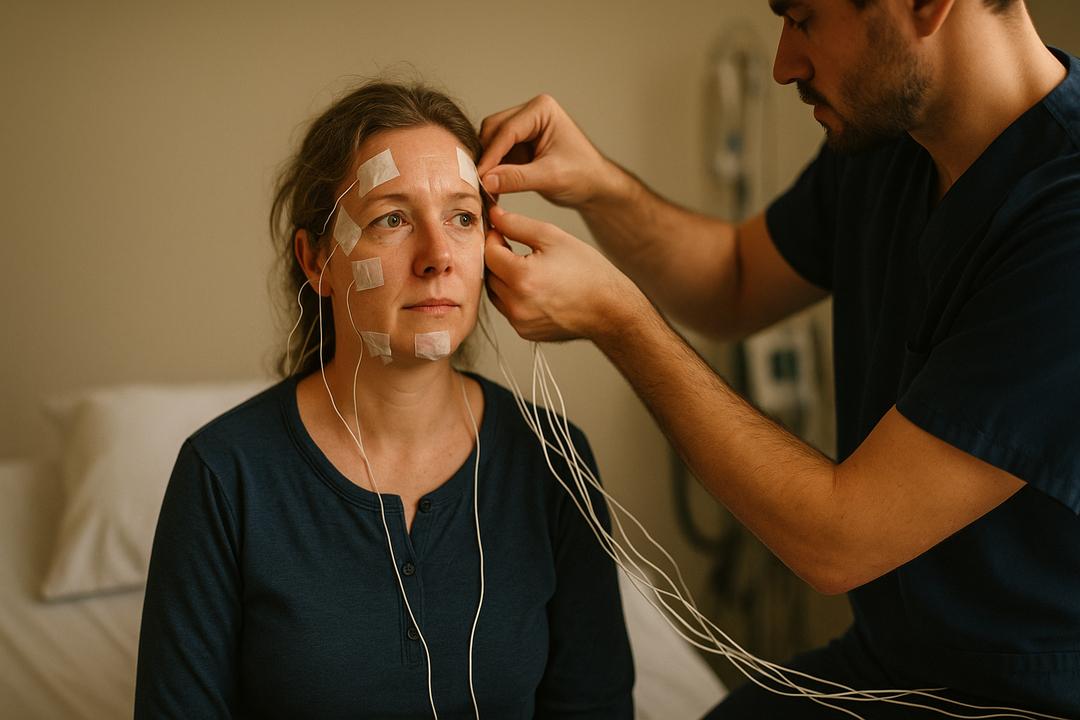
Facing a sleep study can feel overwhelming. Whether it’s your first time stepping into a sleep lab or you’re scheduled for repeat testing, understanding what to expect and how to prepare can make all the difference in your experience and results. This guide walks you through everything you need to know about sleep studies, particularly the Multiple Sleep Latency Test (MSLT) used in narcolepsy testing and other sleep disorder diagnoses.
Key takeaway: A Multiple Sleep Latency Test (MSLT) is the gold-standard diagnostic test for narcolepsy. Accurate results depend on specific preparation: medication holds, consistent sleep schedules, and caffeine restrictions in the days before the study. Telehealth providers can help you understand results and coordinate follow-up care online.
What Is a Sleep Study and Why Might You Need One?
Sleep studies are specialized tests that monitor your body during sleep to diagnose various sleep disorders. The most common type, polysomnography (PSG), typically precedes an MSLT when narcolepsy or other disorders of excessive daytime sleepiness are suspected.
An MSLT specifically measures how quickly you fall asleep during the day in a quiet environment. This test is crucial for diagnosing narcolepsy, idiopathic hypersomnia, and other conditions that cause abnormal daytime sleepiness.
You might need a sleep study if you experience:
Need help with narcolepsy diagnosis or follow-up care? Klarity’s licensed sleep specialists can evaluate your symptoms, review sleep study results, and coordinate treatment online — many insurance plans may cover your visit. See if you may qualify →
Coverage varies by plan. Verify your benefits before booking.
- Excessive daytime sleepiness
- Sudden muscle weakness triggered by emotions (cataplexy)
- Sleep paralysis
- Vivid hallucinations when falling asleep or waking up
- Disturbed nighttime sleep
- Snoring or breathing interruptions during sleep
10 Things to Prepare for Your Sleep Study
- Follow medication hold instructions precisely. Many medications — including antidepressants, REM-suppressing drugs, and stimulants — can invalidate MSLT results. Confirm with your ordering provider which medications to hold and for how long (typically 2 weeks before the study).
- Maintain a consistent sleep schedule for at least 2 weeks prior. Your sleep lab will likely ask you to keep an actigraphy log. Irregular sleep patterns in the lead-up can alter results.
- Avoid alcohol for at least 2 weeks before the study. Alcohol significantly disrupts sleep architecture and can suppress REM sleep, interfering with MSLT interpretation.
- Stop caffeine at least 24-48 hours before the study. Caffeine masks daytime sleepiness — exactly what the MSLT is designed to measure. Check all sources including coffee, tea, soda, and certain medications.
- Pack comfortable, loose-fitting sleep clothing. You will be sleeping at the facility. Tight waistbands or restrictive fabrics can delay natural sleep onset — a key measurement the test relies on.
- Do not nap the day before or morning of the study. Pre-study napping depletes sleep pressure and may prevent you from falling asleep quickly enough during nap opportunities.
- Arrive with clean, product-free hair. EEG electrodes require secure scalp contact. Oils, gels, sprays, and dry shampoo can prevent electrodes from adhering properly.
- Bring your medications and a full prescription list. Even if you are holding certain medications, the technician needs a complete medication history to annotate the study correctly.
- Eat a light dinner; avoid heavy, fatty meals before sleep recording. Large meals can affect overnight sleep quality and may cause discomfort that disrupts the polysomnography recording.
- Plan to stay for the full day of MSLT nap opportunities. The MSLT involves five 20-minute nap trials at 2-hour intervals throughout the day following the overnight PSG. Arrange to have the full day free with transportation organized for late afternoon.
2026 Updates in Narcolepsy Testing and Sleep Study Protocols
Sleep medicine testing protocols and post-study care pathways have evolved in several clinically meaningful ways entering 2026.
Updated AASM 2026 Clinical Practice Guidelines
The American Academy of Sleep Medicine released updated guidelines in early 2026 affirming the MSLT as the diagnostic standard for narcolepsy while providing additional guidance on interpreting borderline cases — specifically patients with mean sleep latency of 8-10 minutes and fewer than two sleep-onset REM periods (SOREMPs). The updated guidelines emphasize that clinical context, symptom severity, and HLA typing results should supplement quantitative MSLT scores in borderline presentations.
Telehealth Follow-Up for Sleep Study Results
A significant 2026 practical development: patients are no longer required to return in-person for results consultations in most states. Telehealth platforms including Klarity Health can review polysomnography and MSLT reports, discuss diagnostic conclusions, and initiate treatment planning — including prescriptions for narcolepsy medications — entirely via secure video visit.
Home Sleep Testing Limitations for Narcolepsy
While home sleep apnea tests (HSATs) have expanded access for obstructive sleep apnea diagnosis, they remain unsuitable for narcolepsy diagnosis, which requires in-lab polysomnography followed by daytime MSLT. Patients should be aware that home testing will not produce the data needed for a narcolepsy diagnosis.
Received your sleep study results and need a specialist? Klarity’s 2,000+ licensed sleep medicine providers offer online follow-up appointments. Check if your plan may cover this →
Coverage varies by plan. Verify your benefits before booking.
Frequently Asked Questions About Sleep Studies and MSLT
- What is an MSLT and why is it used for narcolepsy?
- The Multiple Sleep Latency Test measures how quickly you fall asleep during five 20-minute nap opportunities throughout the day. Narcolepsy is characterized by abnormally short sleep onset (typically under 8 minutes on average) and the presence of sleep-onset REM periods (SOREMPs) — both of which the MSLT quantifies.
- How long does a sleep study take?
- For narcolepsy evaluation, you typically spend one full night (overnight polysomnography, 8-10 hours) plus the following day (MSLT, approximately 8-10 hours of nap trials). Plan for a 20-24 hour total stay at the sleep lab.
- Can I get my sleep study results reviewed and treatment online?
- Yes. After completing your in-lab sleep study, telehealth providers on Klarity Health can review your results and initiate treatment — including prescription management for narcolepsy. See if you may qualify →
- Does insurance typically cover sleep studies?
- Many insurance plans may cover polysomnography and MSLT when ordered for medically documented excessive daytime sleepiness. Coverage varies by plan. Verify your benefits before booking.
- How can Klarity Health help after my sleep study?
- Klarity’s 2,000+ licensed providers include sleep medicine specialists who can review your study results, confirm a diagnosis, and manage narcolepsy treatment entirely online.
Get expert care from top-rated providers
Find the right provider for your needs — select your state to find expert care near you.
Related posts






— Monday to Friday, 7:00 AM to 4:00 PM PST
Join our mailing list for exclusive healthcare updates and tips.

— Monday to Friday, 7:00 AM to 4:00 PM PST



