 HSA & FSA accepted; best-value for top quality care
 Same-day mental health, weight loss, and primary care appointments available

 Accept major insurances and cash-payHSA & FSA accepted; best-value for top quality careSame-day mental health, weight loss, and primary care appointments availableAccept major insurances and cash-pay
Same Day Primary Care Appointments: Real Examples and Tips
Written by Klarity Editorial Team
Published: Jun 28, 2026

Same-day primary care appointments are defined as scheduled or walk-in medical visits where a licensed provider evaluates and treats a patient on the same calendar day they request care. These visits cover acute, non-life-threatening conditions that need prompt attention but do not require an emergency room. Telehealth platforms like Helloklarity have expanded access significantly, connecting patients with over 1,000 licensed providers, often within 24 hours. Understanding what qualifies for same-day care helps you act faster and avoid costly ER visits when your symptoms are urgent but manageable.
1. Examples of same day primary care appointments by condition
The clearest way to understand same-day primary care is through the conditions it covers. These visits handle acute, non-life-threatening issues that cannot wait days for a scheduled appointment but do not require emergency services.
Common conditions treated during same-day visits include:
- Sore throat and strep throat — rapid strep tests and antibiotic prescriptions are handled in a single visit
- Fever in adults — evaluation for source, hydration guidance, and medication recommendations
- Ear pain and ear infections — diagnosis and treatment, often with a prescription sent the same day
- Sinus pressure and congestion — assessment for bacterial sinusitis versus viral illness
- Cough and bronchitis — ruling out pneumonia and determining whether antibiotics are appropriate
- Urinary tract infections (UTIs) — urine dipstick testing and antibiotic prescriptions
- Minor cuts and lacerations — wound cleaning, closure with steri-strips or sutures, and tetanus review
- Minor burns — first and second-degree burn assessment and wound care instructions
- Sprains and minor injuries — physical exam and X-ray referral if fracture is suspected
- Sudden worsening of a chronic condition — for example, a blood pressure spike or a blood sugar reading outside normal range in a known diabetic patient
- Rashes and skin reactions — visual diagnosis and topical or oral treatment
- Pink eye (conjunctivitis) — antibiotic eye drops or antiviral treatment depending on the cause
Pro Tip: If your symptom involves chest pain, difficulty breathing, sudden severe headache, or signs of stroke, go to the emergency room immediately. Same-day primary care is for urgent issues, not emergencies.
The distinction matters. Same-day care closes the gap between “I can wait a week” and “I need a 911 call.” Knowing which category your symptoms fall into saves time and money.
2. How in-person same-day primary care appointments work
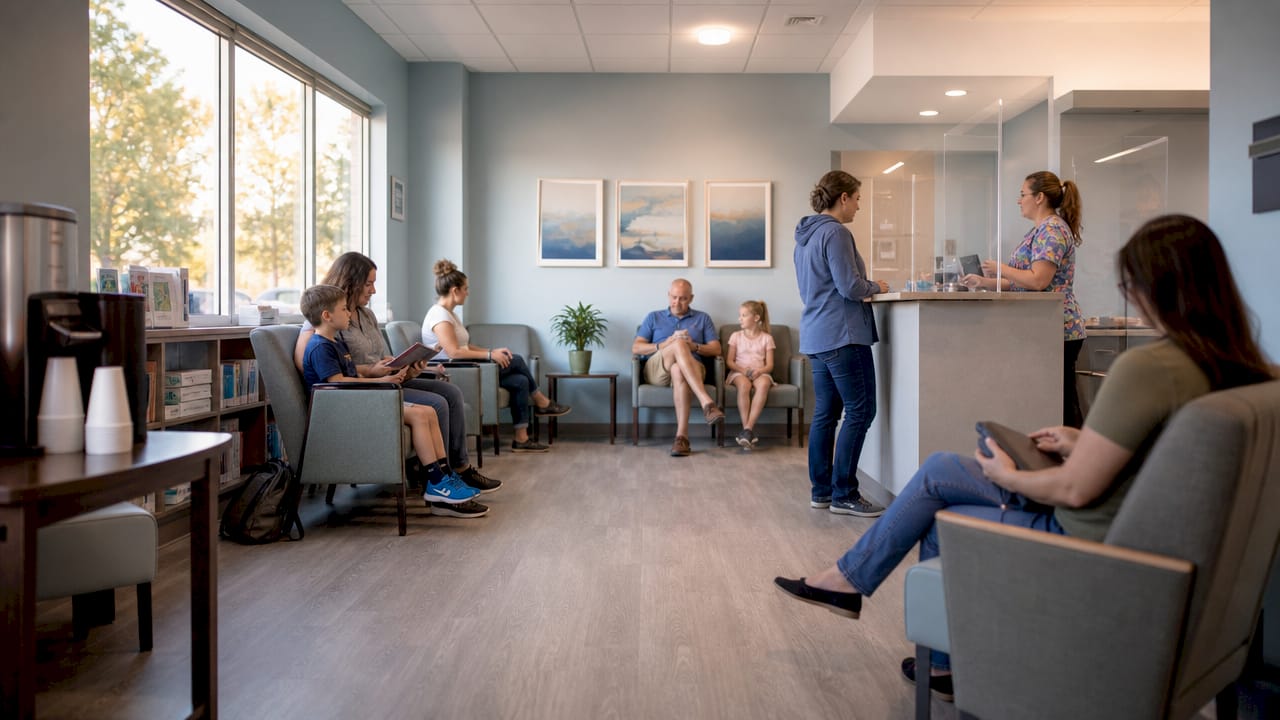
In-person same-day visits follow a predictable process, but the logistics vary depending on whether you visit a physician-led clinic or a walk-in urgent care center.
Physician-led primary care clinics
These clinics reserve a set number of sick slots each day on a first-come, first-served basis. Once those slots fill, same-day access closes. Calling the moment the office opens is the single most effective way to secure a spot.
Walk-in urgent care centers
Walk-in centers typically accept patients without a prior call. On-site wait times average around 15 minutes at lower-volume times, though they can stretch longer during peak hours. The tradeoff is that the provider has no access to your medical history.
The triage process
When you call a primary care clinic, a staff member conducts a brief triage call. Being concise and specific about your symptoms speeds up scheduling and helps staff prioritize correctly. Mention when symptoms started, their severity, and any relevant medical history.
Pro Tip: Call the clinic as soon as it opens, ideally within the first 10 minutes. Have your insurance card, a list of current medications, and a one-sentence description of your main symptom ready before you dial.
What to expect during the visit
Same-day visits are focused and problem-centered. The provider evaluates your acute complaint, orders any necessary tests, and prescribes treatment. This is not the time for a full physical or a review of all your chronic conditions. Those require a separate scheduled appointment.
3. Telehealth same-day primary care: examples and benefits
Telehealth has changed what same-day doctor visits look like for millions of patients. Telehealth primary care services offer a median wait time of around 5 hours, with most patients seen the same day they book. Only about 10% of patients wait longer than 24 hours for a telehealth consultation. That speed rivals many in-person options without requiring travel or a waiting room.
Conditions commonly managed via telehealth same day
- Repeat prescription requests for ongoing medications
- Medical certificates and documentation for work or school
- Referrals to specialists
- UTI diagnosis and antibiotic prescriptions
- Sinus infections and upper respiratory illnesses
- Rashes with clear visual presentation
- Anxiety or stress-related physical symptoms
- Follow-up care after a recent in-person visit
Advantages of virtual same-day visits
Telehealth visits include evening and weekend availability, which fills the gap when primary care offices are closed. No travel time, no exposure to other sick patients in a waiting room, and no parking fees. For patients managing a mild illness, these factors matter.
Limitations to understand
Telehealth cannot replace in-person care for conditions requiring a physical exam, lab work drawn on site, or imaging. Technology comfort is also a real factor. Success with telehealth depends on comfort with digital platforms, including video software and patient portals. Patients who struggle with these tools may find in-person visits more practical. For a full breakdown of what virtual visits cover, the types of primary care telehealth services available in 2026 is a useful reference.
4. Comparing same-day primary care appointment options
The right choice depends on your condition, your location, and how quickly you need care. The table below compares the three main settings for same-day visits.
| Feature | Physician-led clinic | Urgent care center | Telehealth service |
|---|---|---|---|
| Typical wait time | 1–3 hours after calling | ~15 minutes on site | ~5 hours median, same day |
| Location | In-person, clinic office | In-person, walk-in center | Anywhere with internet |
| Conditions treated | Acute illness, chronic flares | Acute illness, minor injuries | Acute illness, prescriptions, referrals |
| Booking method | Call ahead, reserved slots | Walk in or call ahead | Online booking or app |
| Access to patient history | Yes, full history available | Usually no | Varies by platform |
| Evening/weekend hours | Limited | Often available | Frequently available |
The physician-led clinic offers the most personalized care because the provider knows your history. Urgent care centers offer the fastest on-site access. Telehealth offers the most flexibility. None of these settings is appropriate for emergencies. For conditions treated online, telehealth covers a wider range than most patients expect.
5. When to choose same-day primary care over urgent care or the ER
Choosing the right care setting is a clinical decision, not just a convenience choice. Same-day primary care is the right call when symptoms are interfering with your daily life or getting worse, but no single sign points to a life-threatening emergency.
Choose same-day primary care when you experience:
- A fever above 101°F that has lasted more than 24 hours
- Ear pain that is disrupting sleep or concentration
- A UTI with burning and frequency but no back pain or high fever
- A sore throat with difficulty swallowing but no airway obstruction
- A minor injury that needs evaluation but shows no signs of serious fracture
- A sudden blood pressure reading significantly above your normal baseline
- A skin rash that appeared quickly and is spreading
“Same-day visits are advised when symptoms interfere with life or worsen, striking the balance between not waiting too long and not overreacting.”
Same-day appointments help prevent ER overuse by providing timely primary care with access to your full patient history. A provider who knows your medications, allergies, and past diagnoses makes better decisions than one seeing you for the first time in an ER setting. Primary care reduces emergency visits precisely because of this continuity.
Go to the emergency room for chest pain, signs of stroke, severe allergic reactions, difficulty breathing, or any symptom that feels life-threatening. Same-day primary care is not a substitute for emergency services.
Key takeaways
Same-day primary care appointments are the most effective option for acute, non-life-threatening conditions when you need care today and cannot wait for a scheduled visit.
| Point | Details |
|---|---|
| Know which conditions qualify | UTIs, fevers, ear infections, minor injuries, and chronic flares are appropriate for same-day care. |
| Call the clinic when it opens | Reserved slots fill fast; calling within the first 10 minutes gives you the best chance. |
| Telehealth expands access | Virtual visits offer a median same-day wait of around 5 hours with evening and weekend availability. |
| Scope is limited by design | Same-day visits focus on one acute problem; physicals and chronic disease reviews need separate appointments. |
| ER is for emergencies only | Chest pain, stroke symptoms, and severe breathing problems require emergency services, not same-day primary care. |
What I’ve learned about same-day care that most patients get wrong
Patients consistently underestimate how much the booking process affects their outcome. The care itself is often straightforward. Getting the appointment is where most people lose time.
The biggest mistake I see is waiting until mid-morning to call a primary care clinic. By 9:30 a.m., same-day slots at many physician-led practices are already gone. The patients who call at 8:00 a.m. with a clear, one-sentence description of their symptom get seen. The patients who call at 10:00 a.m. with a vague complaint get told to come in tomorrow.
The second misconception is that same-day care is somehow lesser care. It is not. A provider who knows your history and sees you the same day you develop a UTI or a fever is delivering better care than an ER physician who has never met you and is managing three critical patients simultaneously. The scope is narrower, but the quality is not.
Telehealth has genuinely improved access for patients who live far from a clinic or who cannot take time off work. The limitation is real though: if you need a physical exam, a blood draw, or imaging, a virtual visit will get you a referral, not a result. Understanding that boundary before you book saves frustration.
My advice is simple. Know your symptoms, call early, be specific, and match the setting to the problem. Same-day primary care works well when you use it correctly.
— Guorui
Helloklarity’s same-day telehealth primary care options
Helloklarity connects patients with licensed primary care providers for same-day virtual visits, with self-pay options starting at $49 and major insurance accepted. The platform’s network of over 1,000 licensed providers covers a wide range of acute conditions, from UTIs and respiratory infections to prescription renewals and referrals.
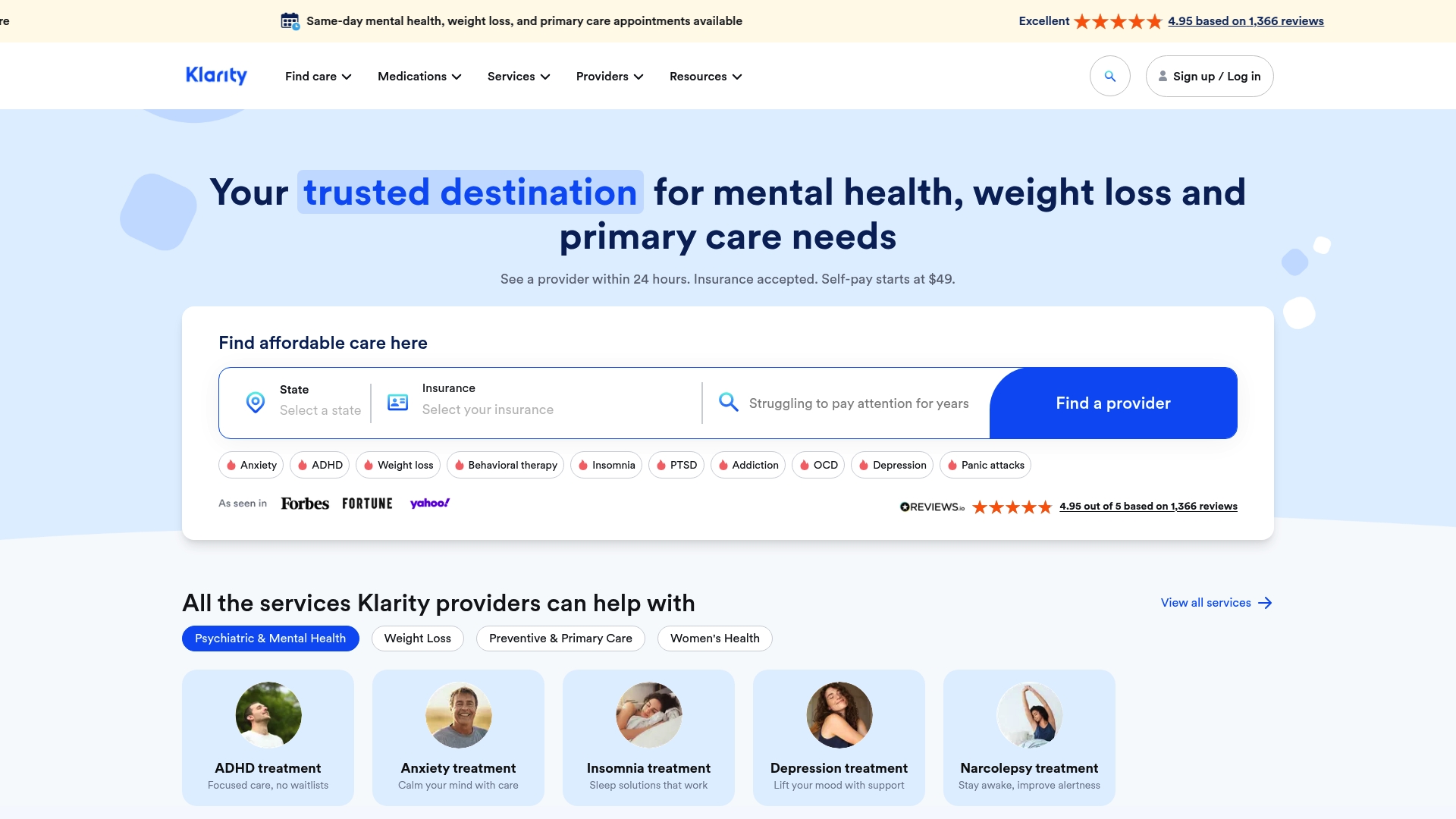
Booking takes minutes through the Helloklarity platform, with appointments available in the evenings and on weekends. Patients who need care today and cannot reach their regular clinic have a direct path to a licensed provider without a waiting room. Browse the full list of conditions treated online or view all available telehealth services to find the right fit for your situation.
FAQ
What counts as a same-day primary care appointment?
A same-day primary care appointment is any visit where a licensed provider evaluates and treats you on the same calendar day you request care. These visits cover acute, non-life-threatening conditions like fevers, UTIs, ear infections, and minor injuries.
How do I see a primary care doctor the same day?
Call the clinic as soon as it opens, describe your symptoms clearly, and ask for a same-day sick visit slot. For telehealth, book online through a platform like Helloklarity, where most patients are seen the same day they schedule.
Are telehealth same-day visits as effective as in-person visits?
Telehealth same-day visits are effective for conditions that do not require a physical exam or on-site lab work. Telehealth covers prescriptions, referrals, and common illnesses effectively, but in-person care is necessary when hands-on evaluation is needed.
What is the difference between same-day primary care and urgent care?
Same-day primary care is provided by your regular physician or a primary care telehealth provider who has access to your medical history. Urgent care centers accept walk-ins but typically have no access to your records, which limits the depth of clinical decision-making.
Can I get a prescription during a same-day primary care visit?
Yes. Prescriptions for antibiotics, antivirals, and other medications are a standard part of same-day primary care visits, both in-person and via telehealth. Telehealth same-day visits include repeat prescriptions and new treatments for common conditions, sent directly to your pharmacy.
Recommended
- Online Primary Care Visit Best Practices In 2026
- Primary Care Explained: Benefits, Roles, And Services
- Why Primary Care Reduces Emergency Visits: 2026 Guide
- Telehealth Primary Care Checklist For Families In 2026
Get expert care from top-rated providers
Find the right provider for your needs — select your state to find expert care near you.
Related posts




— Monday to Friday, 7:00 AM to 4:00 PM PST
Join our mailing list for exclusive healthcare updates and tips.

— Monday to Friday, 7:00 AM to 4:00 PM PST



