 HSA & FSA accepted; best-value for top quality care
 Same-day mental health, weight loss, and primary care appointments available

 Accept major insurances and cash-payHSA & FSA accepted; best-value for top quality careSame-day mental health, weight loss, and primary care appointments availableAccept major insurances and cash-pay
How to Compare Self-Pay Telehealth Pricing Options
Written by Klarity Editorial Team
Published: Jun 27, 2026

Self-pay telehealth pricing is the out-of-pocket cost a patient pays for virtual medical care without billing insurance. When you compare self-pay telehealth pricing options, the two structures you will encounter most often are pay-per-visit and monthly subscription plans. Self-pay visits in 2026 range from $19 to $164, with a national median of roughly $82 for urgent care. That spread is wide enough to make a real difference in your annual healthcare budget. Knowing which model fits your visit frequency and care type is the fastest way to cut costs without cutting corners.
What are the main telehealth pricing models and how do they work?
Two pricing structures define the self-pay telehealth market: pay-per-visit and subscription plans. Each works differently, and choosing the wrong one can cost you hundreds of dollars per year.
Pay-per-visit pricing
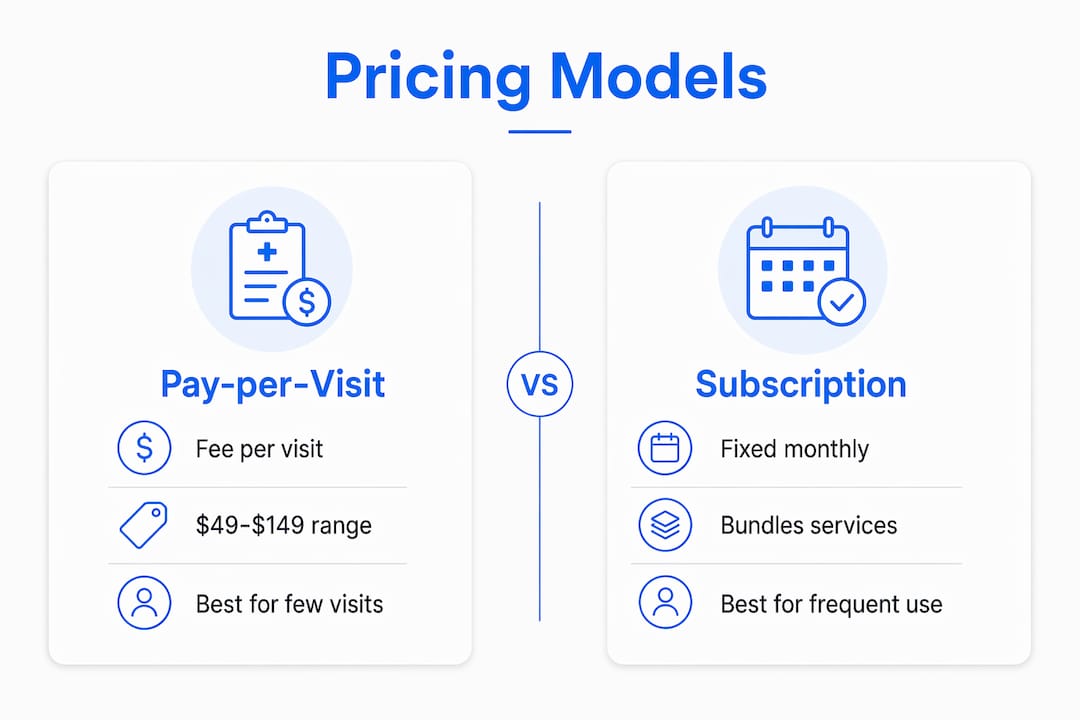
Pay-per-visit means you pay a flat fee each time you book an appointment. Costs typically fall between $49 and $149 per visit, depending on visit complexity and provider credentials. This model suits patients who need care once or twice a year, such as a single urgent care consult or a one-time prescription renewal. The breakeven point with most subscription plans sits at roughly three visits per year. Below that threshold, pay-per-visit is almost always cheaper.

Subscription-based pricing
Subscription plans charge a fixed monthly fee and bundle multiple services into one payment. Monthly fees range from $50 to $299, and many plans include unlimited virtual visits, secure provider messaging, and medication management. This model delivers clear value for patients managing ongoing conditions who expect frequent contact with their care team. The math is straightforward: if you visit four or more times per year, a subscription plan typically costs less per visit than paying each time.
| Feature | Pay-per-visit | Subscription plan |
|---|---|---|
| Cost structure | Fee per appointment | Fixed monthly rate |
| Typical price range | $49–$149 per visit | $50–$299 per month |
| Best for | 1–2 visits per year | 3+ visits per year |
| Services included | Single consultation | Visits, messaging, often medications |
| Provider continuity | Varies by platform | Usually prioritized |
Pro Tip: Before committing to a subscription, count how many telehealth visits you used in the past 12 months. If the number is two or fewer, pay-per-visit will almost certainly save you money.
What factors influence self-pay telehealth visit costs?
Telehealth pricing depends on visit type, provider credentials, geographic location, and platform transparency. Understanding these variables helps you anticipate costs before you book and avoid surprises on your receipt.
The main cost drivers include:
- Visit type and complexity. Urgent care visits for minor issues like sinus infections or rashes sit at the lower end of the price range. Primary care visits involving lab orders or medication adjustments cost more. Mental health therapy sessions, which require longer appointment windows and licensed therapists, typically price at the higher end.
- Provider credentials. A board-certified physician charges more than a nurse practitioner for the same visit type. Platforms that let you choose your provider level give you direct control over this cost variable.
- Continuity of care. Seeing the same provider repeatedly often costs more per session on pay-per-visit platforms. However, low-cost on-demand visits priced at $20–$40 typically do not allow seeing the same provider, which reduces care quality for anyone managing a chronic condition.
- Platform fees and add-ons. Some platforms charge separately for prescription processing, lab orders, or secure messaging. Always read the full fee schedule before booking.
- Geographic market differences. Prices vary by state due to licensing costs and regional market competition. A platform operating in a high-cost state may charge more even for identical visit types.
Pro Tip: The lowest price is not always the best value. A $35 on-demand visit with a rotating provider pool costs less upfront but may require you to repeat your full medical history every time, adding time and frustration to every appointment.
How to compare pricing options effectively when choosing a telehealth service
Effective telehealth pricing comparison follows a clear sequence. Skipping steps leads to mismatched plans and unexpected bills.
- Calculate your expected annual visit count. Estimate how many times you realistically need care per year. Separate urgent care needs from ongoing mental health or chronic condition visits, since these often require different pricing models.
- List every service you need. Identify whether you need prescription management, lab orders, or regular provider messaging. A plan that looks cheap per visit may charge separately for each of these, making the total cost higher than a subscription.
- Check for upfront pricing transparency. Platforms that publish full fee schedules before you create an account are easier to compare accurately. If a platform requires you to sign up before showing prices, treat that as a red flag.
- Assess provider access and appointment availability. A low monthly fee means little if appointment slots are booked two weeks out. Platforms like Helloklarity offer same-day access to over 1,000 licensed providers, which changes the value calculation significantly.
- Verify accepted payment methods. Confirm whether the platform accepts Health Savings Accounts (HSAs) or Flexible Spending Accounts (FSAs). These accounts let you pay with pre-tax dollars, effectively reducing your real cost by your marginal tax rate.
Watch out for these common pitfalls:
- Subscription plans that auto-renew without reminder emails
- Platforms that charge a separate “platform fee” on top of the visit fee
- Plans that advertise unlimited visits but cap the number of prescriptions per month
- Providers who are listed as in-network on a platform but charge separately for follow-up messages
Understanding how telehealth reduces out-of-pocket costs for routine care helps you frame these comparisons against what you would pay for the same visit in person.
What are affordable self-pay options and strategies to save on telehealth costs?
Self-pay telehealth is an effective affordability tool for routine care, but it works best when you pair it with a deliberate cost strategy. The patients who save the most are the ones who match their plan type to their actual usage pattern.
Practical ways to lower your telehealth costs:
- Start with the lowest-cost visit type that fits your need. Urgent care visits for minor issues are the cheapest entry point, often priced under $75. Reserve primary care or mental health sessions for issues that genuinely require that level of care.
- Use subscription plans when you expect multiple visits. If you are managing anxiety, ADHD, or a chronic condition, a monthly plan that bundles visits and medication management will cost less per interaction than paying each time.
- Pay with HSA or FSA funds. Telehealth visits qualify as medical expenses under IRS rules. Paying through an HSA or FSA means you use pre-tax dollars, which cuts the effective cost by 20–30% depending on your tax bracket.
- Ask about payment flexibility. Some platforms offer sliding-scale fees or discounts for prepaying multiple visits. This is not widely advertised, but asking directly often surfaces options that are not listed publicly.
- Combine telehealth with traditional insurance strategically. Use self-pay telehealth for routine visits where the self-pay rate is lower than your insurance copay. Reserve your insurance for specialist visits, imaging, or hospital care where coverage delivers real financial protection.
Helloklarity’s self-pay options start at $49, which sits at the accessible end of the national price range. The platform also accepts major insurance and HSA payments, giving patients multiple ways to manage costs depending on their situation.
How does telehealth pricing differ for mental health versus primary care visits?
Mental health and primary care telehealth visits carry different price structures because they serve different clinical needs. Knowing the difference helps you budget accurately and choose the right plan type.
Mental health therapy sessions through telehealth typically cost between $75 and $150 per session. That range reflects the longer appointment windows required for therapy and the licensing requirements for mental health providers. The pricing is comparable to primary care visits, but the clinical dynamic is different. Mental health care depends heavily on the therapeutic relationship between patient and provider. Switching providers frequently, which is common on low-cost on-demand platforms, disrupts that relationship and can slow progress.
Primary care telehealth visits for acute issues like infections, rashes, or medication refills generally sit at the lower end of the $49–$149 pay-per-visit range. These visits are typically shorter and do not require the same level of ongoing relationship. Patients managing chronic conditions via telehealth benefit most from subscription plans, which prioritize continuity and include regular check-ins as part of the monthly fee.
Subscription plans suit chronic condition management, while pay-per-visit works better for episodic acute issues. This distinction matters most when you are comparing plans for mental health care. A patient seeing a therapist weekly will spend far less on a subscription plan than on individual session fees. A patient who needs a one-time anxiety medication consultation may find pay-per-visit more practical.
Pro Tip: If you are starting mental health care for the first time, book one pay-per-visit session to assess the platform and provider fit before committing to a subscription. The upfront cost is worth the information you gain.
Reviewing common primary care conditions treated online can help you decide which visit type you actually need before you compare pricing plans.
Key takeaways
Matching your telehealth pricing model to your visit frequency and care type is the single most effective way to reduce self-pay healthcare costs without sacrificing quality.
| Point | Details |
|---|---|
| Know your visit frequency | Pay-per-visit saves money at 1–2 visits per year; subscriptions win at 3 or more. |
| Check total cost, not just visit price | Add-on fees for prescriptions and messaging can make cheap plans expensive. |
| Mental health needs continuity | Low-cost on-demand platforms often rotate providers, which disrupts therapeutic care. |
| Use HSA or FSA funds | Pre-tax payment reduces your real telehealth cost by your marginal tax rate. |
| Prioritize pricing transparency | Platforms that publish full fee schedules before sign-up are easier to compare accurately. |
What I have learned about telehealth pricing after years of watching patients navigate it
The most common mistake I see is patients choosing a telehealth plan based on the headline price alone. A $25 visit sounds like a win until you realize the platform charges $15 for the prescription, $10 for the follow-up message, and assigns you a different provider every time. The real cost ends up higher than a transparent $75 visit with a provider who already knows your history.
The second misconception is that telehealth pricing reflects service quality. It does not, at least not in a simple linear way. Self-pay telehealth complements but does not substitute insurance for complex care. Patients who understand that boundary use telehealth well. They handle routine and ongoing care through affordable virtual visits and reserve their insurance for the situations where it actually matters.
My practical advice for anyone new to self-pay telehealth: spend 15 minutes mapping your expected visits for the next 12 months before you compare any plans. Separate your acute needs from your ongoing ones. Then run the math on both models. The right answer is almost always obvious once the numbers are on paper. Provider relationship quality, appointment availability, and pricing transparency matter more than the lowest number on the fee schedule.
— Guorui
Helloklarity’s approach to affordable telehealth pricing
Helloklarity offers same-day access to over 1,000 licensed providers across mental health, primary care, and weight loss, with self-pay options starting at $49.
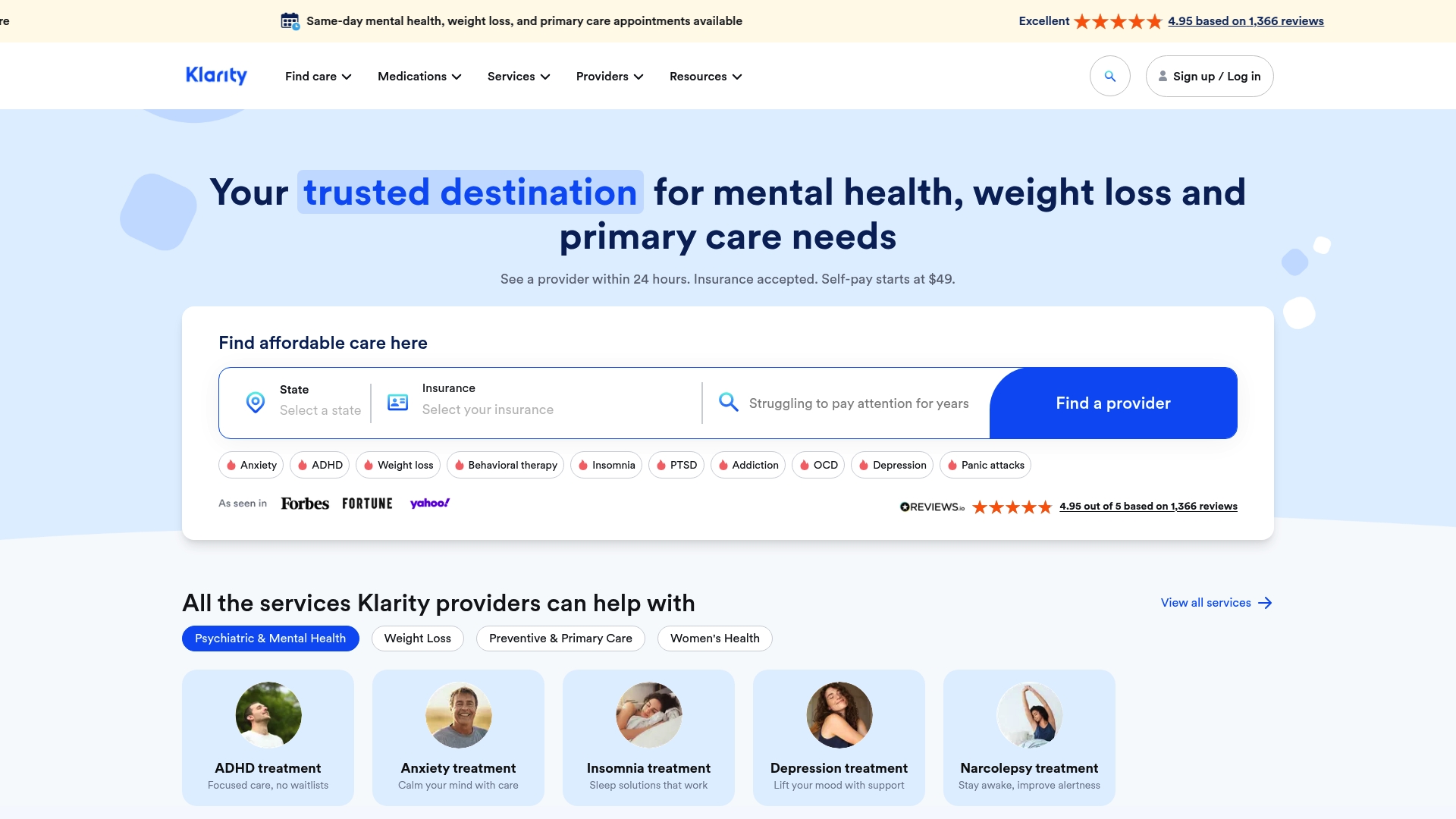
The platform accepts major insurance and HSA payments, so you can use whichever payment method lowers your actual cost. Appointment slots are available within 24 hours, which removes the wait-time problem that makes in-person care expensive and inconvenient. Explore Helloklarity’s telehealth services to see current pricing, available providers, and the conditions the platform treats. If you want to find a licensed provider in your state, the provider search by state shows availability and pricing in your area.
FAQ
What is the average cost of a self-pay telehealth visit?
Self-pay telehealth visits range from $19 to $164, with a national median of approximately $82 for urgent care. Primary care and mental health sessions typically cost $75–$150 per visit.
When does a telehealth subscription plan make financial sense?
A subscription plan saves money when you expect three or more telehealth visits per year. Monthly subscription fees range from $50 to $299 and often include visits, messaging, and medication management.
Can I use my HSA or FSA to pay for telehealth visits?
Telehealth visits qualify as medical expenses under IRS rules, making them eligible for HSA and FSA payment. Paying with pre-tax funds effectively reduces your out-of-pocket cost.
Does telehealth replace health insurance for self-pay patients?
Self-pay telehealth covers routine and ongoing care affordably but does not replace insurance for major medical events, specialist treatment, or hospital care. The two work best together as part of a broader coverage strategy.
Why does mental health telehealth cost more than urgent care visits?
Mental health sessions require longer appointment windows and licensed therapists or psychiatrists, which drives costs toward the $75–$150 range. Provider continuity also matters more in mental health care, and platforms that prioritize it tend to price accordingly.
Recommended
- Hydroxyzine Alternatives If Not Eligible | Klarity Health, Inc
- Yaz Alternatives If Not Eligible | Klarity Health, Inc
- Strattera Alternatives If Not Eligible | Klarity Health, Inc
- Doxepin Alternatives If Not Eligible | Klarity Health, Inc
Get expert care from top-rated providers
Find the right provider for your needs — select your state to find expert care near you.
Related posts






— Monday to Friday, 7:00 AM to 4:00 PM PST
Join our mailing list for exclusive healthcare updates and tips.

— Monday to Friday, 7:00 AM to 4:00 PM PST



