 HSA & FSA accepted; best-value for top quality care
 Same-day mental health, weight loss, and primary care appointments available

 Accept major insurances and cash-payHSA & FSA accepted; best-value for top quality careSame-day mental health, weight loss, and primary care appointments availableAccept major insurances and cash-pay
What Is Value-Based Primary Care? A 2026 Patient Guide
Written by Klarity Editorial Team
Published: Jul 1, 2026

Value-based primary care is a care delivery model that pays providers based on the quality and outcomes of care rather than the number of services performed. This directly contrasts with the traditional fee-for-service system, where providers earn more by doing more, regardless of whether patients actually get better. Primary care accounts for 35% of healthcare visits but receives only 5% of total healthcare expenditures. That gap is exactly what value-based models are designed to fix. Understanding how this model works helps you make smarter decisions about your care, your costs, and which providers to choose.
What is value-based primary care and how is it defined?
Value-based primary care is defined as a system where providers are rewarded for keeping patients healthy, not for ordering more tests or scheduling more visits. The American Medical Association describes success in value-based care as patients living longer, healthier lives through managing populations rather than isolated transactions. That population-level thinking is the core shift. Your doctor is no longer incentivized to treat you only when you are sick. The goal becomes preventing illness in the first place.
The industry term for this approach is “value-based care” (VBC), and it applies across specialties. In primary care specifically, it means your provider is accountable for your overall health trajectory, not just the outcome of a single appointment. HealthIT.gov describes this shift as moving from episodic office visits to person-focused payments that reward quality benchmarks. That is a fundamental change in how the entire care relationship is structured. You can learn more about what a standard primary care visit looks like to see how value-based practices show up in practice.
How does value-based primary care work in practice?
Value-based primary care operates through specific payment models that replace or supplement traditional billing. The three most common structures are per-member-per-month (PMPM) capitation, shared savings arrangements, and quality bonuses.
- PMPM capitation: The payer gives the provider a fixed monthly fee per patient, regardless of how many visits occur. This gives providers a financial reason to keep patients healthy and out of the hospital.
- Shared savings: If a provider keeps total care costs below a target, they share a portion of those savings with the payer. This rewards efficient, coordinated care.
- Quality bonuses: Providers earn additional payments for hitting specific benchmarks, such as controlling blood pressure in diabetic patients or completing annual wellness screenings.
Value-based models often combine these payment types, progressing from upside-only arrangements (where providers only gain) to two-sided risk models (where they can also lose money). That progression reflects a clinic’s growing capability to manage financial risk. Clinics must invest in data systems and care coordination staff to make this work.
Measuring value requires three categories of metrics: clinical outcomes (like hemoglobin A1c levels or blood pressure control), patient experience scores, and total cost of care. Clinical outcome scorecards and patient experience metrics guide where providers focus their attention and how payers distribute rewards. A provider who scores well on diabetes management, for example, earns more than one who simply sees more diabetic patients.

Care coordination is the operational backbone of this model. Providers proactively reach out to patients with chronic conditions, schedule follow-ups before problems escalate, and communicate across specialists. This is very different from waiting for a patient to call when something goes wrong.
Pro Tip: Ask your provider if they use a quality scorecard. If they do, you can ask which benchmarks apply to your conditions. This tells you exactly what outcomes your care team is being measured on, and it helps you hold them accountable.
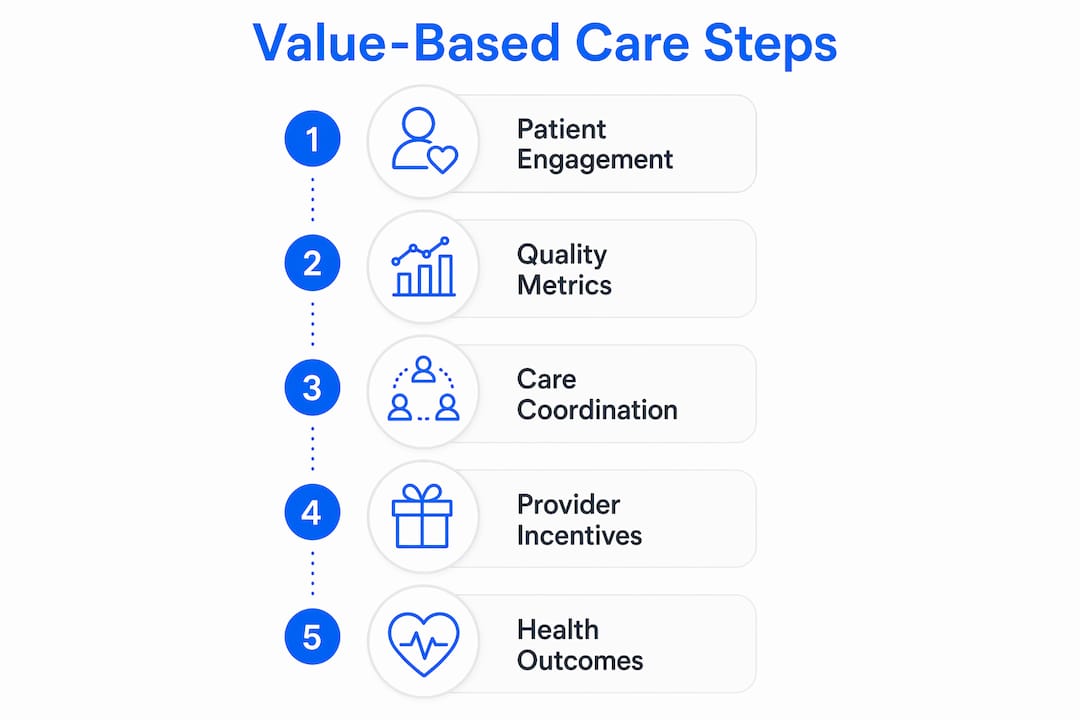
What are the advantages of value-based care for patients?
The benefits of value-based primary care are concrete and measurable for patients. Patients in value-based care models often experience better coordinated care, shared decision-making, faster appointment access, and no increase in out-of-pocket costs. That combination addresses the most common frustrations patients report with traditional healthcare.
Here is what that looks like in practice:
- Better care coordination: Your primary care provider communicates with your specialists, tracks your medications, and follows up after hospitalizations. You are not left to manage those handoffs yourself.
- More preventive services: Value-based providers are incentivized to catch problems early. Annual screenings, vaccine reminders, and chronic disease check-ins become standard, not optional.
- Fewer unnecessary tests: Because providers are not paid per service, they have no financial reason to order tests that will not change your treatment. You get the right tests, not the most tests.
- Lower long-term costs: Preventing a hospitalization costs far less than treating a preventable condition after it becomes severe. Patients in well-run value-based programs tend to see fewer surprise bills.
- Support for social factors: Value-based practices integrate non-medical supports addressing social determinants of health, such as transportation assistance or food access programs. These factors directly affect whether patients can follow through on care plans.
The shared decision-making component deserves special attention. Under fee-for-service, appointments are short and provider-driven. Under value-based care, your provider has an incentive to understand your goals, explain your options, and build a care plan you will actually follow. That shift in dynamic changes the entire experience of being a patient. You can read more about how primary care reduces emergency visits to see the downstream impact of this proactive approach.
What challenges and barriers exist in adopting value-based primary care?
Value-based care is not a simple switch. Transition to value-based care faces challenges including organizational resistance, performance metric complexity, and variability in benefits across different healthcare settings. Patients should understand these barriers because they affect the quality of care you receive during a clinic’s transition period.
- Data management complexity: Tracking clinical outcomes, patient experience scores, and cost metrics requires sophisticated software and trained staff. Many smaller practices lack both.
- Organizational resistance: Physicians trained under fee-for-service often resist the cultural shift to outcome-focused care. Changing how a clinic operates takes years, not months.
- Uneven benefits across settings: A large urban health system has more resources to implement value-based programs than a rural solo practice. The quality of your experience depends heavily on where you receive care.
- Patient misconceptions: Patients may misunderstand value-based care as receiving more care, when it actually means receiving the right care tailored to outcomes. Some patients initially feel they are getting less attention when unnecessary services are removed.
- Financial risk exposure: Clinics must manage financial risks like shared savings and capitation to stay financially sustainable. Practices that take on too much risk too quickly can face serious operational strain.
- Technology investment: Investment in data infrastructure and stakeholder engagement is critical for value-based models to succeed. Without it, providers cannot measure outcomes or coordinate care effectively.
Pro Tip: When evaluating a new primary care provider, ask directly: “Are you in a value-based contract with my insurer?” A yes tells you they are being measured on your outcomes, not just your visit count.
How can patients engage with and benefit most from value-based primary care?
Patients who actively participate in their care plans get more out of value-based primary care than those who remain passive. The model is designed to reward engagement on both sides. Here is how to make it work for you.
- Participate in shared decision-making: When your provider presents treatment options, ask about the expected outcomes for each. Value-based care gives providers time and incentive to have this conversation. Use it.
- Communicate between visits: Many value-based practices offer patient portals, secure messaging, or care coordinator contacts. Use these tools to report symptoms, ask questions, and avoid unnecessary urgent care visits.
- Understand “right care” vs. “more care”: The goal is not more appointments or more tests. The goal is the care that produces the best outcome for your specific situation. Fewer services can mean better care.
- Raise social and behavioral factors: Tell your provider about transportation barriers, food insecurity, or housing instability. Value-based practices are increasingly equipped to connect you with community resources that address these issues.
- Use telehealth access points: Digital tools and telehealth platforms give you faster access to your care team without requiring an in-person visit for every concern. This is especially valuable for managing chronic conditions between appointments. Exploring telehealth platform features can help you understand what to expect from a digital-first primary care experience.
- Recognize value-based practices: Look for clinics that offer care coordinators, proactive outreach for chronic conditions, and transparent quality reporting. These are the operational signs that a practice is genuinely operating under value-based principles.
Key Takeaways
Value-based primary care pays providers for patient outcomes, not service volume, making it the most patient-aligned payment model in modern American healthcare.
| Point | Details |
|---|---|
| Core definition | Providers are paid based on quality and outcomes, not the number of services performed. |
| Common payment models | PMPM capitation, shared savings, and quality bonuses are the three main structures. |
| Patient benefits | Better coordination, fewer unnecessary tests, preventive focus, and support for social health factors. |
| Key challenge | Data complexity and organizational resistance slow adoption, especially in smaller practices. |
| Patient action | Ask providers if they use quality scorecards and participate actively in shared decision-making. |
Why value-based care is the most important shift in primary care right now
I have spent years watching patients navigate a healthcare system that was never designed with their outcomes in mind. Fee-for-service medicine created a perverse incentive: the sicker you stayed, the more money your doctor made. That is not an accusation. It is just how the math worked.
What I find genuinely encouraging about value-based primary care is that it realigns those incentives. When a provider’s income depends on your blood pressure staying controlled, your diabetes being managed, and your preventive screenings being completed, they have a real reason to call you before you end up in the emergency room. That proactive relationship is what most patients actually want from a doctor.
The honest challenge is that the transition is messy. Clinics that are mid-transition often struggle with the data demands and the cultural shift simultaneously. Patients sometimes feel the friction of that change without understanding why it is happening. My advice: be patient with practices that are genuinely trying to make this shift, but do not accept vague answers about your care quality. You have every right to ask how your provider is measuring your outcomes.
The future of primary care runs through this model. Practices that invest in coordination, data, and patient relationships will produce better results. Patients who understand the model will get more from it. That combination is what makes value-based care worth paying attention to right now.
— Guorui
Helloklarity’s approach to value-driven primary care
Helloklarity connects patients with licensed primary care providers who prioritize outcomes and coordinated care, not just visit counts.
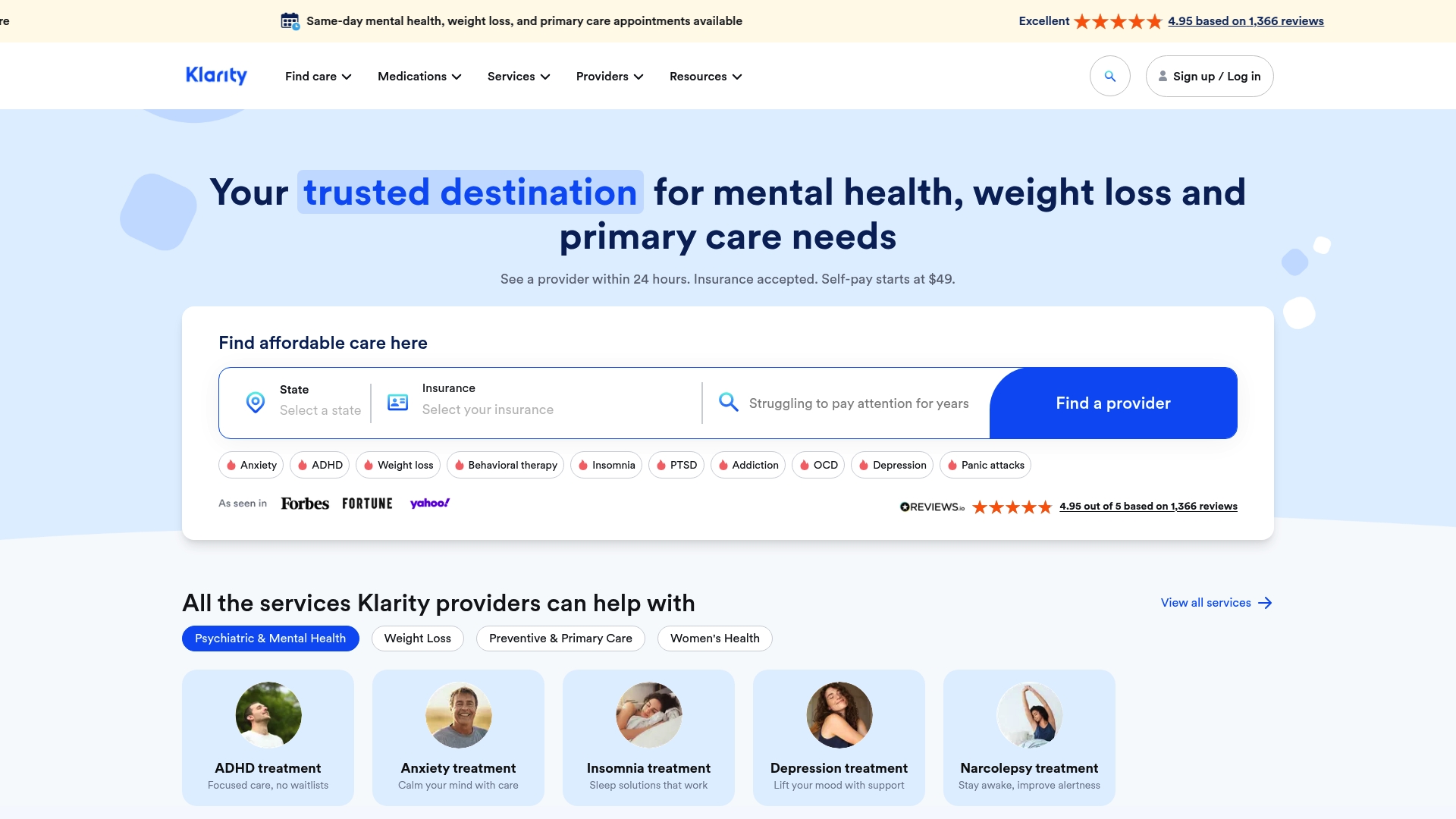
Through Helloklarity’s telehealth platform, patients get same-day access to providers across a network of over 1,000 licensed clinicians. Appointments are available within 24 hours, and self-pay options start at $49. The platform accepts major insurance and health savings accounts, removing the cost barriers that keep many patients from consistent primary care. If you are ready to experience care that focuses on your health outcomes, browse available telehealth services or find a provider in your state to get started.
FAQ
What is value-based primary care in simple terms?
Value-based primary care is a system where providers are paid based on how healthy their patients stay, not how many services they deliver. The focus is on outcomes, prevention, and coordinated care rather than visit volume.
How does value-based care differ from fee-for-service?
Fee-for-service pays providers for each test, visit, or procedure performed. Value-based care pays providers for meeting quality benchmarks and keeping patients healthy, which removes the financial incentive to over-treat.
Do patients pay more under value-based care models?
Patients in value-based care models typically do not see higher out-of-pocket costs. Research shows these models often reduce unnecessary services, which can lower total spending over time.
What payment models are used in value-based primary care?
The most common primary care payment models are per-member-per-month capitation, shared savings arrangements, and quality bonuses tied to clinical outcome benchmarks.
How can I tell if my provider practices value-based care?
Ask your provider directly whether they participate in a value-based contract with your insurer. Signs include proactive outreach for chronic conditions, care coordinators on staff, and transparent quality reporting.
Recommended
- Primary Care Explained: Benefits, Roles, And Services
- Why Primary Care Reduces Emergency Visits: 2026 Guide
- What Does A Primary Care Visit Include?
- Direct Primary Care Model Explained: Benefits And Costs
Get expert care from top-rated providers
Find the right provider for your needs — select your state to find expert care near you.
Related posts






— Monday to Friday, 7:00 AM to 4:00 PM PST
Join our mailing list for exclusive healthcare updates and tips.

— Monday to Friday, 7:00 AM to 4:00 PM PST



