 HSA & FSA accepted; best-value for top quality care
 Same-day mental health, weight loss, and primary care appointments available

 Accept major insurances and cash-payHSA & FSA accepted; best-value for top quality careSame-day mental health, weight loss, and primary care appointments availableAccept major insurances and cash-pay
What Is a Health Maintenance Visit? Your Full Guide
Written by Klarity Editorial Team
Published: Jul 7, 2026

A health maintenance visit is defined as a scheduled preventive care appointment with a primary care provider focused on assessing your overall well-being before symptoms appear. Often called an annual wellness exam, this visit centers on identifying health risks early, updating screenings, and building a personalized prevention plan. Research suggests up to 100,000 lives could be saved annually in the U.S. with recommended preventive care. That number reflects how much disease goes undetected without routine checkups. Understanding what a health maintenance visit involves puts you in control of your long-term health.
What is a health maintenance visit and what does it include?
A health maintenance visit is not the same as a sick visit. You are not there because something hurts. You are there to get a full picture of your health while you still feel fine, so problems can be caught before they become serious.

Annual wellness visits typically cover a structured set of components that give your provider a complete snapshot of your health. Each element serves a specific purpose in your prevention plan.
A standard health maintenance exam includes:
- Medical history review: Your provider updates records on past illnesses, surgeries, and current medications, including dosages.
- Vital signs measurement: Blood pressure, heart rate, weight, and body mass index are recorded and compared to your baseline.
- Preventive screenings and lab work: Age- and risk-based tests such as cholesterol panels, blood glucose, and cancer screenings are ordered.
- Immunization review: Your provider checks which vaccines are current and administers any that are due.
- Lifestyle counseling: Nutrition, physical activity, sleep, and stress management are discussed openly and honestly.
- Mental and emotional health assessment: Standardized tools screen for depression, anxiety, and other conditions that affect daily function.
- Personalized prevention plan: Your provider creates or updates a written plan that reflects your specific risk profile and health goals.
Pro Tip: Bring a written list of every medication you take, including over-the-counter supplements. Providers spend less time gathering basics and more time planning your care when that information is ready on arrival.
Why is a health maintenance visit important for your long-term health?
The most direct benefit of a routine preventive care visit is early detection. Conditions like hypertension, type 2 diabetes, and certain cancers often develop without noticeable symptoms. By the time you feel something, the disease may already be advanced. A health screening appointment catches these conditions at a stage when treatment is far more effective.
“Preventive care shifts the goal from treating disease to preventing it. Providers encourage patients to lead conversations focusing on personal health goals, transforming the visit from a checklist into a collaborative prevention plan.”
The concept of healthspan matters here. Healthspan focuses on years lived without disability or chronic illness, not just total years alive. Many chronic illnesses are strongly shaped by lifestyle and environment, which means preventive visits give you real leverage over your quality of life. Living longer matters less if those extra years are spent managing avoidable conditions.
Routine visits also reduce costly acute care. Regular health maintenance visits allow early intervention and reduce costly emergency room episodes. Catching high blood pressure at a wellness exam costs far less than treating a stroke in an emergency department.
The benefits of consistent preventive care visits include:
- Early detection of hypertension, diabetes, and high cholesterol before complications develop
- Reduced risk of hospitalization through proactive management of chronic conditions
- A stronger, more trusted relationship with your primary care provider over time
- A written prevention plan that evolves with your age and health status
- Mental health screening that catches depression and anxiety before they worsen
Longitudinal care is one of the most underrated benefits of routine visits. When your provider knows your history over years, not just your chart from today, they recognize subtle changes that a new provider would miss entirely.
A common misconception is that these visits are just paperwork. Providers encourage patients to lead conversations focused on personal health goals, which means the visit is only as valuable as the engagement you bring to it.
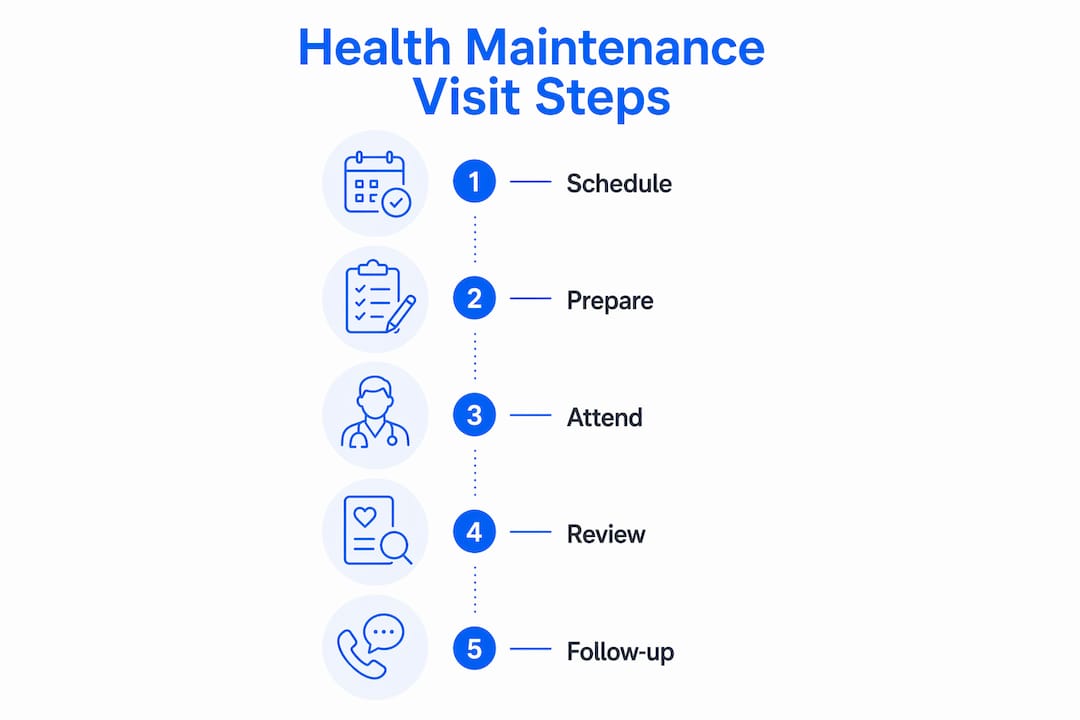
How often should you schedule a health maintenance visit?
Annual visits are the standard recommendation for most adults. Early baseline health assessments improve the effectiveness of all future care, which is why starting preventive visits before health problems emerge matters so much.
Frequency varies based on your individual profile. Here is a practical framework:
- Adults aged 18–39 with no chronic conditions: Annual visits establish your baseline and catch emerging risk factors like elevated blood pressure or cholesterol.
- Adults aged 40–64: Annual visits become more critical as the risk for cardiovascular disease, diabetes, and certain cancers increases significantly.
- Adults 65 and older: Annual visits are standard, and Medicare covers an annual wellness visit specifically designed for this age group.
- People with chronic conditions such as diabetes or hypertension: More frequent visits, sometimes every three to six months, allow tighter monitoring and medication adjustments.
- People with a strong family history of cancer or heart disease: Your provider may recommend additional screenings or shorter intervals between visits.
Pro Tip: Do not wait until you feel unwell to book your next appointment. Schedule your next health maintenance visit before you leave the office from your current one. That single habit prevents the common pattern of skipping years between checkups.
The goal is not to hit a number of visits per year. The goal is to build a continuous record of your health that makes every future visit more useful than the last.
How to prepare effectively for your health maintenance visit
Preparation directly improves the quality of care you receive. Patients who prepare help providers tailor prevention plans rather than spend time gathering basic information. That shift in time allocation changes what you get out of a 20-minute appointment.
Bring these items to every health maintenance exam:
- A complete medication list with drug names, dosages, and how often you take each one
- Notes on any hospitalizations, urgent care visits, or major health events since your last visit
- An updated family health history, especially any new diagnoses among close relatives
- A written list of questions and personal health goals you want to address
- Any recent lab results or specialist reports from outside your primary care practice
Pro Tip: Write your questions down the week before your appointment, not the morning of. Patients who prepare questions in advance ask better ones and leave with clearer answers.
Be ready to discuss your lifestyle honestly. Providers are not there to judge your diet or exercise habits. They need accurate information to give you accurate guidance. Understating alcohol intake or overstating physical activity produces a prevention plan built on false data, which helps no one.
Understanding what a primary care visit includes before you arrive removes the uncertainty that makes some people avoid scheduling altogether. When you know what to expect, the visit feels less like an obligation and more like a tool you control.
Key Takeaways
A health maintenance visit is the single most effective tool for catching disease early, extending healthspan, and building a prevention plan that reflects your actual life.
| Point | Details |
|---|---|
| Definition of the visit | A preventive care appointment focused on risk identification and wellness planning, not treating illness. |
| Core components | Includes vital signs, screenings, lab work, immunizations, lifestyle counseling, and a personalized prevention plan. |
| Primary benefit | Early detection of conditions like hypertension and diabetes before symptoms develop. |
| Recommended frequency | Annual for most adults; more often for those with chronic conditions or high-risk family history. |
| Preparation matters | Bringing medications, health history, and written questions directly improves the care you receive. |
The visit most people underestimate
Most patients I have observed treat the annual wellness exam as a formality. They show up, answer questions, and leave without ever steering the conversation toward what actually concerns them. That is the biggest missed opportunity in routine healthcare.
The shift from reactive to proactive medicine is real, but it only works if you participate actively. A provider can order the right screenings and note your blood pressure, but they cannot tell you what health goals matter most to you. That part is yours to bring. Patients who arrive with a written list of concerns consistently leave with more useful guidance than those who wait to be asked.
The other thing worth saying plainly: building a relationship with one primary care provider over years is not a luxury. It is a clinical advantage. A provider who has seen your labs for five consecutive years recognizes a trend that a new provider reviewing a single chart would never catch. That continuity is what turns a routine checkup into genuinely personalized medicine.
Healthspan, not just lifespan, is the right goal. Living to 85 while managing avoidable chronic conditions from age 60 onward is not the outcome preventive care aims for. The aim is to compress that period of decline and spend more years in full health. The health maintenance visit is the most practical tool available for doing exactly that.
— Guorui
Preventive care is now easier to access than ever
Scheduling a health maintenance visit no longer requires weeks of waiting or taking time off work. Helloklarity connects you with licensed primary care providers who can conduct preventive care visits through telehealth, often within 24 hours of booking.
Helloklarity’s network includes over 1,000 licensed providers across the U.S., with self-pay options starting at $49 and support for major insurance plans and health savings accounts. Whether you need a full preventive care visit or want to address a specific condition identified at your last checkup, you can find a provider and book an appointment without the traditional barriers. You can also find providers by state to locate someone licensed in your area. Proactive health management starts with one scheduled appointment.
FAQ
What is the difference between a health maintenance visit and a sick visit?
A health maintenance visit focuses on prevention and risk identification when you feel well. A sick visit addresses a specific symptom or illness you are already experiencing.
Does insurance cover a health maintenance visit?
Most private insurance plans and Medicare cover annual wellness visits at no cost to the patient. Check your specific plan to confirm coverage details before booking.
What questions should I ask at a checkup?
Ask about your personal risk for chronic conditions, which screenings are due for your age, and what lifestyle changes would have the most impact on your specific health profile.
Can a health maintenance visit be done via telehealth?
Yes. Telehealth providers can conduct medical history reviews, lifestyle counseling, mental health screenings, and order lab work remotely. In-person components like physical exams may still require an office visit depending on your needs.
How is a health maintenance exam different from a physical exam?
A physical exam typically focuses on the body’s current condition through hands-on examination. A health maintenance exam is broader, covering screenings, immunizations, lifestyle factors, and long-term prevention planning alongside the physical assessment.
Recommended
- What Does A Primary Care Visit Include?
- What Is A Medication Management Appointment?
- Primary Care Explained: Benefits, Roles, And Services
- Your Telehealth Mental Health First Visit: What To Expect
Get expert care from top-rated providers
Find the right provider for your needs — select your state to find expert care near you.
Related posts


— Monday to Friday, 7:00 AM to 4:00 PM PST
Join our mailing list for exclusive healthcare updates and tips.

— Monday to Friday, 7:00 AM to 4:00 PM PST



