 HSA & FSA accepted; best-value for top quality care
 Same-day mental health, weight loss, and primary care appointments available

 Accept major insurances and cash-payHSA & FSA accepted; best-value for top quality careSame-day mental health, weight loss, and primary care appointments availableAccept major insurances and cash-pay
Coordinate Family Care on One Telehealth Platform
Written by Klarity Editorial Team
Published: Jul 8, 2026

Coordinating family care on one telehealth platform means managing every family member’s appointments, medications, and health records through a single digital system. This approach, formally called household-centered care, replaces scattered phone calls, separate patient portals, and missed follow-ups with one organized hub. Families using unified telehealth platforms report fewer scheduling conflicts and better medication adherence. Helloklarity connects families to over 1,000 licensed providers for same-day mental health and primary care visits, with self-pay options starting at $49 and major insurance accepted.
What does it mean to coordinate family care on one telehealth platform?
Household-centered care is the clinical term for what most families are trying to do informally. It means a caregiver or parent manages health decisions for multiple people, reinforcing treatment plans between visits and tracking outcomes over time. A unified telehealth platform turns that informal role into a structured, supported process.
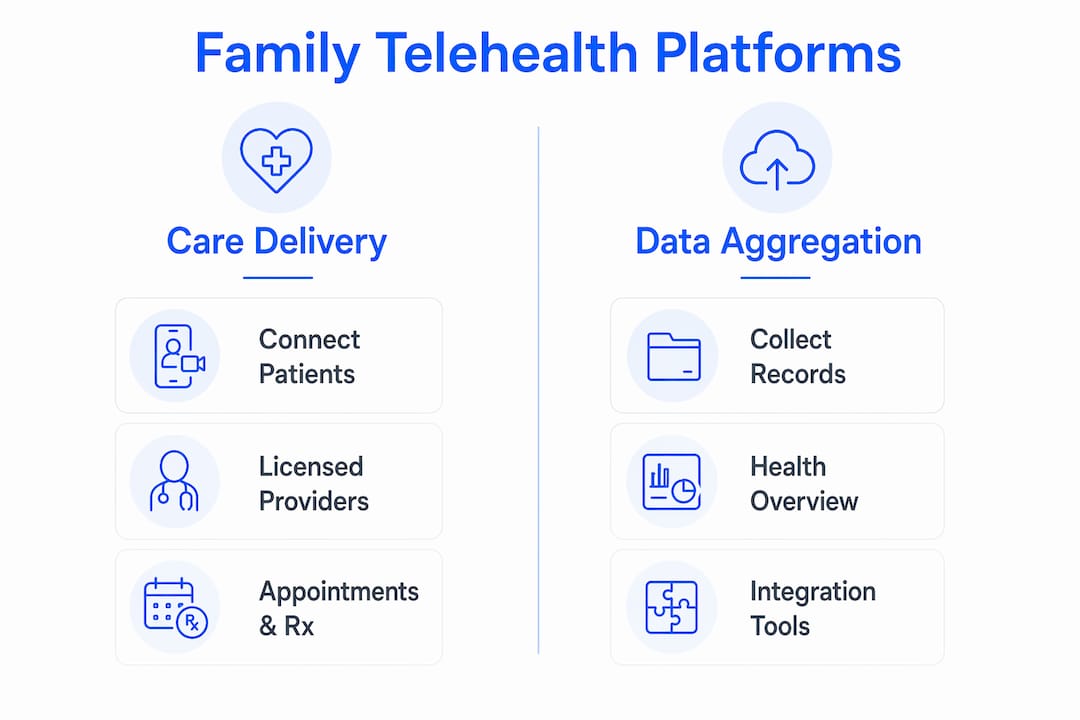
The distinction between two platform types matters here. Care delivery platforms connect families to licensed clinicians for appointments. Data aggregation platforms store and sync digital health records. Effective family health management typically requires both working together, either through one platform that combines them or two tools used in parallel.

Telehealth visits are frequently billed at the same rate as in-office encounters, with normal copays and insurance coverage applying per state regulations. That parity removes one of the biggest financial objections families have to switching from traditional care.
Essential features to look for in a family telehealth platform
Not every telehealth platform supports multi-member households. The features below separate platforms built for family coordination from those designed for individual patients.
- Multi-profile management. The platform must support separate health records, medication lists, and appointment histories for each family member under one account login.
- Integrated scheduling. Booking primary care and mental health visits from the same calendar prevents double-booking and makes it easier to spot care gaps.
- Shared medication management. Centralized medication schedules with adherence alerts reduce missed doses across all household members.
- HIPAA-compliant communication. Secure messaging between family members and providers protects sensitive health data. Any platform you use must meet federal HIPAA standards for data storage and transmission.
- Privacy protections. Top coordination apps explicitly prohibit selling user data and fund operations through subscriptions rather than advertising. Read the privacy policy before committing.
- AI-assisted documentation. AI ambient charting automatically generates visit notes during appointments, improving record accuracy and reducing the manual burden on caregivers.
- Proxy and caregiver access. Parents managing care for children or adult children managing care for aging parents need the ability to grant controlled access without sharing full account credentials.
Pro Tip: Before signing up for any platform, search its privacy policy for the phrase “sell your data.” If the policy is vague or absent, choose a different service.
The table below compares the two core platform categories families typically use.
| Feature | Care delivery platforms | Data aggregation platforms |
|---|---|---|
| Primary function | Connect patients to licensed providers | Store and sync health records |
| Appointment booking | Yes | Rarely |
| Record storage | Limited | Full history |
| Insurance billing | Yes | No |
| Best used for | Scheduling visits, getting prescriptions | Tracking chronic conditions, sharing records |
How to set up your family on a telehealth platform
Setup takes time upfront, but the payoff is significant. Families typically spend 15–30 minutes importing documents and syncing calendars during initial onboarding. That investment eliminates the group text coordination and repeated phone calls that consume far more time each month.
Follow these steps to get your household organized efficiently.
- Create the primary account. Register with your email and set a strong password. Choose a platform that explicitly supports household or family accounts, not just individual profiles.
- Add each family member’s profile. Enter basic demographics, insurance information, and any existing diagnoses. Upload recent lab results or vaccination records if the platform supports document imports.
- Sync your calendars. Connect the platform to your phone’s calendar app so appointment reminders reach you automatically. Set reminders at least 24 hours before each visit.
- Build your care team directory. Add your family’s existing providers, including specialists, so the platform can route referrals and share records correctly.
- Configure medication schedules. Enter every current medication for each family member with dosage and timing. Turn on adherence alerts for anyone who frequently misses doses.
- Set up proxy access. If a grandparent, co-parent, or other caregiver needs visibility into a family member’s care, grant them access at the appropriate permission level.
- Schedule a first telehealth visit. Use the platform to book a same-day or next-day appointment. This confirms the system works and familiarizes everyone with the video visit process.
Pro Tip: Take a photo of each family member’s insurance card and upload it during setup. Platforms that store insurance images reduce billing delays significantly.
| Setup task | Estimated time |
|---|---|
| Account creation and profile entry | 10–15 minutes per member |
| Document uploads | 5–10 minutes per member |
| Calendar sync and reminders | 5 minutes total |
| Medication schedule entry | 5–10 minutes per member |
| Proxy access configuration | 5 minutes total |
Best practices for managing ongoing family healthcare needs
Consistent habits keep a family telehealth platform working well after the initial setup. The biggest mistake families make is treating the platform as a scheduling tool only. It functions best as a living health record that every family member contributes to regularly.
Update health logs and symptom trackers at least once a week for any family member managing a chronic condition. Brief notes like “headache three days this week” give providers context that a rushed appointment cannot capture. Platforms with shared care notes let you add observations that the provider sees before the visit, making the appointment itself more productive.
“Household-centered care focuses on care continuity, ensuring caregivers reinforce treatment plans between visits for better outcomes. This is distinct from traditional patient-centered care, which treats each visit as a standalone event.”
Schedule follow-up visits before you leave each appointment, not after. Most telehealth platforms allow booking directly from the post-visit summary screen. Same-day mental health appointments are available through platforms like Helloklarity, which means a family member in crisis does not have to wait weeks for support. Coordinating mental health and primary care through the same platform also prevents the common problem of providers working in silos without shared information.
Use the alert system aggressively. Set reminders for annual checkups, vaccine boosters, and prescription refills. Automated alerts are the single most effective tool for preventing the care gaps that lead to emergency visits.
Common mistakes when coordinating family care through telehealth
Data fragmentation across multiple providers is the most common barrier families face. When a pediatrician, a therapist, and a cardiologist each use separate portals, no one has the full picture. A unified platform consolidates those silos so families can advocate effectively during every visit.
- Skipping the privacy review. Many families accept platform terms without reading them. Platforms that monetize health data through advertising create real privacy risks for your household.
- Using one login for everyone. Sharing a single account across family members mixes records and creates billing errors. Each person needs a distinct profile.
- Assuming telehealth replaces all in-person care. Telehealth handles a wide range of conditions effectively, but physical exams, imaging, and certain procedures still require an in-person visit. Know the limits.
- Ignoring insurance parity rules. Telehealth visits for mental health and primary care are covered at the same rate as office visits in most states. Families who pay out of pocket unnecessarily are leaving money on the table.
- Neglecting data synchronization errors. If a medication update does not appear across all profiles, a provider may prescribe something that causes an interaction. Check sync status after every update.
Pro Tip: Set a monthly “health admin” reminder on your calendar. Use 20 minutes to review each family member’s profile, confirm upcoming appointments, and update any medication changes.
Choosing a platform with strong customer support resources matters more than most families realize. When a sync error or billing question arises, a platform with live chat or phone support resolves the issue in minutes. A platform with only a help-center FAQ can leave you stuck for days.
Key Takeaways
A unified telehealth platform reduces care gaps, prevents data fragmentation, and gives families direct access to same-day mental health and primary care services from one organized system.
| Point | Details |
|---|---|
| Choose the right platform type | Look for platforms that combine care delivery and data aggregation, or use both in parallel. |
| Prioritize privacy | Select platforms that fund operations through subscriptions and explicitly prohibit selling health data. |
| Setup takes 15–30 minutes | Initial onboarding per member is brief; consistent weekly updates keep the system accurate. |
| Use alerts to prevent care gaps | Automated reminders for refills, checkups, and follow-ups are the most effective adherence tool. |
| Telehealth has billing parity | Mental health and primary care telehealth visits are covered at in-office rates in most states. |
Why I think families underestimate what telehealth coordination actually does
Most families I speak with think of telehealth as a convenience feature. They use it to skip the waiting room. That framing misses the real value entirely.
The shift to household-centered care is a structural change in how families relate to the healthcare system. When one person manages records, appointments, and medication schedules for an entire household through a single platform, that family becomes a far more effective advocate in every clinical encounter. Providers get better information. Treatments get followed through. Outcomes improve.
AI ambient charting is the feature I watch most closely right now. When a platform automatically generates accurate visit notes during a family medicine appointment, it removes the documentation burden from both the provider and the caregiver. That means more time in the visit for actual clinical conversation. Families who use platforms with this feature get more out of every appointment.
The uncomfortable truth is that most families wait until a health crisis to get organized. A parent gets a serious diagnosis, and suddenly everyone scrambles to find records, coordinate specialists, and figure out who has power of attorney. Setting up a unified telehealth platform before that moment is one of the most practical things a family can do for its long-term health. By 2030, household-centered telehealth coordination will be standard practice. The families who start now will have years of organized data and established provider relationships that make every future health decision easier.
— Guorui
Helloklarity’s telehealth services for your whole family
Helloklarity connects families to over 1,000 licensed providers for same-day mental health and primary care visits, with appointments available within 24 hours. The platform accepts major insurance, health savings accounts, and offers self-pay visits starting at $49.
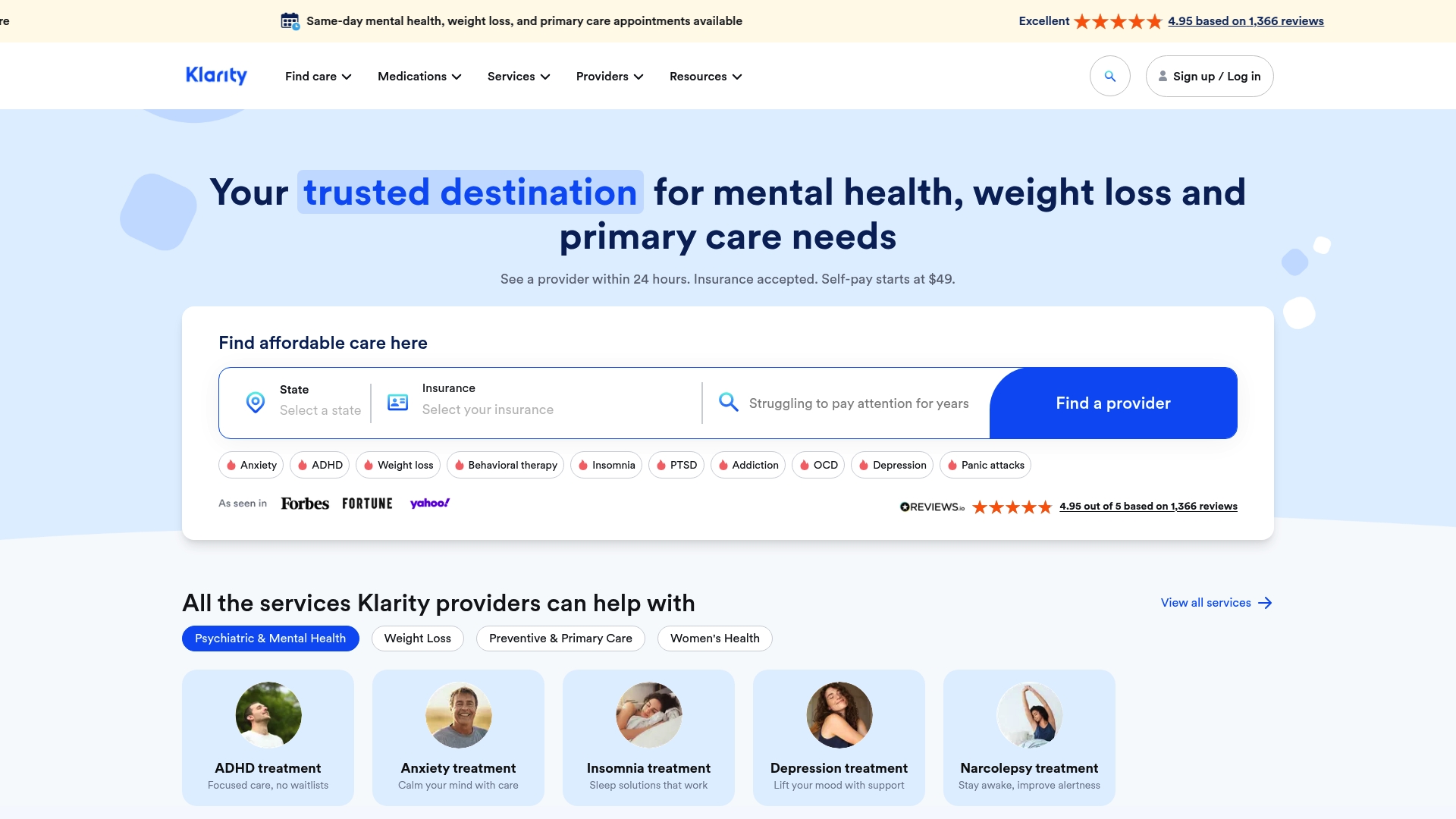
Families managing anxiety, ADHD, depression, or chronic primary care needs can browse available services and book directly without a referral. Helloklarity’s provider network spans all 50 states, so you can find a provider near you or access care entirely online. The platform also covers a broad range of conditions families commonly treat online, making it a practical starting point for households ready to centralize their care.
FAQ
What is household-centered care in telehealth?
Household-centered care is a model where one platform manages health records, appointments, and treatment plans for every family member together. It prioritizes care continuity between visits rather than treating each appointment as a standalone event.
How long does it take to set up a family telehealth account?
Most families complete initial setup in 15–30 minutes per family member, including document uploads and calendar sync. Ongoing maintenance takes roughly 20 minutes per month.
Does insurance cover telehealth visits for mental health and primary care?
Telehealth visits for mental health and primary care are billed at the same rate as in-office visits in most states, with standard copays applying. Helloklarity accepts major insurance and HSA payments.
What is the difference between a care delivery and a data aggregation platform?
A care delivery platform connects patients to licensed providers for appointments and prescriptions. A data aggregation platform stores and syncs health records. Effective family care coordination often uses both together.
How do I protect my family’s health data on a telehealth platform?
Choose platforms that are HIPAA-compliant, fund operations through subscriptions rather than advertising, and explicitly state they do not sell user data. Review the privacy policy before creating any account.
Recommended
- Telehealth Primary Care Platform Features Explained
- Telehealth Primary Care Checklist For Families In 2026
- How To Manage Chronic Conditions Via Telehealth
- Telehealth’s Role In Rural Family Healthcare: 2026 Guide
Get expert care from top-rated providers
Find the right provider for your needs — select your state to find expert care near you.
Related posts


— Monday to Friday, 7:00 AM to 4:00 PM PST
Join our mailing list for exclusive healthcare updates and tips.

— Monday to Friday, 7:00 AM to 4:00 PM PST



