 HSA & FSA accepted; best-value for top quality care
 Same-day mental health, weight loss, and primary care appointments available

 Accept major insurances and cash-payHSA & FSA accepted; best-value for top quality careSame-day mental health, weight loss, and primary care appointments availableAccept major insurances and cash-pay
What Is Telehealth Mental Health? Your 2026 Guide
Written by Klarity Editorial Team
Published: May 26, 2026
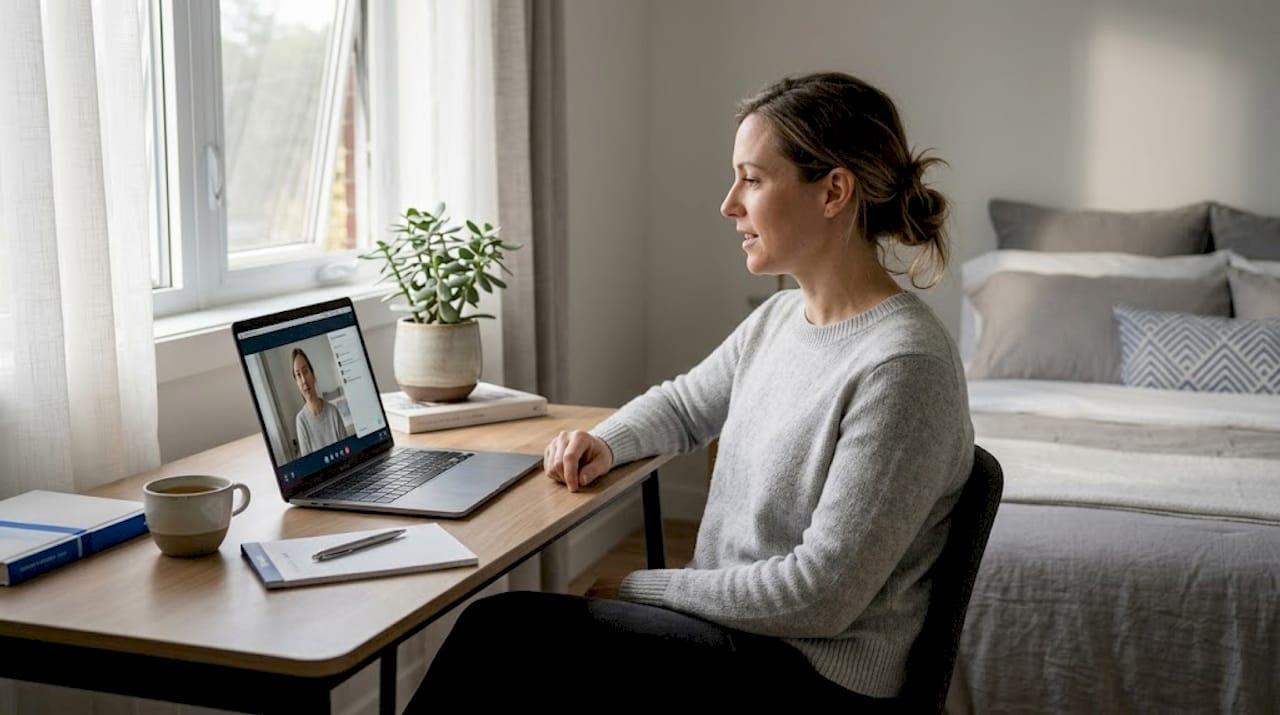
If you’ve ever wondered what is telehealth mental health and whether it actually works, you’re not alone. Millions of Americans are skipping the waiting room and seeing licensed therapists or psychiatrists from their couch, their car, or their lunch break. This isn’t a workaround. It’s a fully functional model of mental health care that behavioral health visits have embraced at rates consistently higher than pre-pandemic levels. This guide breaks down exactly how it works, what the evidence says, and whether it’s right for you.
Table of Contents
- Key takeaways
- What telehealth mental health is and how it works
- Benefits of telehealth for mental health care
- Limitations and things to consider
- How to get started with telehealth mental health care
- My perspective on where telehealth mental health is actually heading
- Get mental health care today with Helloklarity
- FAQ
Key takeaways
| Point | Details |
|---|---|
| Telehealth is real care | Telehealth mental health services deliver therapy, psychiatry, and medication management just like in-person visits do. |
| Outcomes are comparable | Peer-reviewed research shows telehealth matches in-person care for anxiety and depression treatment. |
| Barriers go down | Virtual care removes obstacles like transportation, stigma, and scheduling conflicts that keep people from getting help. |
| It isn’t for every situation | Crisis states, severe conditions, and lack of private space may require in-person care instead. |
| Hybrid models work best | Combining telehealth with occasional in-person visits often delivers the strongest results for complex needs. |
What telehealth mental health is and how it works
Telehealth mental health refers to the delivery of mental health services using technology instead of a physical office. That includes therapy, psychiatric evaluations, medication management, and follow-up care. The connection happens over video, phone, or secure messaging, depending on what the provider and patient agree on.
89% of psychologists used telehealth as of 2023, and many have adopted hybrid models that blend remote and in-person appointments. That number tells you something important: this isn’t a fringe experiment. It’s how mental health care is being practiced today.
Here’s what telehealth services for mental health typically look like in practice:
- Video sessions: Live, real-time appointments through a HIPAA-compliant platform. These mirror in-person sessions almost exactly, with the same structure, duration, and therapeutic techniques.
- Phone appointments: Used when video isn’t possible. Slightly less common for ongoing therapy but useful for check-ins or medication reviews.
- Asynchronous messaging: Some platforms allow patients to send messages to their provider between sessions, which supports continuity between scheduled visits.
- Psychiatric evaluations: A licensed psychiatrist or psychiatric nurse practitioner assesses your symptoms, diagnoses conditions, and can prescribe medication where clinically appropriate.
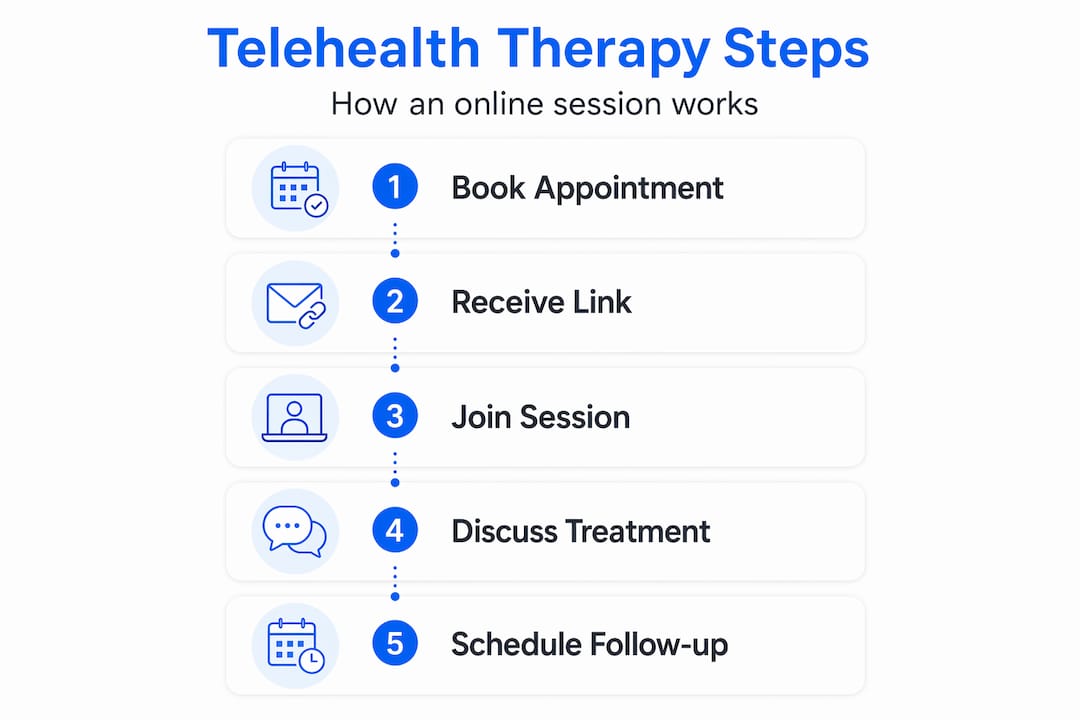
How does teletherapy work on a session level? You book an appointment, receive a link or call-in number, and join from wherever you are. The provider conducts the session the same way they would in an office. They take notes, track your progress, adjust treatment plans, and refer you for additional care if needed. The experience feels different from sitting in a waiting room, but the clinical substance is the same.
Telehealth now accounts for 58% of behavioral health visits in some systems, up from 47% in 2020. The most commonly treated conditions include general anxiety at 18%, depression at 9%, and PTSD at 6%. If you’re dealing with any of those, virtual mental health consultations are a proven path to care.
Benefits of telehealth for mental health care
The case for telehealth isn’t just about convenience. There’s real evidence behind why telehealth improves mental health outcomes, and it comes down to a few core advantages.
Peer-reviewed studies show telehealth achieves comparable treatment outcomes to in-person care for anxiety and depression. That alone answers one of the most common doubts people have: “Is this actually as good as seeing someone in person?” For most conditions and most patients, yes.
Beyond effectiveness, the benefits of telehealth in therapy come from what it removes from the equation:
- Transportation barriers: No commute, no parking, no gas money. For rural patients or people without reliable transportation, this is the difference between getting care and not getting care.
- Scheduling flexibility: Evening and weekend appointments are more common with telehealth providers. That matters for working adults who can’t leave during business hours.
- Childcare conflicts: You can see a therapist while your child naps. That might sound small, but it keeps parents in treatment who would otherwise drop out.
- Stigma reduction: Telehealth addresses stigma by allowing patients to receive care discreetly. Sitting in a therapist’s waiting room is visible. Joining a video call from your bedroom is not.
- Continuity of care: When you travel, move, or face life disruptions, you can keep seeing the same provider. Consistency in therapy is directly tied to better outcomes.
Telehealth for depression treatment specifically benefits from this continuity factor. Dropping out of depression treatment is extremely common, and it usually happens when the logistics become overwhelming. Removing those logistics keeps people in treatment longer.
Cost is another real consideration. Typical out-of-pocket rates for uninsured patients range from $125 to $250 per session, which is similar to in-person rates. However, insurance coverage for telehealth has grown significantly, and many platforms accept major insurers plus health savings accounts.

Pro Tip: Before your first session, treat your space the way you would any important meeting. Close the door, silence your phone, and use headphones if others are nearby. A private, quiet environment directly affects how comfortable you feel opening up, which affects how much progress you make.
Limitations and things to consider
Telehealth mental health services are not the right fit for every situation. Being honest about that is part of making a good decision.
Telehealth is not suitable for all conditions. First-episode psychosis, severe eating disorders, and active crisis states often require in-person assessment and intervention. A provider can’t perform a physical exam over video, and they can’t ensure your immediate safety from a remote location. If you are in crisis, emergency services and in-person care remain the appropriate first step.
There are other practical constraints worth knowing:
- Technology access: Telehealth requires a reliable internet connection and a device with a camera and microphone. Patients without consistent access face a real barrier.
- Private space: Lack of privacy negatively affects therapeutic engagement. If you share a small apartment or live with people you don’t want to know you’re in therapy, finding a private space requires planning.
- Regulatory limits on prescribing: DEA remote prescribing rules for certain controlled substances have been extended through December 2026. This means some medications can be prescribed via telehealth under specific conditions, but not all. Your provider will tell you what applies to your situation.
- High-acuity cases: Patients with complex psychiatric needs or recent hospitalization often benefit from more intensive in-person support, at least initially.
Online therapy for anxiety, mild to moderate depression, and ongoing mental health maintenance tends to work very well remotely. Severe or newly diagnosed complex conditions may need a different starting point.
Pro Tip: If your needs feel too complex for pure telehealth, ask your provider about a hybrid care model. Most therapists report that clients engage in a mix of online and in-person treatment, and this approach often builds stronger rapport while keeping the convenience of remote care.
How to get started with telehealth mental health care
Getting started is simpler than most people expect. Here’s what the process typically looks like:
- Identify what you need. Are you looking for talk therapy, a psychiatric evaluation, medication management, or all of the above? Knowing this helps you find the right type of provider.
- Check your insurance. Call your insurer or log into your member portal to see which telehealth providers are covered. Many major plans now cover telehealth mental health visits at the same rate as in-person care.
- Find a licensed provider. Use a telehealth platform to browse providers by specialty, availability, and state. Licensure requirements mean your provider must be licensed in the state where you are located during the session.
- Prepare your technology. Test your camera, microphone, and internet connection before the first appointment. Charge your device. Use a laptop or tablet when possible for the clearest video.
- Set up your space. Choose a private location, tell anyone in your home not to interrupt, and have water nearby. Treat it like a real appointment because it is one.
- Show up and be honest. The first session is usually an intake, where the provider gathers your history and goals. You don’t need to have everything figured out. Just show up.
What to expect from teletherapy after that first session is pretty straightforward. Your provider will outline a treatment plan, set a session frequency, and check in on your progress at regular intervals. If medication is part of your care, they will schedule follow-ups to monitor how it’s working and adjust as needed. Some platforms also connect you to online depression treatment resources that guide you through the process step by step.
My perspective on where telehealth mental health is actually heading
I’ve watched telehealth adoption grow from an emergency workaround during the pandemic into something that now defines how mental health care reaches people. What strikes me most isn’t the technology. It’s how much lower the activation energy for care has become.
Before telehealth, the path to a therapist included a referral, a weeks-long wait, time off work, transportation, and sitting in a waiting room that announced to anyone nearby that you were there for mental health reasons. Most people gave up somewhere along that path. Telehealth collapses most of those steps.
What I think gets underestimated is the prescribing side. The ability to manage medications remotely under evolving DEA guidelines has opened access to psychiatric care for people who would have waited months for an appointment. That matters more than almost anything else for conditions like anxiety and ADHD, where delayed treatment has real consequences.
My honest take: telehealth isn’t better or worse than in-person care in some abstract sense. It’s a tool, and like any tool, it works best when matched to the right situation. I’ve seen people thrive in fully remote treatment for years. I’ve also seen cases where the absence of physical presence made it harder to pick up on what wasn’t being said. The future isn’t one or the other. It’s providers who know when to use which.
The most important shift still ahead is making sure patients know they can ask for a hybrid approach without it feeling like an admission of failure. It isn’t. It’s smart care planning.
— Guorui
Get mental health care today with Helloklarity
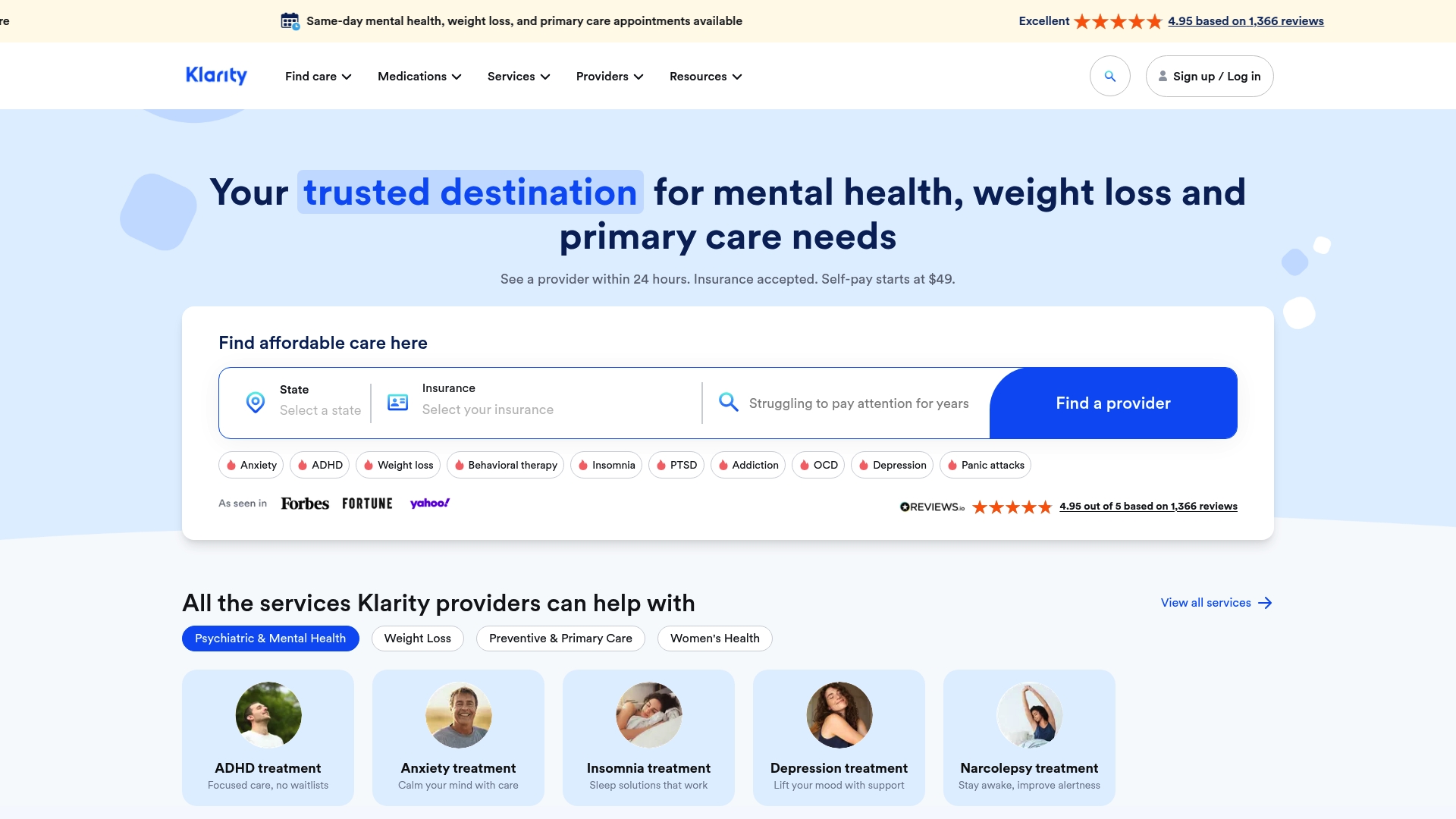
If you’re ready to move from reading about telehealth mental health to actually trying it, Helloklarity makes the first step easy. The platform connects you with over 1,000 licensed providers specializing in anxiety, depression, ADHD, and more, often with availability within 24 hours. You can browse telehealth services available online and see exactly what’s covered before you book anything.
Self-pay appointments start at $49, and Helloklarity accepts major insurance plans and health savings accounts. If you’re not sure which condition or provider type fits your situation, you can also browse treatable conditions to find where your needs align with available care. No long waitlists. No commute. Just licensed providers ready to help.
FAQ
What does telehealth mental health mean?
Telehealth mental health refers to receiving therapy, psychiatric evaluation, or medication management through video, phone, or secure messaging instead of visiting a provider in person. Sessions follow the same clinical structure as traditional appointments.
Is telehealth therapy as effective as in-person therapy?
Yes, for most conditions. Peer-reviewed research shows telehealth achieves comparable treatment outcomes to in-person care for anxiety and depression, making it a clinically sound option for the majority of patients.
Can a telehealth provider prescribe mental health medication?
Yes, in many cases. DEA regulations allow controlled substances prescribing via telehealth under specific conditions, with current rules extended through December 2026. Your provider will confirm what applies based on your diagnosis and location.
What do I need to start telehealth therapy?
You need a device with a camera and microphone, a reliable internet connection, and a private, quiet space. Most sessions run through a secure link your provider sends before the appointment.
When is telehealth not appropriate for mental health care?
Telehealth is not appropriate for active crisis states, first-episode psychosis, or severe eating disorders, where in-person assessment and immediate safety monitoring are required. If you are in crisis, contact emergency services or go to the nearest emergency room.
Recommended
- Mental Health Awareness Month 2026: Why More Americans Are Turning To Telehealth For Anxiety And Depression | Klarity Health, Inc
- What Telehealth Services Can I Get Online? Medical Guide
- Telehealth Depression Prescribing: What Psychiatrists Can Do | Klarity Health, Inc
- Telehealth Depression Prescribing: What Prescribers Can Do | Klarity Health, Inc
Get expert care from top-rated providers
Find the right provider for your needs — select your state to find expert care near you.
Related posts






— Monday to Friday, 7:00 AM to 4:00 PM PST
Join our mailing list for exclusive healthcare updates and tips.

— Monday to Friday, 7:00 AM to 4:00 PM PST



