 HSA & FSA accepted; best-value for top quality care
 Same-day mental health, weight loss, and primary care appointments available

 Accept major insurances and cash-payHSA & FSA accepted; best-value for top quality careSame-day mental health, weight loss, and primary care appointments availableAccept major insurances and cash-pay
Family Telehealth Coverage Benefits: A 2026 Guide
Written by Klarity Editorial Team
Published: Jul 18, 2026

Last updated: August 9, 2026
Family telehealth coverage is defined as an insurance or subscription plan that pays for video, phone, or asynchronous medical visits for every member of a household under a single benefit structure. The benefits of family telehealth coverage go well beyond convenience: they include measurable time savings, lower out-of-pocket costs, and access to specialists that many families could not otherwise reach. A 2026 study found that 96.7% of parents have used telehealth, with 71.3% citing cost-effectiveness and overcoming distance as the top reasons. That figure signals a clear shift in how American families manage health, not just a pandemic-era workaround.
Need care for your household this week? Klarity connects families with 2,000+ licensed providers for online anxiety treatment, online depression treatment, ADHD treatment online, online prescriptions, and more. Coverage varies by plan; verify your benefits before booking. Browse conditions →
1. What are the top time-saving benefits of family telehealth coverage?
Time is the resource families protect most fiercely, and telehealth delivers a measurable return. Virtual visits average 20 minutes compared to 121 minutes for in-person appointments, saving over 100 minutes per visit. For a family of four with quarterly checkups, that adds up to dozens of hours recovered each year.
The time savings show up in several concrete ways:
- No commute. Families skip the drive to the clinic, parking, and the walk to the waiting room.
- Same-day scheduling. Many telehealth platforms offer appointments within hours, not days or weeks.
- No childcare scramble. Parents do not need to arrange care for siblings while one child sees a doctor.
- Flexible hours. Evening and weekend slots mean parents do not lose work time for routine visits.
Pro Tip: Book your telehealth appointment during a lunch break or after school pickup. Most platforms confirm slots in under two minutes, and the visit itself rarely runs longer than 20 minutes.
The ripple effect on household logistics is real. When a sick child can be seen at 7:00 PM from the living room couch, parents avoid taking unpaid leave or burning vacation days. That flexibility alone makes telehealth a practical anchor for busy family health management.

2. How does telehealth coverage help families reduce healthcare costs?
Telehealth cuts costs at multiple points in the care cycle, not just at the point of service. Cash-pay virtual visits cost $40–$80 for low-acuity conditions, compared to $100–$250 for urgent care. That gap widens when you factor in the hidden costs most families overlook.
| Cost Category | In-Person Visit | Telehealth Visit |
|---|---|---|
| Visit fee (cash pay) | $100–$250 | $40–$80 |
| Transportation | $10–$30 | $0 |
| Parking | $5–$20 | $0 |
| Lost work time | $50–$150 | Minimal |
| Childcare (siblings) | $20–$60 | $0 |
The savings compound quickly for families who use telehealth repeatedly across the year. A household managing two children with recurring ear infections, a parent with a chronic condition, and routine prescription refills can redirect hundreds of dollars annually.
- Avoid the ER default. Families without easy clinic access often use emergency rooms for non-emergencies. Telehealth closes that gap at a fraction of the cost. Learn more about urgent care vs. ER costs to understand where telehealth fits.
- HSA and FSA eligible. Most telehealth visits qualify for health savings account spending, stretching pre-tax dollars further.
- Insurance routing matters. Verifying that virtual visits are routed correctly within your plan prevents surprise deductible triggers.
Pro Tip: Before your first visit, call your insurer and ask specifically whether telehealth visits are routed as “office visits” or “telehealth benefits.” The answer changes your copay and whether the visit counts toward your deductible.
Families can also explore affordable telehealth plans designed to cap costs across all household members, which often beats individual plan pricing significantly.
3. In what ways does family telehealth coverage increase healthcare accessibility?
Access is where telehealth changes the equation most dramatically for many households. Families in rural areas, those without reliable transportation, and those caring for immunocompromised members all face barriers that a traditional clinic cannot solve. Telehealth removes those barriers directly.
“Over 60% of parents plan to continue virtual pediatric visits post-pandemic specifically to avoid waiting-room illness exposure. For families with infants or immunocompromised members, that waiting room is not just inconvenient. It is a genuine health risk.”
Source: Kids and Teens PC
The accessibility gains extend across every family member:
- Children and teens. Pediatric telehealth services offer secure photo uploads, e-prescribing, and after-hours coverage that drive effective care for younger patients. Teens also benefit from privacy-protected visits for sensitive topics like mental health or reproductive health.
- Elderly relatives. Grandparents on a family plan can consult specialists without traveling, which matters enormously for those with mobility limitations.
- Rural households. Families far from specialist clinics can access dermatologists, psychiatrists, and endocrinologists through a screen. Telehealth’s role in rural family healthcare is one of its most significant and underreported advantages.
- Extended hours. Many platforms offer 24/7 access, so a fever at 2:00 AM does not require an ER visit.
A 2026 study confirmed that 68% of parents agreed telehealth enhances healthcare access. That consensus reflects lived experience, not just theoretical convenience.
4. How does telehealth improve consistency and quality of family health management?
Consistent care produces better outcomes than sporadic visits, and telehealth makes consistency easier to maintain. When appointments are frictionless, families actually keep them. Higher follow-up rates and care plan adherence are documented benefits of telehealth for both adults and children managing ongoing conditions.
The quality advantage comes from continuity, not just frequency. Booking consecutive visits with the same provider builds a virtual medical history that eliminates the need to repeat information at every appointment. That history enables more personalized treatment over time.
| Care Scenario | Fragmented Visits | Relationship-Based Telehealth |
|---|---|---|
| Chronic condition monitoring | Repeated intake, inconsistent advice | Ongoing symptom tracking, adjusted treatment |
| Mental health support | New provider each visit | Established rapport, better outcomes |
| Pediatric care | No baseline for comparison | Growth and development tracked over time |
| Medication management | Risk of duplication or gaps | Coordinated refills and dosage adjustments |
Families managing chronic conditions gain the most from this model. Telehealth supports chronic condition management through regular check-ins, remote symptom monitoring, and faster medication adjustments without requiring an office visit for every change. Mental health integration is another area where telehealth shines: a parent managing anxiety or a teenager dealing with depression can maintain weekly sessions without the stigma or logistics of an in-person clinic.
5. What practical tips help families maximize their telehealth coverage?
Getting the most from a family telehealth plan requires more than signing up. Coverage complexity catches many families off guard, and a few deliberate steps prevent most of the common problems.
- Verify provider licensure. Confirm that any provider you see is licensed in your state. Out-of-state providers may not be covered under your plan, and prescriptions from unlicensed providers can be rejected by pharmacies.
- Activate all dependents. Many plans require each family member to be individually activated. Check your plan’s dependent enrollment rules before the first visit, especially for children under 18.
- Understand benefit routing. Improper benefit routing is the leading cause of unexpected telehealth bills. Ask your insurer whether virtual visits apply to your telehealth benefit or your general medical benefit, since the copay difference can be significant.
- Use pediatric-specific features. Platforms with secure photo uploads and asynchronous messaging let parents document a rash or ear condition before the visit, which speeds diagnosis and reduces back-and-forth.
- Request the same provider. Most platforms allow you to select a preferred provider for follow-up visits. This single habit produces better outcomes than rotating through different clinicians.
- Check teen privacy rules. Adolescents in most states have the right to seek mental health or reproductive health care without parental notification. Confirm your platform’s policy so teens feel safe using the benefit.
- Use insurance correctly. Families navigating insurance for telehealth visits should review how to use insurance for telehealth to avoid billing errors that turn a $0 visit into an unexpected charge.
Pro Tip: Keep a shared family health document with each member’s current medications, allergies, and recent diagnoses. Paste it into the telehealth platform’s intake form before every visit. Providers see the full picture immediately, and visits run faster.
Key Takeaways
Family telehealth coverage delivers the greatest value when families use it consistently, verify their coverage details upfront, and build ongoing relationships with the same providers rather than treating it as a one-off convenience.
| Point | Details |
|---|---|
| Time savings are substantial | Virtual visits average 20 minutes vs. 121 minutes in person, saving over 100 minutes per visit. |
| Costs drop across multiple categories | Telehealth eliminates transportation, parking, and childcare costs on top of lower visit fees. |
| Access expands for all family members | Rural, elderly, immunocompromised, and pediatric patients all gain care options unavailable locally. |
| Consistency drives better outcomes | Booking with the same provider builds medical history and improves chronic condition management. |
| Coverage details determine real savings | Verifying benefit routing and dependent activation prevents surprise bills and maximizes plan value. |
My take on what families actually get from telehealth coverage
Most families I have worked with underestimate telehealth until they use it for the second or third time. The first visit feels like a novelty. By the fifth, it has replaced at least two urgent care trips and one specialist referral that would have taken six weeks to schedule.
The cost savings are real, but the bigger shift is behavioral. When care is easy to access, families stop waiting until a problem becomes serious. A parent checks in about a lingering cough after two days instead of two weeks. A teenager mentions anxiety during a routine visit instead of hiding it for months. That early intervention is where telehealth earns its keep, not in the dramatic moments but in the steady, incremental care that prevents those moments from happening.
The one caution I always raise: telehealth is not a replacement for emergency care, and families should be clear on that boundary. It also does not replace the annual physical where a provider examines your child in person. The families who use it best treat telehealth as the first call, not the only call.
Coverage clarity is the other non-negotiable. I have seen families pay full price for visits they thought were covered because no one verified the benefit routing. Spend 15 minutes on the phone with your insurer before your first visit. That conversation saves more money than any discount code.
— Guorui
Helloklarity makes family telehealth coverage work in practice
Klarity connects families with 2,000+ licensed providers across mental health, primary care, and weight management, with same-day appointments available and most patients seen within 24 hours. Self-pay visits start at $49, and the platform accepts major insurance and health savings accounts, which removes the coverage friction that frustrates so many families. Coverage varies by plan; verify your benefits before booking.
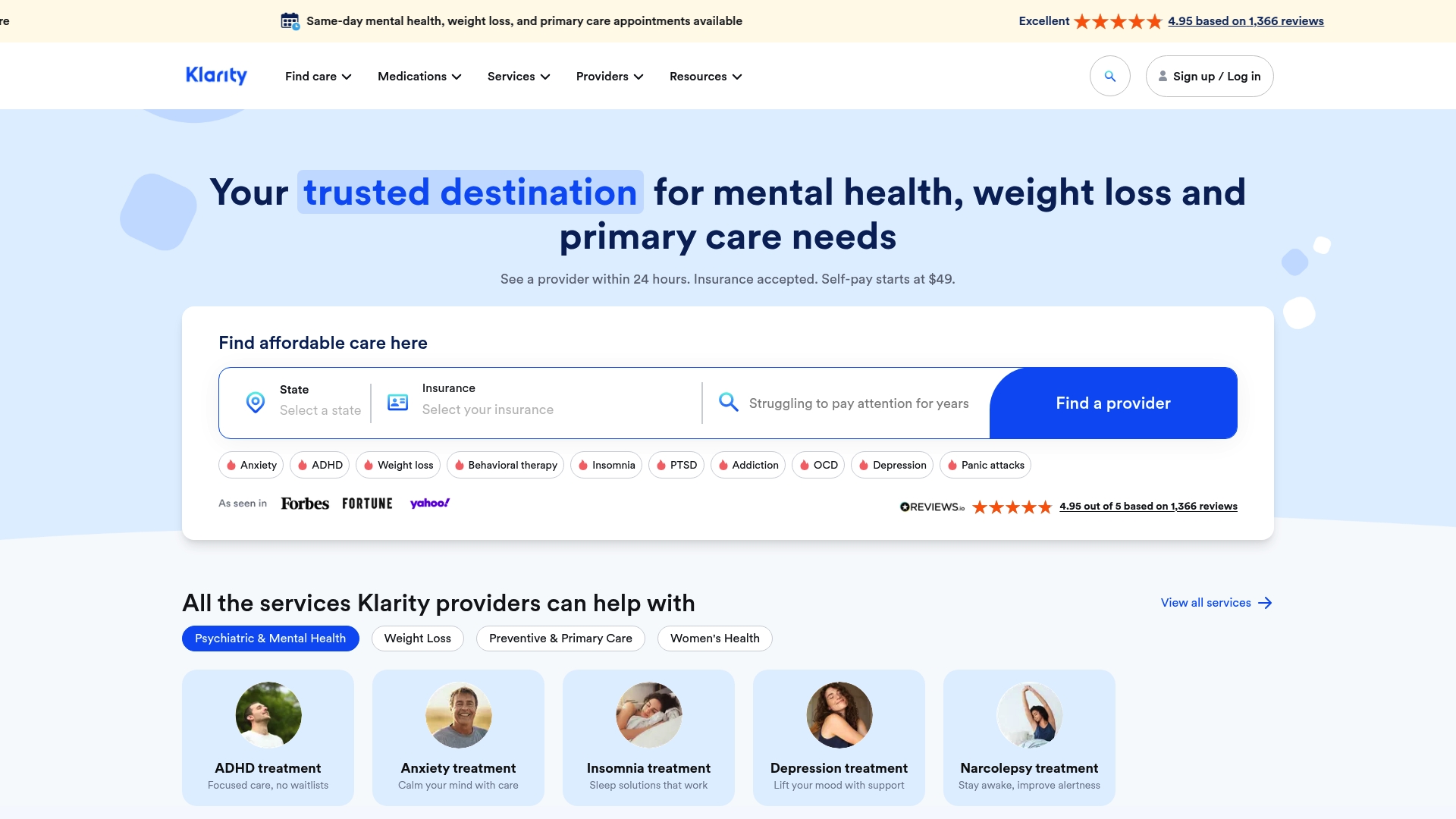
Whether your household needs pediatric care, chronic condition support, depression care, ADHD treatment, or other mental health services, Klarity’s network of 2,000+ licensed providers covers the conditions that matter most to families. Browse all conditions, request an online doctor prescription when clinically appropriate, and find a licensed provider in your state without a referral or a long waiting list.
Next step: See conditions Klarity treats →
Related care: Online anxiety treatment · Online depression treatment · ADHD treatment online · Online prescriptions · Weight loss treatment · All conditions
FAQ
What is family telehealth coverage?
Family telehealth coverage is a health plan benefit that pays for virtual medical visits for all household members under one policy. It typically covers video, phone, and asynchronous consultations with licensed providers.
How much money can a family save with telehealth?
Cash-pay telehealth visits cost $40–$80 compared to $100–$250 for urgent care, and families also avoid transportation, parking, and childcare costs. Savings compound significantly for households with frequent care needs.
Is telehealth safe for children and teens?
Telehealth is safe and effective for pediatric care, with platforms offering secure photo uploads, e-prescribing, and after-hours access. Most states also protect teens’ privacy for sensitive health topics like mental health visits.
Does telehealth work for chronic condition management?
Telehealth improves chronic condition management by making follow-up visits easier to keep, which increases care plan adherence and allows faster medication adjustments without requiring an in-person appointment each time.
Why do some telehealth visits cost more than expected?
Unexpected costs usually result from improper benefit routing, where a virtual visit is processed under the wrong insurance benefit category. Calling your insurer before your first visit to confirm routing prevents most surprise charges.
Recommended
- Does Insurance Cover Telehealth? What Every Major Plan Actually Covers In 2026 | Klarity Health, Inc
- Affordable Telehealth Plans For Families In 2026
- Does Blue Cross Blue Shield Cover Telehealth? What Patients Need To Know In 2026 | Klarity Health, Inc
- How To Use Insurance For Telehealth Family Visits
Get expert care from top-rated providers
Find the right provider for your needs — select your state to find expert care near you.
Related posts






— Monday to Friday, 7:00 AM to 4:00 PM PST
Join our mailing list for exclusive healthcare updates and tips.

— Monday to Friday, 7:00 AM to 4:00 PM PST



