 HSA & FSA accepted; best-value for top quality care
 Same-day mental health, weight loss, and primary care appointments available

 Accept major insurances and cash-payHSA & FSA accepted; best-value for top quality careSame-day mental health, weight loss, and primary care appointments availableAccept major insurances and cash-pay
Types of Primary Care Telehealth Services in 2026
Written by Klarity Editorial Team
Published: May 29, 2026

Not all virtual care is the same, and knowing the types of primary care telehealth services available can mean the difference between getting effective care and wasting time on the wrong platform. Primary care telehealth, broadly defined as the delivery of general medical services through digital technology, now spans three distinct modalities: synchronous video visits, asynchronous communication, and remote patient monitoring. Each works differently, serves different needs, and comes with different technology requirements. This guide breaks all three down so you can make a confident, informed decision about your healthcare.
Table of Contents
- Key takeaways
- How to evaluate types of primary care telehealth services
- 1. Synchronous telehealth: live video and audio visits
- 2. Asynchronous telehealth: store-and-forward services
- 3. Remote patient monitoring for chronic disease management
- 4. Comparing all three types to find your best fit
- My take on navigating this evolving space
- How Helloklarity connects you with the right primary care telehealth care
- FAQ
Key takeaways
| Point | Details |
|---|---|
| Three core service types | Virtual primary care uses synchronous visits, asynchronous messaging, and remote patient monitoring as its main delivery models. |
| Synchronous is closest to in-person care | Live video appointments let providers observe you in real time, making them ideal for acute illness and chronic care follow-ups. |
| Asynchronous works on your schedule | Store-and-forward services let you submit symptoms, photos, or forms at any time without a scheduled call. |
| RPM supports chronic disease management | Connected devices track biometrics like blood pressure and glucose and send data directly to your care team. |
| Insurance and state rules vary | Coverage and licensing laws differ by state and insurer, so verify your plan before booking any telehealth appointment. |
How to evaluate types of primary care telehealth services
Before choosing a provider, it pays to understand what separates a good telehealth setup from a frustrating one. The telehealth legal environment is still evolving fast, which means patients need to do a bit of homework upfront.
Here are the key criteria worth checking before committing to any platform:
- Accessibility and technology requirements. Does the platform require a high-speed internet connection, or does it support audio-only visits? Audio-only telehealth remains permitted for behavioral health under CMS and improves access for patients without reliable broadband.
- Range of services offered. A strong platform covers acute care, chronic disease management, and preventive care. Verify what conditions the provider can treat before you sign up.
- Insurance coverage and cost. Licensure, payment parity, and coverage vary by state. Some plans cover telehealth at the same rate as in-person care; others don’t. Check out this breakdown of telehealth insurance coverage before your first visit.
- Provider qualifications and licensing. Confirm that your provider holds an active license in your state. Telehealth intersects with prescribing authority and HIPAA compliance in ways that differ across state lines.
- Technology security. Any legitimate primary care telehealth platform uses HIPAA-compliant video tools. Never use a general-purpose video app for medical visits.
Pro Tip: Before your first appointment, call your insurance company directly and ask whether telehealth visits with your chosen provider are covered under your specific plan and benefit tier.
1. Synchronous telehealth: live video and audio visits
Synchronous telehealth is what most people picture when they think about seeing a doctor online. It involves a real-time audio or video session between you and a licensed provider through a HIPAA-compliant platform. Think of it as a face-to-face appointment, just without the waiting room.
Providers can observe nonverbal cues and conduct basic visual assessments, which makes synchronous visits the closest digital equivalent to an in-person appointment. That matters more than it sounds. A provider who can see you is more likely to catch subtle signs like labored breathing or visible discomfort that a text message would never convey.
Common uses for synchronous visits include:
- Acute illness evaluation (sore throat, ear pain, rashes, UTIs)
- Mental health screenings and therapy sessions
- Chronic disease follow-ups for conditions like hypertension or diabetes
- Annual wellness and preventive care visits
- Prescription renewals and medication adjustments
Virtual primary care services for adults typically provide same-day or next-day access at costs comparable to in-person visits, and significantly cheaper than urgent care. That makes them a practical first stop for most routine and acute concerns.
You will need a smartphone, tablet, or computer with a working camera and microphone, plus a reasonably stable internet connection. If broadband is not available, some platforms support phone-only visits for certain visit types.
The main drawback is scheduling. Unlike asynchronous services, synchronous visits require both you and your provider to be available at the same time. If your schedule is unpredictable, that can add friction.
Pro Tip: Test your camera and microphone at least five minutes before a live telehealth visit. A technical hiccup at the start of your appointment eats into your consultation time.
2. Asynchronous telehealth: store-and-forward services
Asynchronous telehealth, often called store-and-forward, removes the need for real-time interaction entirely. You submit your health information, whether that is a symptom description, a photo of a skin concern, or a completed questionnaire, and a provider reviews it on their own schedule, typically within 24 to 72 hours.
Patient-submitted photos and questionnaires are reviewed by clinicians without live interaction, which is a model that works particularly well in dermatology. In primary care, it shows up most often in:
- Prescription refill requests for stable, ongoing conditions
- Chronic condition check-ins that do not require live assessment
- Lab result reviews and follow-up messages
- Symptom triage before a live visit is scheduled
- Mental health intake questionnaires
The biggest advantage here is flexibility. You are not tied to anyone’s calendar. Submit your information at midnight if that works for you. That convenience is especially valuable for people managing demanding schedules or those in different time zones from their provider.
The tradeoff is pace and depth. If your situation is urgent, waiting a day or more for a response is not acceptable. And because there is no live interaction, the provider cannot ask follow-up questions in real time. Asynchronous services work best as a complement to live care, not a full replacement for it.
Privacy is another consideration worth taking seriously. Any platform you use for submitting health data must comply with HIPAA. Always verify before uploading any personal health information.
3. Remote patient monitoring for chronic disease management
Remote patient monitoring, or RPM, takes the concept of virtual care beyond appointments entirely. Instead of visiting a provider, you use FDA-cleared devices at home that automatically collect and transmit biometric data to your care team on an ongoing basis.
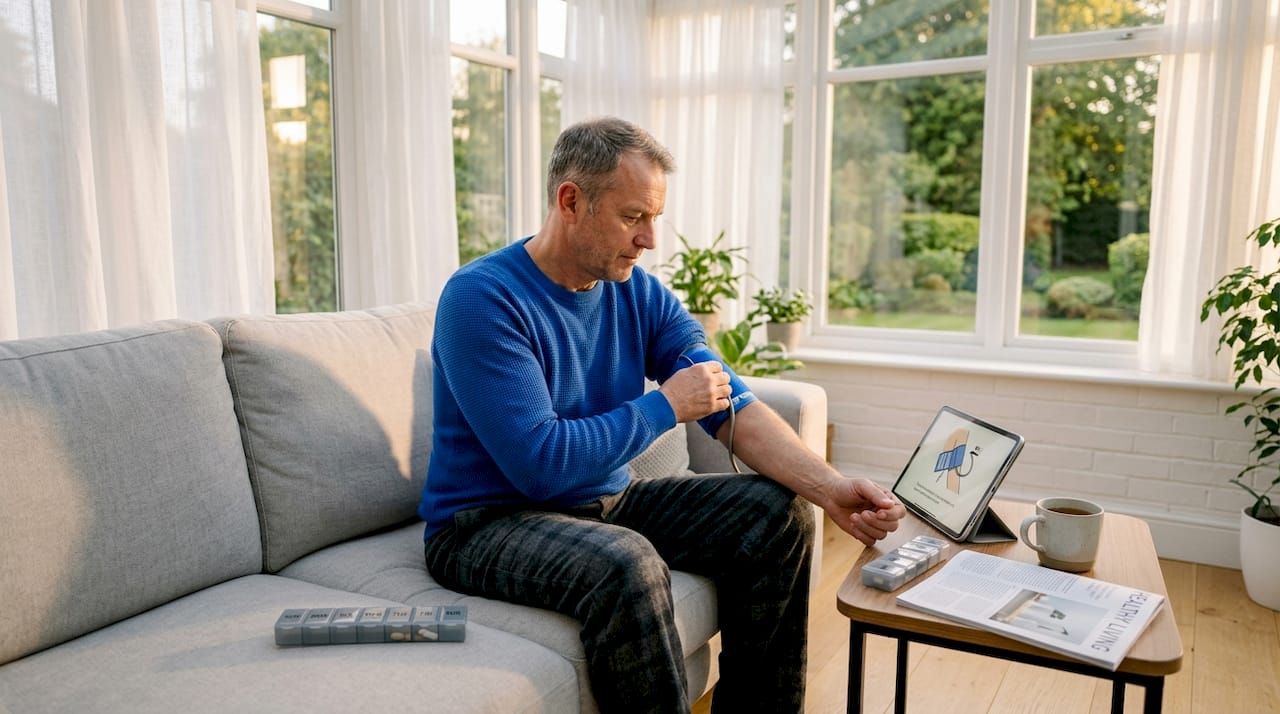
RPM uses FDA-cleared devices to track physiological data continuously, and clinicians review that data to manage chronic conditions proactively. The technology is no longer reserved for hospital systems. It is increasingly standard in primary care practices managing high-risk patient populations.
Common types of biometric data collected through RPM:
| Device | Data Collected | Common Conditions Managed |
|---|---|---|
| Blood pressure cuff | Systolic/diastolic readings | Hypertension, heart disease |
| Continuous glucose monitor | Blood sugar levels | Type 1 and Type 2 diabetes |
| Pulse oximeter | Oxygen saturation, heart rate | COPD, asthma, post-COVID recovery |
| Smart scale | Weight trends | Heart failure, obesity management |
| Wearable ECG patch | Heart rhythm | Arrhythmia, atrial fibrillation |
The practical benefit is early detection. When a patient’s blood pressure spikes or blood sugar trends upward between appointments, the care team sees it before the patient is even symptomatic. That kind of proactive oversight is genuinely difficult to replicate in a traditional quarterly check-in model.
RPM does come with real challenges. Device costs can be a barrier, though many are covered under Medicare and select commercial plans. Billing for RPM requires specific documentation and patient consent, which varies by payer. And the value of RPM depends heavily on patient compliance. A blood pressure monitor that sits in a drawer sends no data at all.
4. Comparing all three types to find your best fit
Understanding the difference between these three models is one thing. Knowing which one suits your specific situation is another. Here is a direct comparison:
| Service Type | Best For | Scheduling Required | Real-Time Interaction | Insurance Coverage |
|---|---|---|---|---|
| Synchronous video | Acute illness, mental health, chronic follow-ups | Yes | Yes | Widely covered |
| Asynchronous | Prescription refills, stable chronic conditions | No | No | Varies by platform |
| Remote patient monitoring | Ongoing chronic disease management | No (automated) | No (reviewed later) | Often covered under Medicare |
About 83% of telehealth visits do not require an in-person follow-up, which speaks to the effectiveness of well-matched virtual care. But that still leaves cases where you genuinely need to be seen in person. High fevers, severe abdominal pain, possible fractures, and anything requiring a physical exam or lab draw require an in-person visit.
Medicare policy currently permits home-based telehealth services with distant-site providers nationwide through at least 2027, with permanent flexibilities for behavioral health. That is useful to know if you are on Medicare and concerned about coverage continuity.
Pro Tip: If you are deciding between providers, check whether they accept your specific insurance plan and whether they have experience treating your condition. A provider who regularly treats your condition is more efficient than one who is learning as they go.
My take on navigating this evolving space
I have spent a lot of time studying how patients actually use telehealth versus how the industry talks about it, and the gap is striking. Most articles frame virtual primary care as a simple convenience upgrade. In my experience, the reality is more nuanced.
The biggest mistake I see patients make is choosing a telehealth service based on speed or price alone, without considering whether the delivery model actually fits their health needs. Someone managing Type 2 diabetes who signs up for an asynchronous-only service is going to hit a wall the moment their glucose readings need real clinical interpretation.
What I find genuinely underrated is RPM. Patients often dismiss it as “something for really sick people,” but proactive biometric tracking is one of the few healthcare tools that catches problems before you feel them. That has real value for anyone managing a chronic condition, not just those who are already struggling.
The telehealth space is also still catching up on integration. Your synchronous provider may not see your RPM data unless they are on the same platform. Ask about data sharing before you commit to a multi-service setup.
My advice: match the service type to the health problem, not the other way around. And always confirm that your provider is licensed in your state before your first visit, because prescribing authority varies significantly and it affects what care you can actually receive.
— Guorui
How Helloklarity connects you with the right primary care telehealth care
If reading through these service types made you realize you are ready to actually use one, Helloklarity makes that next step straightforward. Klarity Health connects patients with over 1,000 licensed providers across mental health, weight loss, and primary care, with same-day availability and appointments typically available within 24 hours.
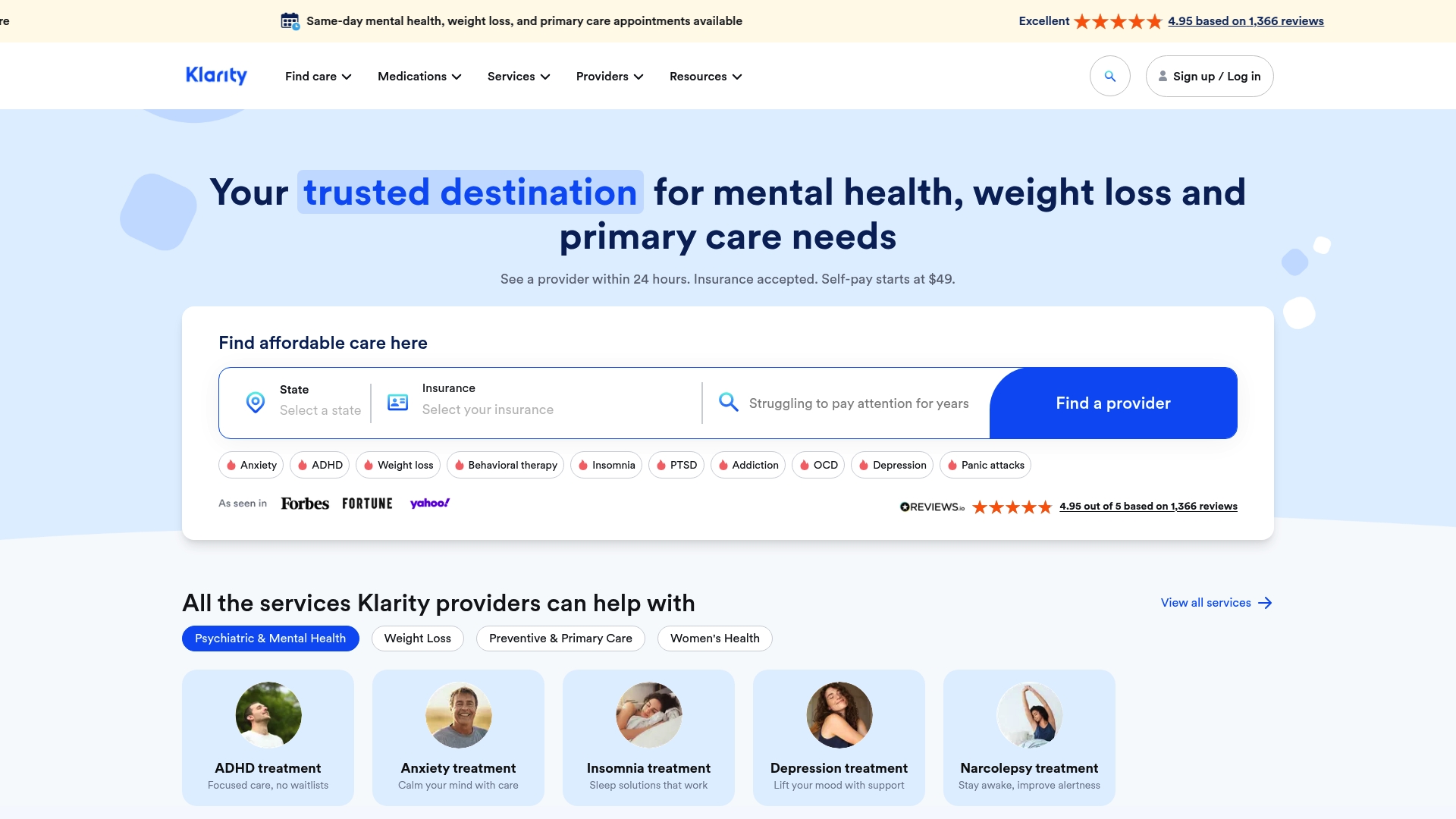
Whether you need a live video consultation for an acute issue, an ongoing prescription review, or care for a chronic condition, Helloklarity’s platform is built around getting you matched with the right licensed provider fast. Self-pay options start at $49, and major insurance plans and health savings accounts are accepted. You can explore available telehealth services to see what conditions are covered and find a provider who fits your specific needs. If you manage a chronic condition and want to understand your financial options, check out Klarity’s chronic care commitment cards for long-term savings.
FAQ
What are the three main types of primary care telehealth?
The three main types are synchronous telehealth (live video or audio visits), asynchronous telehealth (store-and-forward messaging and photo submissions), and remote patient monitoring (biometric data collected via connected devices). Each serves different clinical needs and patient situations.
Is telehealth effective for routine checkups?
Yes. Virtual primary care visits cover preventive care, chronic follow-ups, and routine assessments at costs comparable to in-person care. Studies show approximately 83% of telehealth visits do not require any in-person follow-up.
Does insurance cover telehealth primary care services?
Coverage depends on your plan and state. Medicare permits nationwide telehealth through at least 2027, but commercial insurance coverage and payment parity laws vary significantly by state and insurer.
When is in-person care still necessary?
Telehealth cannot replace physical exams for conditions like severe pain, high fevers, possible fractures, or anything requiring lab work or hands-on assessment. Virtual care does not substitute for in-person evaluation in urgent or complex clinical situations.
How do I choose the right telehealth service type?
Match the service to your health need. Use synchronous visits for acute illness or mental health care, asynchronous tools for stable prescription management, and remote patient monitoring if you have a chronic condition requiring ongoing biometric tracking.
Recommended
- Does Insurance Cover Telehealth? What Every Major Plan Actually Covers In 2026 | Klarity Health, Inc
- What Telehealth Services Can I Get Online? Medical Guide
- Does Blue Cross Blue Shield Cover Telehealth? What Patients Need To Know In 2026 | Klarity Health, Inc
- Mental Health Awareness Month 2026: Why More Americans Are Turning To Telehealth For Anxiety And Depression | Klarity Health, Inc
Get expert care from top-rated providers
Find the right provider for your needs — select your state to find expert care near you.
Related posts






— Monday to Friday, 7:00 AM to 4:00 PM PST
Join our mailing list for exclusive healthcare updates and tips.

— Monday to Friday, 7:00 AM to 4:00 PM PST



