 HSA & FSA accepted; best-value for top quality care
 Same-day mental health, weight loss, and primary care appointments available

 Accept major insurances and cash-payHSA & FSA accepted; best-value for top quality careSame-day mental health, weight loss, and primary care appointments availableAccept major insurances and cash-pay
Pediatric Telehealth Services: A 2026 Parent's Guide
Written by Klarity Editorial Team
Published: Jun 12, 2026

Pediatric telehealth services are virtual healthcare visits that connect licensed clinicians with children and their parents or guardians through video, phone, or secure digital tools, without requiring a trip to a clinic. These services cover children from birth through age 17 and handle everything from sick visits and follow-ups to behavioral health and chronic condition management. As a parent, you are not just a bystander in these visits. You are an active clinical partner, providing observations your child’s provider relies on to make accurate decisions. This guide gives you a complete pediatric telehealth services overview so you can use virtual care with confidence.

1. What types of pediatric telehealth services are available?
Pediatric telehealth covers a wider range of services than most parents expect. It is not limited to urgent care calls at midnight. Depending on the platform and clinician, your child can receive:
- Well-child visits and routine follow-ups for ongoing health monitoring
- Sick visits for non-emergency concerns like ear pain, rashes, mild respiratory symptoms, and pink eye
- Behavioral and mental health services, including ADHD medication follow-ups, anxiety check-ins, and therapy sessions
- Chronic disease management for conditions like asthma or Type 1 diabetes, where regular monitoring matters more than physical exams
- Specialty consultations, including dermatology using asynchronous store-and-forward tools where photos are reviewed without a live video call
- Lactation support for new parents navigating feeding challenges
- Developmental screenings and referral coordination
For parents managing a child with ADHD, for example, telehealth ADHD follow-ups allow medication adjustments and behavioral check-ins without pulling a child out of school. Typical visits last 5 to 15 minutes for simpler concerns, while behavioral health appointments often run longer. That efficiency matters when your child is already anxious about seeing a doctor.
2. How pediatric telehealth works: the visit from start to finish
The process is more structured than a video call with a family member, but far less complicated than an in-person appointment. Here is what to expect:
- Schedule and complete intake forms. Most platforms let you book online or through an app. You will fill out pre-visit forms covering symptoms, medications, and insurance or payment details before the appointment begins.
- Verify identity and provide consent. A parent or legal guardian must provide consent for the visit and for any additional adults present on the call. This is a required step under pediatric telehealth policy standards.
- Join the visit from a device with audio and video. A smartphone, tablet, or laptop with a stable internet connection is all you need. Some programs, like those modeled on same-day telemedicine access available 8am to midnight, require no referral at all.
- The clinician conducts a visual and verbal assessment. They observe your child’s breathing effort, skin appearance, responsiveness, and comfort level through the camera. Your descriptions of symptoms fill in what hands-on exams would otherwise provide.
- Receive a diagnosis, treatment plan, or prescription. Many visits end with a care plan, a prescription sent to your pharmacy, or a referral if in-person evaluation is needed.
- Handle tech issues with a backup plan. If internet fails mid-visit, most systems continue by phone or reschedule without losing your place in the queue.
Pro Tip: Position your child near your home router before the visit starts. A wired connection or strong Wi-Fi signal prevents the most common reason visits get interrupted.
3. Benefits of pediatric telehealth backed by evidence
The convenience argument for pediatric health virtual care is obvious: no waiting rooms, no travel, no exposing a sick child to other sick children. But the clinical case is equally strong. A study of 694 U.S. clinics found that telemedicine antibiotic prescribing for pediatric respiratory infections was 34.6% compared to 46.8% for in-person visits, with similar guideline adherence. That means virtual care actually reduces unnecessary antibiotic use, which is a meaningful public health outcome.
Mental health benefits are just as real. Children often communicate more openly about anxiety or behavioral struggles from the comfort of their own bedroom than in a clinical exam room. For parents managing a child’s ongoing mental health needs, that comfort translates directly into better quality information for the provider.
| Benefit | Details |
|---|---|
| Reduced travel burden | No commute, no parking, no time off work for routine follow-ups |
| Faster access | Same-day appointments available on many platforms |
| Lower antibiotic overuse | Telemedicine prescribing rates are measurably lower than in-person rates |
| Better behavioral engagement | Children at home often communicate more openly with providers |
| Privacy and security | Platforms must meet HIPAA privacy requirements and obtain informed consent |
“Telehealth is a care delivery mode, not a separate service. Its appropriateness depends on whether enough clinical information can be gathered from history and visual observation alone.” — National Telehealth Authority
4. When telehealth is not the right choice for your child
Telehealth access for kids is genuinely useful, but it has hard limits. Telehealth is not appropriate for emergencies or situations requiring physical examination, including severe breathing difficulty, suspected broken bones, deep lacerations, seizures, or high fever in infants under three months. These situations require an emergency room or urgent care clinic, not a video call.
Age is also a factor. Research suggests that younger children under age 2 may show higher subsequent emergency department use after telehealth visits, which points to the need for careful judgment when the patient is an infant or toddler. When in doubt, call your pediatrician’s nurse line before booking a virtual visit.
Situations that clearly warrant in-person care include:
- Infants under 3 months with any fever
- Suspected ear infections in children under 2 (visual exam is required)
- Rashes that need tactile assessment
- Any symptom that has worsened rapidly over hours
- Injuries involving the head, neck, or spine
A clinician may also redirect you to in-person care mid-visit if visual assessment proves inadequate or if an exam is needed to confirm a diagnosis. That is not a failure of the system. It is the system working correctly.
Pro Tip: When you are unsure whether your child’s symptoms qualify for a telehealth visit, call the provider’s office first. Most practices have a triage nurse who can guide you to the right level of care in under five minutes.
5. How to prepare your child for a successful virtual visit
Preparation is the single biggest factor in visit quality. A well-prepared parent gives the clinician more to work with than a rushed, disorganized call ever could. Follow these steps before every pediatric telemedicine appointment:
- Choose a quiet, well-lit room close to your router. Natural light or a lamp facing your child works better than overhead lighting, which creates shadows that obscure skin color and breathing movement.
- Minimize distractions. Turn off the TV, put pets in another room, and let older siblings know the visit is happening. A calm environment helps younger children stay cooperative.
- Have health information ready. Bring your child’s current medication list, a timeline of symptoms, and your pharmacy’s name and phone number. Providers need this information quickly.
- Position the camera for clinical observation. Clinicians rely on camera positioning to observe breathing effort, rashes, and responsiveness. Practice showing the relevant area before the visit starts.
- Measure and record observable data. Take your child’s temperature, note their breathing rate, and write down when symptoms started and how they have changed. Numbers give providers concrete data to work with.
- Prepare your child emotionally. Tell them they will talk to a doctor on the screen, that it will be quick, and that they do not need to be scared. Children who know what to expect cooperate far better than those who are surprised.
- Have a backup plan ready. Know your phone number in case the video drops and the provider needs to continue by phone. Keep the device charged and the app open before the scheduled time.
For a broader look at how primary care telehealth services work across different visit types, reviewing the full range of available modalities helps you understand what your child’s provider can and cannot do remotely.
6. Insurance, billing, and what telehealth visits actually cost
Coverage for pediatric telehealth varies more than most parents realize. Billing and reimbursement can be complex, with coverage depending on payer, service type, and state policies. Before booking, confirm three things with your insurer: whether the specific service type is covered via telehealth, whether the provider is in-network, and whether your state requires parity between telehealth and in-person reimbursement.
Many platforms also offer self-pay options for families without coverage or with high deductibles. Helloklarity, for example, offers self-pay visits starting at $49 and accepts major insurance plans and health savings accounts. For families who have struggled to access timely pediatric care through traditional channels, that pricing structure removes a significant barrier.
Telehealth billing codes changed significantly under 2025 CMS rules, so even if your child used a platform last year, verify current coverage before assuming costs are the same. A five-minute call to your insurance company before the visit prevents billing surprises afterward.
Key takeaways
Pediatric telehealth delivers clinically sound, convenient care for non-emergency conditions, but its effectiveness depends entirely on appropriate use and thorough parental preparation.
| Point | Details |
|---|---|
| Telehealth scope is broad | Services range from sick visits and ADHD follow-ups to chronic disease management and lactation support. |
| Evidence supports care quality | Telemedicine reduces unnecessary antibiotic prescribing compared to in-person visits for respiratory infections. |
| Preparation drives visit quality | Camera positioning, measured vitals, and a symptom timeline give clinicians the data they need. |
| Age and symptom severity matter | Infants under 3 months and children with severe or worsening symptoms need in-person evaluation. |
| Verify coverage before booking | Telehealth billing varies by payer, state, and service type. Confirm costs ahead of the appointment. |
What I have learned from watching pediatric telehealth mature
I have followed the evolution of pediatric telemedicine closely, and the most important thing I can tell you is this: telehealth is a complement to pediatric care, not a replacement for it. The parents who get the most out of it are the ones who treat it as a tool with a specific job, not a universal solution.
What genuinely impresses me is the evidence on antibiotic stewardship. The fact that virtual visits produce lower prescribing rates than in-person visits challenges the assumption that convenience comes at the cost of quality. Providers working through a screen are, in some cases, making more conservative and guideline-consistent decisions than those in exam rooms.
Where I think parents need to be more careful is with very young children. The research on infants and toddlers showing higher subsequent ED use after telehealth visits is a signal worth taking seriously. A two-year-old with a fever is not the same clinical situation as a nine-year-old with a rash. The technology is the same, but the clinical risk is not.
My honest recommendation: use telehealth freely for school-age children with clear, non-severe symptoms. Be more cautious with infants and toddlers. And always trust your instinct as a parent. If something feels wrong, it probably warrants more than a video call.
— Guorui
Access telehealth services for your family through Helloklarity
Helloklarity connects families with licensed providers across a network of over 1,000 clinicians, with same-day appointments available and no referral required. Whether your child needs a behavioral health follow-up, a sick visit for a mild respiratory illness, or ongoing support for a chronic condition, Helloklarity makes booking fast and straightforward.
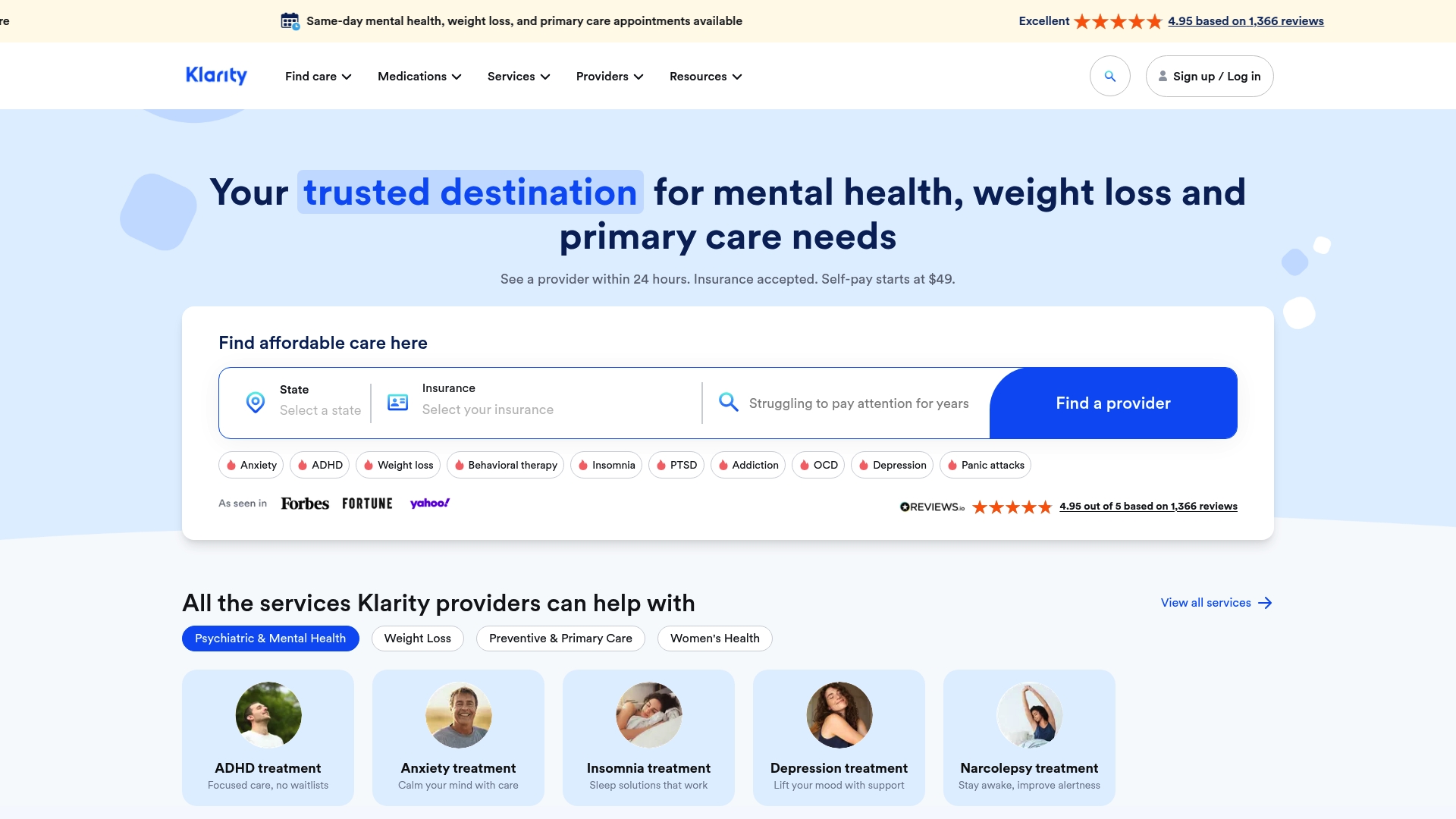
Self-pay options start at $49, and Helloklarity accepts major insurance plans and health savings accounts, so cost does not have to be a barrier. You can explore the full range of available telehealth services and find a licensed provider in your state today. If you want to see which conditions are treatable through the platform, browse by condition to confirm your child’s needs are covered before you book.
FAQ
What is pediatric telehealth?
Pediatric telehealth is virtual healthcare delivery for children from birth through age 17, using video, phone, or asynchronous digital tools to connect clinicians with patients and their parents or guardians without an in-person visit.
Is telehealth safe for children?
Telehealth is safe and clinically effective for non-emergency pediatric conditions. Research shows telemedicine produces lower unnecessary antibiotic prescribing rates than in-person visits for respiratory infections, with comparable guideline adherence.
Can a telehealth provider prescribe medication for my child?
Yes. Many pediatric telehealth providers can diagnose, create a treatment plan, and send prescriptions directly to your pharmacy during the visit, depending on the condition and applicable state laws.
When should I take my child to the ER instead of using telehealth?
Take your child to the emergency room for severe breathing difficulty, suspected broken bones, seizures, deep wounds, or any fever in an infant under three months. These conditions require physical examination and cannot be safely managed through a virtual visit.
How do I find a pediatric telehealth provider?
You can search for licensed providers through platforms like Helloklarity, which lets you find providers by state and book same-day appointments without a referral. Always verify that the provider accepts your insurance before booking.
Recommended
- What Telehealth Services Can I Get Online? Medical Guide
- Telehealth ADHD Prescribing: What PMHNPs Can Do In Texas | Klarity Health, Inc
- Affordable Telehealth Plans For Families In 2026
- Telehealth’s Role In Rural Family Healthcare: 2026 Guide
Get expert care from top-rated providers
Find the right provider for your needs — select your state to find expert care near you.
Related posts






— Monday to Friday, 7:00 AM to 4:00 PM PST
Join our mailing list for exclusive healthcare updates and tips.

— Monday to Friday, 7:00 AM to 4:00 PM PST



