 HSA & FSA accepted; best-value for top quality care
 Same-day mental health, weight loss, and primary care appointments available

 Accept major insurances and cash-payHSA & FSA accepted; best-value for top quality careSame-day mental health, weight loss, and primary care appointments availableAccept major insurances and cash-pay
How Telehealth Cuts Your Out-of-Pocket Healthcare Costs
Written by Klarity Editorial Team
Published: Jun 14, 2026

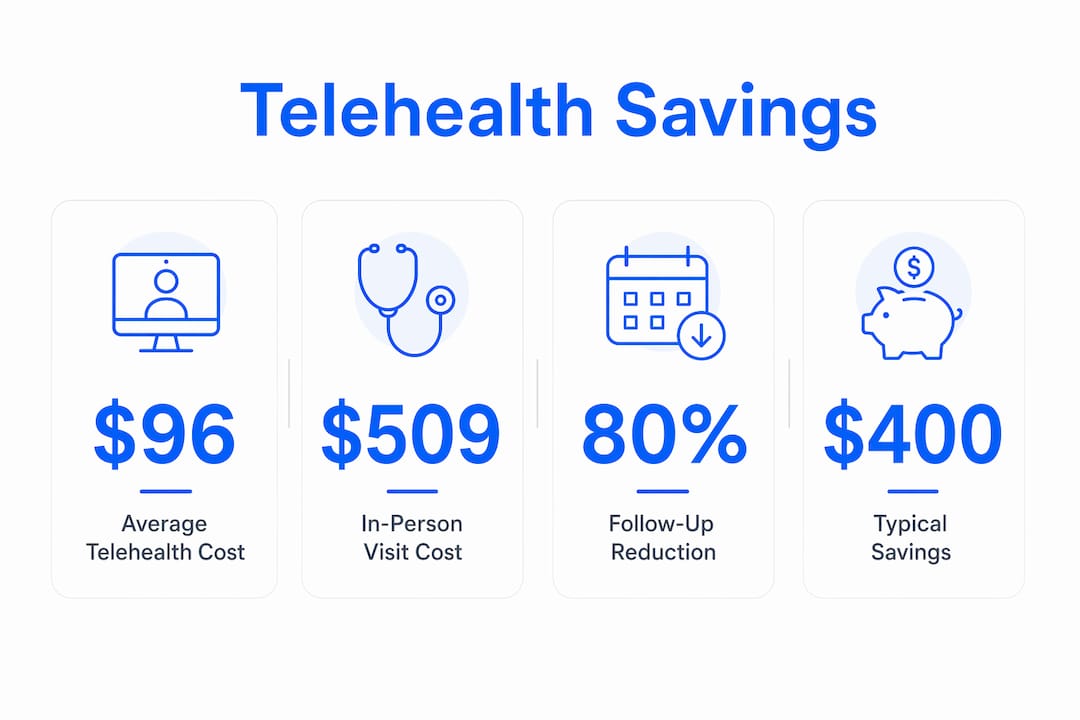
Telehealth is one of the most direct ways to reduce out-of-pocket healthcare costs, with telemedicine visits averaging $96 compared to $509 for in-person office visits, a difference of $400 per episode. That gap is not just about the visit fee. Telehealth also eliminates transportation costs, lost wages, and childcare expenses that routinely exceed the copay itself. If you are managing anxiety, ADHD, depression, or a chronic condition, the savings compound quickly. This article walks you through insurance navigation, service selection, indirect cost savings, and practical steps to lower your medical expenses through telehealth in 2026.
How to reduce out-of-pocket healthcare costs with telehealth insurance
Your insurance plan is the single biggest variable in what you actually pay for a telehealth visit. Coverage varies widely depending on your insurer, plan tier, and whether the provider is in your network. Two people on different plans from the same employer can pay $0 or $75 for the exact same telehealth appointment.
What to check before you book
Before scheduling any telehealth visit, confirm these four things with your insurer:
- In-network status: Out-of-network telehealth providers trigger higher cost-sharing, sometimes 40–60% coinsurance instead of a flat copay. Always verify the provider is in-network before booking.
- Deductible application: Some plans apply telehealth visits to your deductible before cost-sharing kicks in. If you have not met your deductible, you may pay the full negotiated rate.
- Copay vs. coinsurance: Many plans charge a flat copay ($10–$40) for telehealth primary care. Mental health visits often carry a separate, higher copay or coinsurance percentage.
- Service-specific coverage: Prescription management, therapy, and specialist consults may each have different coverage rules under the same plan.
Medicare coverage is also shifting. Congressional proposals in 2026 include extending telehealth flexibilities that allow Medicare beneficiaries to access virtual care from home without geographic restrictions. If you are on Medicare, check whether your plan has adopted these extended provisions.
Pro Tip: Call the member services number on the back of your insurance card and ask specifically: “Is telehealth covered under my plan, and what is my cost-sharing for in-network virtual visits?” Get the representative’s name and note the date. This protects you if a claim is disputed later.
Which telehealth services give you the best value?
Not all telehealth visits carry the same price tag or deliver the same return on your spending. General primary care visits for self-pay patients typically run $40–$90 out of pocket, while specialist consultations cost more. Knowing where telehealth delivers the most value helps you spend less without sacrificing care quality.

| Service Type | Typical Self-Pay Cost | Best Use Case |
|---|---|---|
| Primary care / urgent care | $40–$90 | Infections, rashes, minor injuries, prescription refills |
| Mental health therapy | $80–$175 per session | Anxiety, depression, ADHD management |
| Psychiatry / medication management | $100–$250 initial, less for follow-ups | ADHD, depression, bipolar disorder |
| Chronic disease check-ins | $50–$120 | Diabetes, hypertension, asthma monitoring |
| Specialist consult | $150–$300+ | Dermatology, cardiology, second opinions |
Mental health care is where telehealth delivers some of its strongest financial value. Telehealth reduces care fragmentation and improves chronic disease management, which lowers the risk of expensive emergency and inpatient care down the line. For conditions like anxiety or ADHD, consistent virtual follow-ups cost far less than sporadic in-person visits interrupted by scheduling barriers. You can explore telehealth mental health options to understand what conditions are routinely treated online.
Telehealth also reduces the number of follow-up visits you need. Penn Medicine research shows telehealth patients average just over 3 follow-up visits per care episode compared to over 4 for in-person patients. Fewer visits means lower cumulative costs, especially if each visit carries a copay or coinsurance charge.
Telehealth is not the right fit for every situation. Physical exams, imaging, and diagnostic procedures require in-person care. Trying to substitute a telehealth visit when a physical exam is necessary creates redundant costs: you pay for the virtual visit, then pay again for the in-person appointment. Use telehealth for what it handles well and reserve in-person care for what it cannot.
Pro Tip: For routine prescription refills and follow-up appointments on stable conditions, telehealth is almost always the lower-cost option. Reserve in-person visits for new, undiagnosed symptoms that require a physical exam.
How does telehealth reduce transportation and indirect costs?
The direct visit fee is only part of what you pay for healthcare. Indirect costs including fuel, parking, transit fares, lost wages, and childcare can easily exceed the copay for an in-person visit. Telehealth eliminates most of these costs entirely.
Here is how the indirect savings add up across a single care episode:
- Transportation: A round trip to a medical office in a mid-size city averages $15–$30 in gas or rideshare costs, plus $10–$20 in parking. For patients in rural areas, the trip can cost $50 or more.
- Lost wages: Most in-person appointments require at least 2–3 hours away from work, including travel and waiting room time. At $20 per hour, that is $40–$60 in lost income per visit. Telehealth appointments typically run 15–30 minutes from your home or office.
- Childcare: Parents who cannot bring children to appointments often pay $20–$50 for a few hours of childcare. Telehealth removes that barrier entirely.
- Missed appointments: Telehealth reduces missed appointment rates for rural and underserved populations, which means fewer gaps in care that lead to more expensive acute episodes later.
“Telehealth use within 7 days of symptom onset is associated with 28% fewer emergency department visits, reducing costly acute care for patients who act quickly.”
That statistic matters because emergency department visits average over $1,000 per episode. Catching a problem early through a $60 telehealth visit instead of a $1,200 ER trip is not just convenient. It is a significant financial decision. Managing chronic conditions through regular telehealth check-ins is one of the most direct ways to prevent those expensive acute care episodes.
What practical steps maximize your telehealth savings?
Knowing telehealth is cheaper is one thing. Structuring your care to actually capture those savings requires a few deliberate habits. These steps prevent surprise bills and help you get the most from every virtual visit.
- Verify network status before booking. Search your insurer’s online provider directory or call member services. A single out-of-network telehealth visit can cost 3–4 times more than an in-network one.
- Compare self-pay pricing across platforms. If you are uninsured or your deductible is high, self-pay telehealth rates vary significantly. Helloklarity offers appointments starting at $49, which undercuts many general telehealth platforms. Comparing prices before booking takes five minutes and can save $30–$100 per visit.
- Understand what is included in the visit fee. Some platforms charge separately for prescription management, lab order interpretation, or follow-up messages. Ask before you book whether the fee covers diagnosis, a prescription if needed, and one follow-up question.
- Use telehealth for preventive and routine care. Annual wellness check-ins, medication reviews, and chronic condition monitoring are all appropriate for telehealth. Handling these virtually keeps you out of urgent care and emergency rooms.
- Explore community health center options. Federally Qualified Health Centers (FQHCs) offer telehealth on sliding-scale fees based on income. For uninsured patients, this can reduce costs to $20 or less per visit.
- Use your HSA or FSA. Health Savings Accounts and Flexible Spending Accounts cover telehealth visit fees, prescription costs, and some mental health services. Paying through an HSA uses pre-tax dollars, effectively reducing your real cost by 20–30% depending on your tax bracket.
Pro Tip: Schedule your annual preventive care visit via telehealth. Most insurance plans cover preventive visits at 100% with no cost-sharing. Using telehealth for this visit saves you travel time and keeps the appointment free.
You can browse primary care telehealth services to understand which conditions and visit types are routinely handled online, so you can plan your care calendar accordingly.
Key takeaways
Telehealth cuts healthcare costs through lower visit fees, fewer follow-ups, and eliminated indirect expenses like transportation and lost wages.
| Point | Details |
|---|---|
| Direct cost savings | Telehealth averages $96 per visit vs. $509 in-person, saving roughly $400 per episode. |
| Insurance verification matters | Always confirm in-network status and copay structure before booking to avoid surprise bills. |
| Indirect savings are significant | Transportation, childcare, and lost wages can exceed the copay itself; telehealth eliminates most of these. |
| Mental health is high-value | Consistent virtual mental health care costs less and reduces expensive emergency episodes over time. |
| Self-pay options exist | Uninsured patients can access telehealth for $40–$90 per visit, with platforms like Helloklarity starting at $49. |
Telehealth in 2026: what i’ve learned about real cost savings
Most people approach telehealth as a convenience. The patients who actually save money treat it as a system. They verify their insurance before every visit, schedule preventive care virtually, and use telehealth for follow-ups on stable conditions instead of driving to an office.
The biggest mistake I see is patients assuming telehealth is always cheaper without checking the details. An out-of-network virtual visit through a platform your insurer does not cover can cost more than an in-person visit at your primary care office. The savings are real, but they require one extra step: confirming coverage first.
Mental health care is where I have seen the most dramatic financial impact. Patients managing anxiety or ADHD through consistent telehealth appointments spend less per year than those who see providers sporadically in person, partly because of lower per-visit costs and partly because consistent care prevents the expensive crises that come from untreated conditions.
Telehealth is not a replacement for all in-person care. A virtual visit cannot listen to your lungs or palpate your abdomen. The patients who save the most are the ones who know the difference and use each setting appropriately. That judgment, more than any single platform or pricing trick, is what makes telehealth a genuine long-term cost management tool rather than just a cheaper appointment.
— Guorui
How Helloklarity helps you lower your healthcare costs
Helloklarity connects you with over 1,000 licensed providers for mental health, primary care, and weight management, with same-day appointments available and self-pay options starting at $49. The platform accepts major insurance plans and Health Savings Accounts, so you can use your existing benefits without hunting for in-network providers manually.
Whether you need anxiety treatment, ADHD management, or a routine primary care visit, Helloklarity makes it straightforward to find affordable care without the wait. You can browse available telehealth services to see what conditions are covered, or find providers in your state to confirm in-network availability before you book. Same-day access means you can act on a symptom today instead of waiting weeks for an in-person slot.
FAQ
How much can telehealth save compared to in-person visits?
Telehealth visits average $96 per episode versus $509 for in-person visits, a savings of roughly $400 per care episode according to Penn Medicine research. Indirect savings from eliminated transportation, childcare, and lost wages add further to that total.
Does insurance cover telehealth visits in 2026?
Most private insurance plans cover telehealth, but out-of-pocket costs depend on your specific plan, in-network status, and whether you have met your deductible. Always verify coverage with your insurer before scheduling a virtual visit.
What telehealth services are best for reducing medical expenses?
Primary care, mental health therapy, and chronic disease management deliver the strongest cost savings through telehealth. These service types have the highest frequency of follow-up visits, so the per-visit savings compound significantly over a care year.
Can i use telehealth if i don’t have insurance?
Self-pay telehealth visits typically cost $40–$90 for general care, with platforms like Helloklarity offering appointments starting at $49. Federally Qualified Health Centers also offer sliding-scale telehealth fees for uninsured patients based on income.
Does telehealth reduce emergency room visits?
Telehealth use within 7 days of symptom onset is associated with 28% fewer emergency department visits. Addressing symptoms early through a low-cost virtual visit prevents the escalation that leads to expensive ER trips.
Recommended
- Does Insurance Cover Telehealth? What Every Major Plan Actually Covers In 2026 | Klarity Health, Inc
- Affordable Telehealth Plans For Families In 2026
- Does Blue Cross Blue Shield Cover Telehealth? What Patients Need To Know In 2026 | Klarity Health, Inc
- Klarity Health Promotions | Telehealth Discounts & Savings
Get expert care from top-rated providers
Find the right provider for your needs — select your state to find expert care near you.
Related posts






— Monday to Friday, 7:00 AM to 4:00 PM PST
Join our mailing list for exclusive healthcare updates and tips.

— Monday to Friday, 7:00 AM to 4:00 PM PST



