 HSA & FSA accepted; best-value for top quality care
 Same-day mental health, weight loss, and primary care appointments available

 Accept major insurances and cash-payHSA & FSA accepted; best-value for top quality careSame-day mental health, weight loss, and primary care appointments availableAccept major insurances and cash-pay
Find a Low-Cost Online Doctor for Your Family
Written by Klarity Editorial Team
Published: Jun 4, 2026

Telehealth is the fastest-growing channel for affordable primary and mental health care, and families who know how to use it pay a fraction of traditional clinic rates. Finding a low-cost online doctor for your family no longer means sacrificing quality. Platforms like LifeMD, GoodRx Care, and Open Path Psychotherapy Collective have built pricing models specifically for households watching their budgets. Affordable telehealth plans now cover everything from urgent care to ongoing therapy, with many services starting under $70 per visit and requiring no insurance at all.
How to find low-cost online doctors for your family
The telehealth market has matured enough that families now have real choices across price points. The table below compares four widely used platforms by cost structure, service type, and insurance requirements.
| Platform | Starting Price | Services Covered | Insurance Required? |
|---|---|---|---|
| LifeMD | $19/month membership | Primary care, urgent care | No |
| GoodRx Care | Varies by visit | Primary care, urgent care, mental health | No |
| MinuteClinic Virtual Care | Varies by visit | Primary and urgent care | Optional |
| Walgreens Virtual Healthcare | Varies by visit | Primary and urgent care | Optional |
LifeMD’s $19 monthly membership covers general primary and urgent care via telehealth, with additional costs for certain medications. That price point makes it one of the most accessible entry points for families who need routine care without committing to a full insurance plan. GoodRx Care and MinuteClinic Virtual Care both operate on a per-visit model, which suits families with occasional rather than ongoing needs.
Virtual urgent care visits typically cost between $37 and $59 per visit without insurance. That flat self-pay pricing removes the guesswork from budgeting for non-emergency care. When you compare that to an in-person urgent care co-pay plus travel time, the math favors telehealth for most families.

When evaluating any platform, check four things before signing up: whether the service covers your state, whether providers can prescribe medications, what the cancellation policy is for memberships, and whether mental health services are included or priced separately.
Pro Tip: Many platforms offer a free first visit or a discounted trial month. Use that window to assess provider quality before committing to a membership.
How to navigate online family mental health therapy affordably
Mental health care is where telehealth pricing gets most confusing for families, and also where the biggest savings opportunities exist. The key distinction is between insurance-based platforms and nonprofit membership models.
Open Path Psychotherapy Collective is a nonprofit that offers reduced-rate therapy sessions ranging from $40 to $70 per session, plus a one-time membership fee. That fee is typically recovered within two sessions, making it cost-effective for families who need ongoing care. The network includes over 30,000 therapists and covers individual, couples, and family therapy formats.
What makes Open Path particularly useful for families is the pricing structure itself. Session fees go directly to the therapist, with no recurring platform charges. That transparency removes the surprise bills that often come with insurance-based therapy, where co-pays vary by session type and deductibles reset annually.
Consider the annual math. A family using insurance-based therapy might pay $40 to $80 per session in co-pays, plus deductible costs early in the year. Open Path’s model locks in $40 to $70 per session from day one, regardless of the calendar. For families needing telehealth mental health support across multiple members, that predictability is worth more than the nominal membership fee.
- Individual therapy: Available through Open Path for adults managing anxiety, depression, or stress
- Couples therapy: Covered under the same membership at the same per-session rate
- Family therapy: Accessible for households dealing with behavioral or relational challenges
- Child and adolescent therapy: Many Open Path therapists specialize in younger patients
Pro Tip: If your family needs therapy for more than one member, a single Open Path membership covers all of them. You pay one membership fee, then book sessions for each family member at the reduced rate.
What are the key cost factors for online family telehealth?
Price is not uniform across telehealth platforms, and two families using the same service can end up with very different bills depending on where the visit takes place and what insurance they carry.
Many top telehealth platforms do not require insurance and offer upfront pricing from $19 to roughly $70 per visit for primary and mental health care. That range reflects real differences in service depth, provider credentials, and visit type. A quick urgent care consult costs less than a comprehensive primary care evaluation, and mental health visits are priced separately on most platforms.
How Medicare affects your telehealth costs
Medicare families face a specific wrinkle that most telehealth guides overlook. Medicare pays providers at a higher rate for services delivered to beneficiaries in their homes than for those in separate clinical settings. That tiered payment structure directly affects what you pay out of pocket.
“When on Medicare, it’s critical for families to confirm not just ‘is telehealth covered?’ but ‘where is the telehealth visit conducted?’ as home visits are reimbursed differently, affecting patient cost-sharing.” — KFF Medicare Telehealth Payment Guidance
Telehealth use is higher among dual-eligible Medicare and Medicaid beneficiaries, who often have lower incomes. This data point confirms that telehealth is not just a convenience tool for tech-savvy users. It is a genuine access solution for financially vulnerable families who cannot easily travel to in-person appointments.
For Medicare families, the practical advice is straightforward. Choose home-based telehealth visits over clinical site visits whenever possible. Home-based visits are reimbursed at higher rates, which means providers are more willing to offer them and your cost-sharing tends to be lower. Confirm this detail with your specific plan before booking.
Insurance versus self-pay: which works better for families?
Self-pay telehealth works best for families with high-deductible plans or no insurance at all. When your deductible is $3,000 or more, paying $49 out of pocket for a telehealth visit is almost always cheaper than running it through insurance until the deductible clears. Membership models like LifeMD’s $19 monthly plan make self-pay even more predictable. Insurance-based telehealth makes more sense once your deductible is met or if your plan covers mental health visits at low co-pays.
How to book an affordable online family doctor: step-by-step
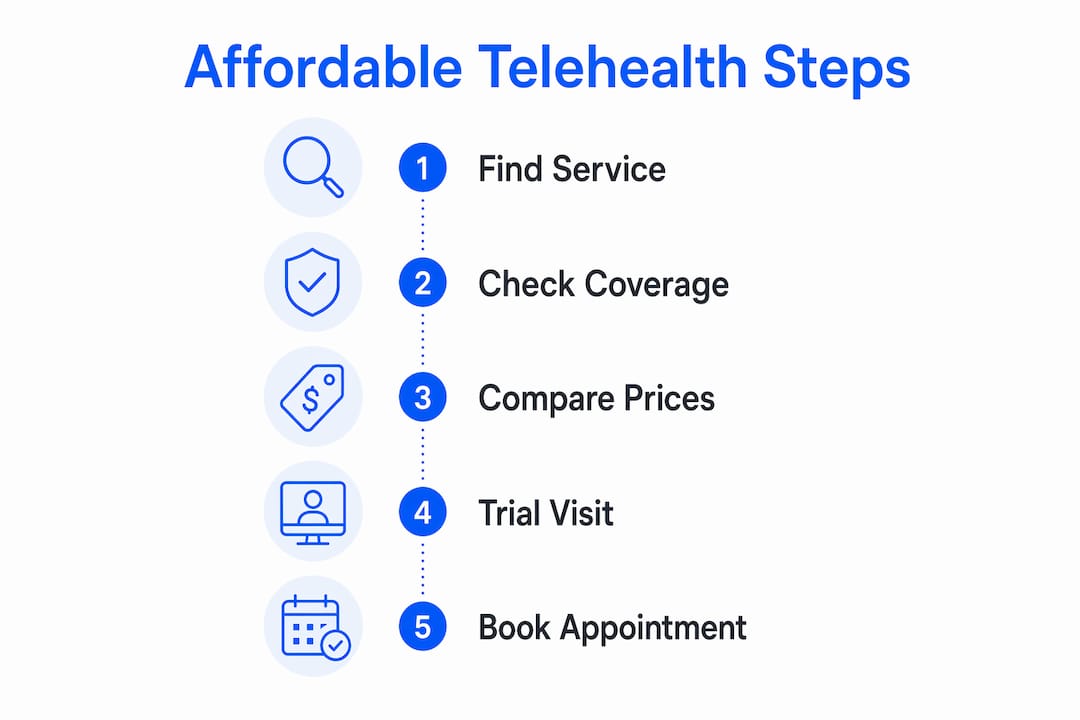
The process of finding and booking a cheap virtual healthcare visit is simpler than most families expect. Follow these five steps to get your household set up efficiently.
Identify your family’s actual needs. Separate primary care needs (routine checkups, prescription refills, chronic condition management) from mental health needs (therapy, psychiatry, medication management). Different platforms specialize in each, and bundling them on one platform is not always the cheapest option.
Research platforms and compare pricing structures. Use the comparison table above as a starting point. Check whether the platform serves your state, whether providers are licensed in your state, and whether the pricing shown is the full cost or a base rate with add-ons.
Register and set up your account or membership. Most platforms take under ten minutes to register. Have your insurance card ready even if you plan to self-pay. Some platforms apply insurance automatically to reduce your cost, and others let you choose self-pay at checkout.
Schedule your appointment and prepare for the visit. Write down your symptoms, current medications, and any relevant medical history before the call. Virtual visits are typically 15 to 20 minutes. Providers make faster, more accurate decisions when you come prepared.
Manage prescriptions and follow-ups affordably. Ask your provider to send prescriptions to a pharmacy that uses GoodRx discounts. Many telehealth platforms also offer follow-up messaging at no extra charge, which reduces the need for repeat paid visits.
Pro Tip: Book your first telehealth visit during off-peak hours, typically mid-morning on weekdays. Wait times are shorter and providers tend to have more time for thorough consultations.
Americans are increasingly turning to telehealth for anxiety and depression because the combination of lower cost and faster access removes two of the biggest barriers to getting help. For families managing a member with a mental health condition, that speed matters as much as the price.
Key takeaways
Affordable online family healthcare is accessible right now through a combination of self-pay telehealth platforms, nonprofit therapy memberships, and Medicare-aware visit planning.
| Point | Details |
|---|---|
| Self-pay beats insurance early in the year | Paying $37 to $70 per visit out of pocket is cheaper than meeting a high deductible through insurance. |
| LifeMD offers the lowest entry price | A $19 monthly membership covers primary and urgent care with no insurance required. |
| Open Path saves money on ongoing therapy | One-time membership plus $40 to $70 per session beats most insurance co-pay structures annually. |
| Medicare home visits cost less | Choosing home-based telehealth over clinical site visits lowers out-of-pocket costs for Medicare families. |
| Preparation shortens visit time | Arriving with a symptom list and medication history reduces the need for costly follow-up appointments. |
Why the cheapest option is rarely the best strategy
I have spent years reviewing telehealth platforms, and the pattern I see most often is families chasing the lowest per-visit price and ending up paying more over twelve months. A $15 urgent care visit sounds better than a $19 monthly membership until you realize you have used urgent care four times in a quarter for conditions a primary care provider could have managed with one visit and a follow-up message.
The smarter move is to match the pricing model to your usage pattern. If your family sees a doctor twice a year, pay per visit. If you have a child with a chronic condition or a family member managing anxiety, a membership or nonprofit therapy model like Open Path will save you real money. The math is not complicated, but most families never run it.
The Medicare angle is the one that surprises people most. Families with older parents or grandparents on Medicare often assume telehealth coverage is binary. It is not. The location of the visit changes the reimbursement rate, which changes your cost-sharing. That single detail can mean the difference between a $0 co-pay and a $40 one, multiplied across every visit in a year.
My honest advice: spend 20 minutes mapping your family’s healthcare usage from the past year before you pick a platform. Count visits, types of care, and what you actually paid. That exercise will tell you whether self-pay, membership, or insurance-based telehealth is the right fit. No article can do that math for you, but the platforms above give you everything you need to make the calculation.
— Guorui
Start accessing affordable telehealth for your family today
Helloklarity connects families with over 1,000 licensed providers for same-day or next-day appointments in mental health, primary care, and weight management. Self-pay options start at $49, and the platform accepts major insurance plans and HSA payments.
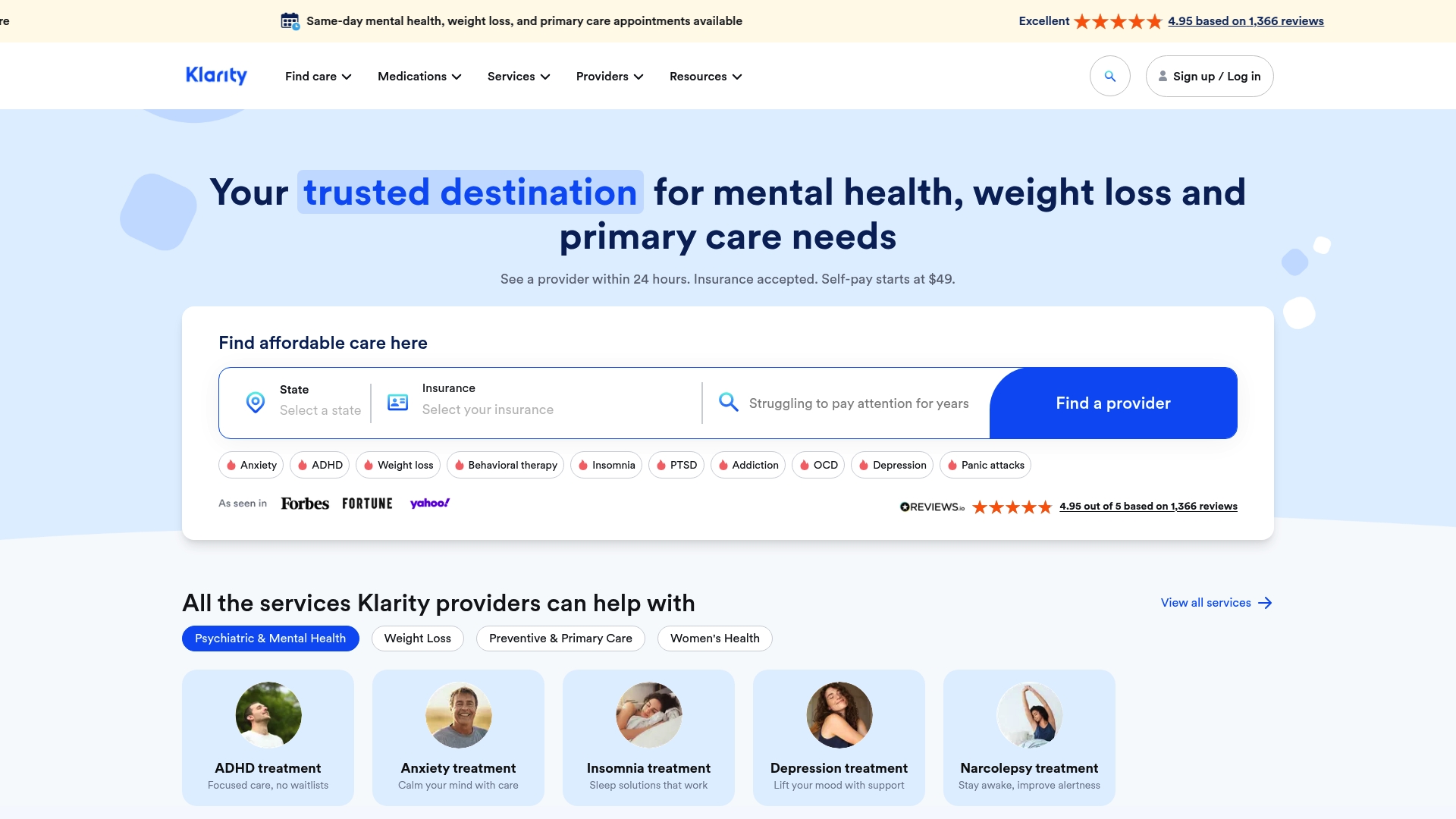
Browse telehealth services online to see which conditions Helloklarity providers treat, or use the find provider by state tool to locate licensed doctors in your area. Transparent pricing, no surprise bills, and access within 24 hours make Helloklarity one of the most practical options for families who need care now without the wait.
FAQ
What is the cheapest way to see a doctor online for my family?
Self-pay telehealth platforms like LifeMD offer primary care memberships starting at $19 per month, while per-visit urgent care typically costs $37 to $59 without insurance. Choosing a membership model saves money if your family uses telehealth more than twice a month.
How do I find an affordable online family doctor without insurance?
Most major telehealth platforms do not require insurance and offer upfront self-pay pricing. Platforms like GoodRx Care and LifeMD list their costs before you book, so you know the full price in advance.
Is online therapy affordable for families?
Open Path Psychotherapy Collective offers reduced-rate therapy sessions from $40 to $70 per session after a one-time membership fee, covering individual, couples, and family therapy. This model is often cheaper annually than using insurance with a high deductible.
Does Medicare cover telehealth visits at home?
Medicare covers telehealth visits delivered to beneficiaries in their homes, and home-based visit rates are reimbursed at a higher level than clinical site visits. Families with Medicare members should confirm visit location details with their plan to minimize cost-sharing.
How quickly can my family see an online doctor?
Most telehealth platforms offer same-day or next-day appointments. Helloklarity, for example, connects patients with a licensed provider within 24 hours for mental health and primary care needs.
Recommended
- What Telehealth Services Can I Get Online? Medical Guide
- Affordable Telehealth Plans For Families In 2026
- Online Doctor Note Via Telehealth: Is It Legit? | Klarity Health
- Online Doctor Visit: How Telehealth Works, What To Expect, And How To Start | Klarity Health, Inc
Get expert care from top-rated providers
Find the right provider for your needs — select your state to find expert care near you.
Related posts






— Monday to Friday, 7:00 AM to 4:00 PM PST
Join our mailing list for exclusive healthcare updates and tips.

— Monday to Friday, 7:00 AM to 4:00 PM PST



