 HSA & FSA accepted; best-value for top quality care
 Same-day mental health, weight loss, and primary care appointments available

 Accept major insurances and cash-payHSA & FSA accepted; best-value for top quality careSame-day mental health, weight loss, and primary care appointments availableAccept major insurances and cash-pay
Prescription Weight Loss Medication: Your 2026 Guide
Written by Klarity Editorial Team
Published: Jul 9, 2026

Prescription weight loss medication is defined as an FDA-approved drug prescribed to help adults with obesity or overweight conditions lose weight alongside diet and physical activity. These are not over-the-counter diet pills. They are clinically tested treatments for chronic weight management, and as of 2026, the FDA has approved six of them for long-term use in adults: bupropion-naltrexone, liraglutide, orlistat, phentermine-topiramate, semaglutide, and tirzepatide. Each works through a different mechanism, and each carries a distinct benefit and risk profile. Understanding the differences is the first step toward making an informed decision with your provider.
What types of prescription weight loss medications are available?
The six FDA-approved medications fall into three broad categories based on how they work: GLP-1 receptor agonists, lipase inhibitors, and combination drugs. Each category targets a different part of the body’s weight regulation system.
GLP-1 receptor agonists
GLP-1 agonists are the most discussed class right now, and for good reason. Semaglutide and tirzepatide both mimic gut hormones that regulate appetite and slow stomach emptying. Tirzepatide is a dual agonist, meaning it activates two hormone receptors instead of one, which explains why it produces weight loss of up to 20% in clinical trials. Semaglutide also carries documented cardiovascular benefits, making it a strong option for patients with heart disease risk. Liraglutide, an earlier GLP-1 agent, showed 5.4%–8% weight loss at 56 weeks in trials. These medications are injectable, typically administered once weekly or daily depending on the drug and dose.

Lipase inhibitors
Orlistat works differently. It blocks the enzyme that digests fat in the gut, reducing the amount of dietary fat your body absorbs. Clinical data shows orlistat adds 2–3 kg of weight loss beyond what diet and exercise alone produce. It is the only medication in this class and the only FDA-approved weight loss drug also available over the counter at a lower dose. Patients taking orlistat must follow a low-fat diet to avoid gastrointestinal side effects.
Combination drugs
Phentermine-topiramate and bupropion-naltrexone are oral combination pills. Phentermine-topiramate suppresses appetite through two complementary mechanisms: phentermine acts on the central nervous system, while topiramate reduces hunger signals. Bupropion-naltrexone targets the brain’s reward and hunger pathways simultaneously. Both are taken daily in pill form, which some patients prefer over injections.
Here is a quick comparison of the six approved medications by mechanism and form:
| Medication | Mechanism | Form |
|---|---|---|
| Semaglutide | GLP-1 receptor agonist | Injectable |
| Tirzepatide | Dual GLP-1/GIP agonist | Injectable |
| Liraglutide | GLP-1 receptor agonist | Injectable |
| Orlistat | Lipase inhibitor | Oral |
| Phentermine-topiramate | Appetite suppression | Oral |
| Bupropion-naltrexone | Reward/hunger pathway | Oral |
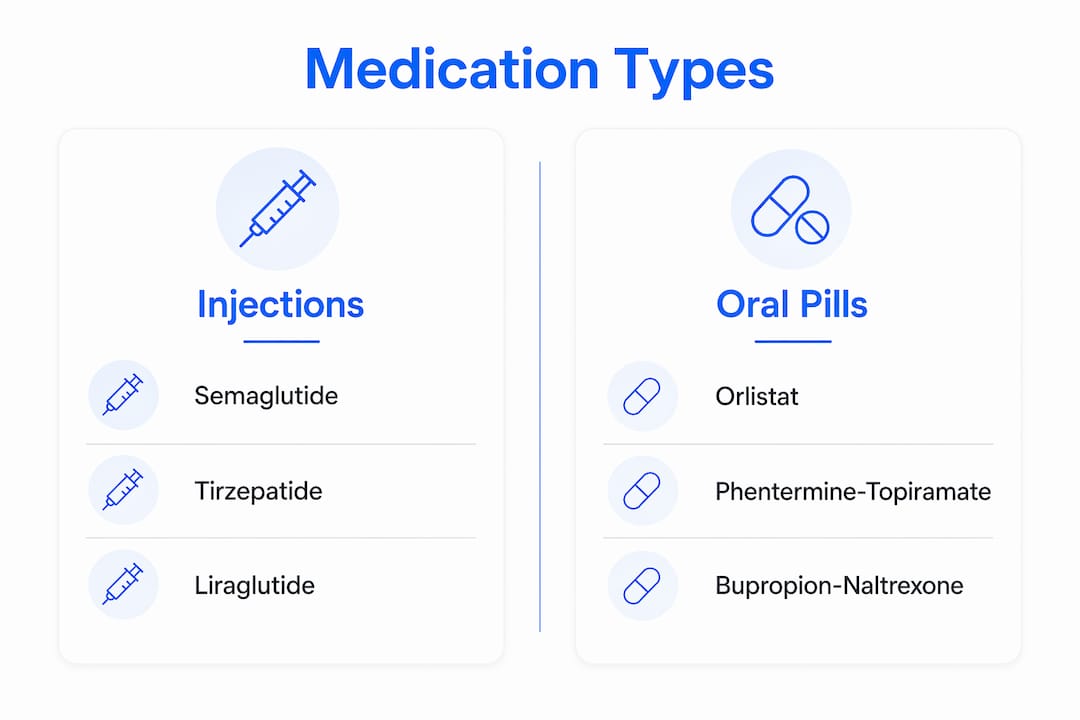
Pro Tip: If you prefer not to self-inject, ask your provider specifically about oral options like phentermine-topiramate or bupropion-naltrexone. Both are effective and often underrepresented in media coverage of weight loss drugs.
How do providers decide when to prescribe weight loss medications?
Eligibility for prescription weight loss drugs follows clear clinical criteria. The standard threshold is a BMI of 30 or higher, or a BMI of 27 or higher when a patient has at least one obesity-related condition such as type 2 diabetes, hypertension, or sleep apnea. BMI alone does not tell the full story, so providers also evaluate metabolic health, cardiovascular risk, kidney function, and current medications before prescribing.
The evaluation process typically includes:
- A full medical history review, including prior weight loss attempts
- Lab work to assess blood sugar, cholesterol, liver function, and kidney markers
- A review of current medications for potential interactions
- A discussion of lifestyle habits, including diet patterns and physical activity levels
- An assessment of mental health, since conditions like depression can affect both weight and medication adherence
Shared decision-making is central to this process. Medication selection works best when it accounts for a patient’s comorbidities, insurance access, and personal preferences. A provider who simply hands over a prescription without this conversation is skipping a critical step. Ongoing monitoring matters too. Providers typically reassess patients monthly during the early titration phase and adjust dosing based on response and tolerability.
Pro Tip: Before your first appointment, write down your full medication list, any previous weight loss attempts, and your top two or three health goals. This saves time and helps your provider make a faster, more accurate recommendation.
What are the benefits and risks of prescription weight loss drugs?
The benefits of these medications are real and well-documented. When combined with a reduced-calorie diet and at least 150 minutes of physical activity per week, prescription weight loss drugs produce significantly greater weight loss than lifestyle changes alone. GLP-1 agonists in particular have shown reductions in cardiovascular events, improvements in blood sugar control, and lower blood pressure in clinical populations.
That said, no medication is without risk. Common side effects include:
- Nausea, especially during the first weeks of GLP-1 therapy
- Headache and fatigue, reported with several combination drugs
- Constipation or diarrhea, depending on the medication class
- Gastrointestinal discomfort with orlistat, particularly after high-fat meals
Serious side effects are rare but require monitoring. Providers watch for signs of pancreatitis with GLP-1 agents, mood changes with bupropion-naltrexone, and elevated heart rate with phentermine-topiramate.
Cost is a significant barrier for many patients. Without insurance, monthly costs for GLP-1 medications range from $1,000 to $1,500. Insurance coverage is inconsistent, and Medicare has specific restrictions on standalone obesity medications. Copay assistance programs exist for commercially insured patients and can substantially reduce out-of-pocket costs.
Prescription weight loss medications are not a substitute for lifestyle change. They are most effective as one part of a broader treatment plan that includes nutrition, movement, and behavioral support. Patients who rely on medication alone without addressing diet and activity consistently see less durable results.
One safety note worth knowing: compounded GLP-1 formulations were discontinued in 2025 due to safety concerns. Only FDA-approved commercial medications are recommended. If you encounter an online service offering compounded semaglutide or tirzepatide, that is a red flag.
How to integrate weight loss medications into a long-term plan
Prescription weight loss treatment works best as part of a structured, long-term plan. Medication alone produces results, but those results are more durable when paired with consistent lifestyle changes. Clinical guidelines specify a 500 kcal/day caloric deficit and 150 minutes of moderate physical activity per week as the standard lifestyle targets alongside medication.
A practical integration plan looks like this:
- Start with a thorough provider evaluation to confirm eligibility and select the right medication
- Begin at the lowest effective dose and increase gradually, no faster than monthly
- Track side effects and report them to your provider at each follow-up
- Work with a registered dietitian or behavioral health counselor to reinforce dietary changes
- Schedule regular check-ins, at minimum every three months, to assess weight, labs, and medication response
GLP-1 medications require slow titration to manage nausea and other early side effects. Providers increase the dose at most monthly, giving the body time to adjust. Patients who rush this process or skip titration steps tend to experience more side effects and are more likely to discontinue treatment early.
Behavioral therapy adds another layer of support. Cognitive behavioral approaches help patients identify eating triggers, build sustainable habits, and manage the psychological dimensions of weight. For patients who want to learn more about getting a prescription via telehealth, the process is now more accessible than it has ever been.
Pro Tip: Set a 12-week check-in with your provider as a milestone, not just a routine appointment. Use it to review your weight trend, side effect history, and whether your current dose is still the right fit.
Key Takeaways
Prescription weight loss medications are FDA-approved treatments that work best when combined with diet, physical activity, and ongoing provider support for managing obesity as a chronic condition.
| Point | Details |
|---|---|
| Six FDA-approved options | Semaglutide, tirzepatide, liraglutide, orlistat, phentermine-topiramate, and bupropion-naltrexone are the current standard options. |
| Eligibility requires BMI criteria | A BMI of 30 or higher, or 27 with a comorbidity, is the standard threshold for prescribing. |
| Lifestyle changes are non-negotiable | A 500 kcal/day deficit and 150 minutes of weekly activity are required alongside medication for best results. |
| Costs can be substantial | Monthly costs without insurance reach $1,000–$1,500; copay programs and prior authorization can help. |
| Slow titration improves outcomes | Increasing doses no faster than monthly reduces side effects and improves long-term adherence. |
The case for treating obesity like the chronic disease it is
Obesity is a chronic disease. That framing matters more than most people realize, because it changes how you approach treatment. I have seen patients who tried medication for three months, lost 15 pounds, and then stopped because they felt “fixed.” Within a year, most of them had regained the weight. The medication was not the problem. The expectation was.
The media coverage around GLP-1 drugs has created a distorted picture. These are genuinely effective medications, but they are not permanent solutions on their own. The long-term provider relationship is what makes the difference between a short-term result and a durable one. Providers who monitor metabolic health, adjust dosing, and integrate behavioral support produce better patient outcomes than those who simply renew a prescription.
The next generation of weight loss medications is promising. Dual and triple agonists targeting multiple hormone pathways are in late-stage trials, and the efficacy numbers are striking. But the fundamental principle will not change: medication works within a system of care, not instead of one. Patients who understand that from the start are the ones who see lasting results.
— Guorui
Weight loss medication support through Helloklarity
Helloklarity connects patients with licensed providers who specialize in weight management, including prescribing FDA-approved weight loss medications. Appointments are available within 24 hours, and the platform accepts major insurance as well as health savings accounts. Self-pay options start at $49, making it one of the more accessible paths to a formal weight loss evaluation.
Helloklarity’s network includes over 1,000 licensed providers across the country. Whether you are exploring GLP-1 options for the first time or looking to continue an existing treatment plan, the Klarity weight loss program offers structured support from evaluation through ongoing care. You can also browse providers by state to find a licensed clinician in your area.
FAQ
What is prescription weight loss medication?
Prescription weight loss medication refers to FDA-approved drugs designed to help adults with obesity or overweight conditions lose weight alongside diet and exercise. The six currently approved options include semaglutide, tirzepatide, liraglutide, orlistat, phentermine-topiramate, and bupropion-naltrexone.
Who qualifies for prescription weight loss drugs?
Patients with a BMI of 30 or higher, or a BMI of 27 or higher with an obesity-related condition like type 2 diabetes or hypertension, typically qualify. A full medical evaluation is required before any prescription is issued.
How much weight can you lose with prescription medications?
Results vary by medication. Tirzepatide has produced up to 20% body weight loss in clinical trials, while liraglutide showed 5.4%–8% loss at 56 weeks. All medications work best when combined with a reduced-calorie diet and regular physical activity.
Are prescription weight loss pills safe?
FDA-approved prescription weight loss medications are considered safe when used under medical supervision. Common side effects include nausea, headache, and constipation. Serious side effects are rare but require monitoring by a licensed provider.
Can you get a weight loss prescription through telehealth?
Yes. Licensed telehealth providers can evaluate eligibility, prescribe FDA-approved weight loss medications, and provide ongoing monitoring. Platforms like Helloklarity offer same-day appointments with licensed providers who specialize in weight loss treatment online.
Recommended
- Weight Loss Medication Online: How To Get A Prescription Through Telehealth | Klarity Health, Inc
- Prescriber Scope Of Practice For Weight Loss/GLP-1 In California | Klarity Health, Inc
- Prescriber Scope Of Practice For Weight Loss/GLP-1 In Illinois | Klarity Health, Inc
- Weight Loss Medication Online: Your Complete Guide To GLP-1 Prescriptions | Klarity Health, Inc
Get expert care from top-rated providers
Find the right provider for your needs — select your state to find expert care near you.
Related posts



— Monday to Friday, 7:00 AM to 4:00 PM PST
Join our mailing list for exclusive healthcare updates and tips.

— Monday to Friday, 7:00 AM to 4:00 PM PST



