 HSA & FSA accepted; best-value for top quality care
 Same-day mental health, weight loss, and primary care appointments available

 Accept major insurances and cash-payHSA & FSA accepted; best-value for top quality careSame-day mental health, weight loss, and primary care appointments availableAccept major insurances and cash-pay
Mental Health Conditions Treated Online: 2026 Guide
Written by Klarity Editorial Team
Published: Jul 13, 2026

Mental health conditions treated online include major depressive disorder, generalized anxiety disorder, ADHD, PTSD, postpartum depression, and insomnia, all supported by FDA-authorized digital treatments as of 2026. Telehealth has moved well past video calls and basic chat. Licensed providers now manage diagnoses, prescriptions, and structured therapy programs entirely through digital platforms. Mental health treatment via telehealth has expanded rapidly since 2020, with regulatory authorizations and clinical research continuing to grow through 2026. If you have been waiting for online care to become “real” medicine, it already is.
1. What mental health conditions are commonly treated online?
Sixteen FDA-authorized digital products currently support treatment for psychiatric conditions online. That number reflects serious clinical investment, not a fringe trend. The conditions covered span the most common mental health disorders Americans face.
Conditions with FDA-authorized digital treatment options include:
- Major depressive disorder (MDD): Online cognitive behavioral therapy (CBT) programs and medication management via telehealth are both available and clinically supported.
- Generalized anxiety disorder (GAD): Digital CBT tools and licensed provider consultations address symptom management and long-term coping strategies.
- ADHD: Four FDA-authorized digital products provide diagnostic support for ADHD specifically, helping clinicians evaluate and confirm diagnoses remotely.
- PTSD-related conditions: Structured digital therapy programs and provider-led treatment plans are accessible through telehealth platforms.
- Insomnia: FDA-authorized software delivers digital CBT for insomnia, a first-line treatment that works without medication.
- Postpartum depression: Online psychiatric care connects new parents to licensed providers quickly, reducing the gap between symptom onset and treatment.
- Autism spectrum disorder (ASD): Digital diagnostic support tools assist clinicians in evaluating ASD as part of telehealth assessments.
Pro Tip: If you are unsure whether your condition qualifies for online treatment, book a single consultation with a licensed telehealth provider. They can assess your situation and recommend the right care path, whether online or in person.
2. How do FDA-authorized digital mental health products work?

FDA authorization is the clearest signal that a digital mental health product has met a defined clinical standard. Understanding what that means helps you choose treatment with confidence.
The FDA uses three main pathways to authorize digital health products:
- 510(k) clearance: The product demonstrates substantial equivalence to an already-authorized device. This pathway requires less novel clinical data but still demands safety and effectiveness evidence.
- De Novo classification: Used for new, low-to-moderate risk devices with no existing predicate. This pathway requires more original clinical evidence and creates a new regulatory category.
- Premarket Approval (PMA): The highest standard, reserved for high-risk devices requiring extensive clinical trial data.
FDA marketing authorization does not uniformly indicate clinical effectiveness. A 510(k)-cleared product and a De Novo-classified product carry different levels of supporting evidence. That distinction matters when you are choosing between a digital therapy app and a clinician-managed telehealth program.
The practical takeaway: always check what a product is authorized to do, not just whether it is authorized. A tool cleared for “adjunctive use” alongside therapy is different from one authorized as a standalone treatment. Licensed providers on platforms like Helloklarity interpret these distinctions for you, matching the right digital tools to your specific condition.
3. What types of virtual services are available for mental health treatment?
Virtual mental health services cover a wider range of care than most people expect. The format you choose depends on your condition, your schedule, and how you prefer to communicate.
Therapy formats available online:
- Individual video therapy: One-on-one sessions with a licensed therapist or psychologist, structured like traditional in-person appointments. Telehealth therapy formats adapt to patient preferences and conditions.
- Group therapy: Facilitated online sessions with peers facing similar challenges. Effective for conditions like social anxiety, depression, and addiction recovery.
- Text-based counseling: Asynchronous messaging with a licensed counselor. Lower barrier to entry for people who find speaking difficult or who have unpredictable schedules.
Medication management:
Medication management for mental health conditions can be handled entirely online with licensed psychiatric providers managing prescriptions remotely. This means no in-person pharmacy visits for initial consultations and no gaps in treatment when you travel or relocate. Providers evaluate your symptoms, review your history, and adjust medications through secure video or messaging appointments.
Diagnostic support tools:
Telehealth platforms now use FDA-authorized software to assist clinicians in diagnosing ADHD and autism spectrum disorder. These tools collect structured behavioral data before or during appointments, giving providers a clearer clinical picture without requiring a specialist office visit.
Accessibility and convenience rank among the top benefits patients report from virtual care. Online treatment removes barriers including travel time, scheduling conflicts, and the stigma of walking into a mental health clinic.
4. Online CBT: the most evidence-backed digital therapy
Online cognitive behavioral therapy is the most clinically supported digital intervention for depression, anxiety, and insomnia. Digital CBT products provide structured treatment sessions accessible entirely through a device, with FDA-authorized software guiding the program.
CBT works by identifying and changing thought patterns that drive symptoms. The online version delivers the same core techniques through interactive modules, homework assignments, and provider check-ins. For insomnia specifically, digital CBT outperforms sleep medication in long-term outcomes, according to clinical research. That is a significant finding because most people assume pills are the faster and more effective fix.
For depression and anxiety, telehealth depression prescribing combined with digital CBT produces better outcomes than either approach alone. The combination gives you both the skill-building of therapy and the neurochemical support of medication, managed by a single licensed provider online.
5. How to choose the right online treatment for your condition
Choosing online mental health care requires matching your specific condition to the right type of service. Not every platform offers the same level of clinical oversight.
Start with condition severity. Mild to moderate depression, anxiety, or insomnia respond well to digital CBT programs with periodic provider check-ins. Severe symptoms, active suicidal ideation, or psychosis require direct clinical management, not a self-guided app.
Check FDA authorization status. When evaluating a digital mental health product, look for its specific authorization pathway. A De Novo-classified product carries more original clinical evidence than a 510(k)-cleared one. Ask the platform or provider which category their tools fall into.
Evaluate the payment model. Affordable online mental health care exists across a range of price points. Helloklarity offers self-pay appointments starting at $49 and accepts major insurance and health savings accounts. That pricing structure removes one of the most common reasons people delay treatment.
Verify provider credentials. Licensed providers include psychiatrists, psychologists, licensed clinical social workers, and nurse practitioners. Each has a different scope of practice. Psychiatrists can prescribe medication; psychologists typically cannot. Confirm that the provider you see is licensed in your state.
Pro Tip: Before your first telehealth appointment, write down your three most disruptive symptoms and how long you have had them. That information helps a provider assess severity quickly and recommend the most appropriate treatment path.
Key Takeaways
Online mental health treatment is clinically credible, FDA-supported, and accessible for conditions including depression, anxiety, ADHD, PTSD, insomnia, and postpartum depression.
| Point | Details |
|---|---|
| FDA authorization matters | Sixteen digital mental health products are FDA-authorized, covering major psychiatric conditions. |
| Authorization type varies | 510(k) clearance and De Novo classification reflect different levels of clinical evidence. |
| CBT is the top digital therapy | Online CBT is FDA-supported for depression, anxiety, and insomnia with strong clinical backing. |
| Medication management works online | Licensed providers can prescribe and adjust psychiatric medications entirely through telehealth. |
| Match treatment to severity | Mild to moderate conditions suit digital programs; severe symptoms require direct clinical oversight. |
What I have learned from watching online mental health care grow
The shift I find most significant is not the technology. It is the change in who gets treatment at all.
Before telehealth expanded, the gap between symptom onset and first appointment averaged months for many people. That delay was not laziness. It was geography, cost, stigma, and the sheer friction of navigating a system built for people with flexible schedules and reliable transportation. Online care removed most of that friction overnight.
What I tell people who are skeptical: FDA authorization of sixteen digital mental health products is not a marketing claim. It is a regulatory record. These products went through defined clinical review processes. That does not mean every app is equally effective, but it means the bar exists and some products have cleared it.
The nuance I think gets lost is that online care works best as a complete system, not a single tool. A digital CBT program paired with a licensed provider who manages your medication and checks in monthly is a real treatment plan. A standalone app with no clinical oversight is not. The difference matters, and the best telehealth platforms build that complete system for you.
My honest advice: do not wait for online mental health care to feel more legitimate. The clinical evidence is already there. Find a licensed provider, confirm their credentials, and start. The conditions treatable through telehealth now cover most of what people actually struggle with.
— Guorui
Helloklarity connects you to licensed mental health providers online
Helloklarity gives you access to over 1,000 licensed providers specializing in anxiety, depression, ADHD, insomnia, and more. Appointments are available within 24 hours, with self-pay options starting at $49. Major insurance and health savings accounts are accepted.
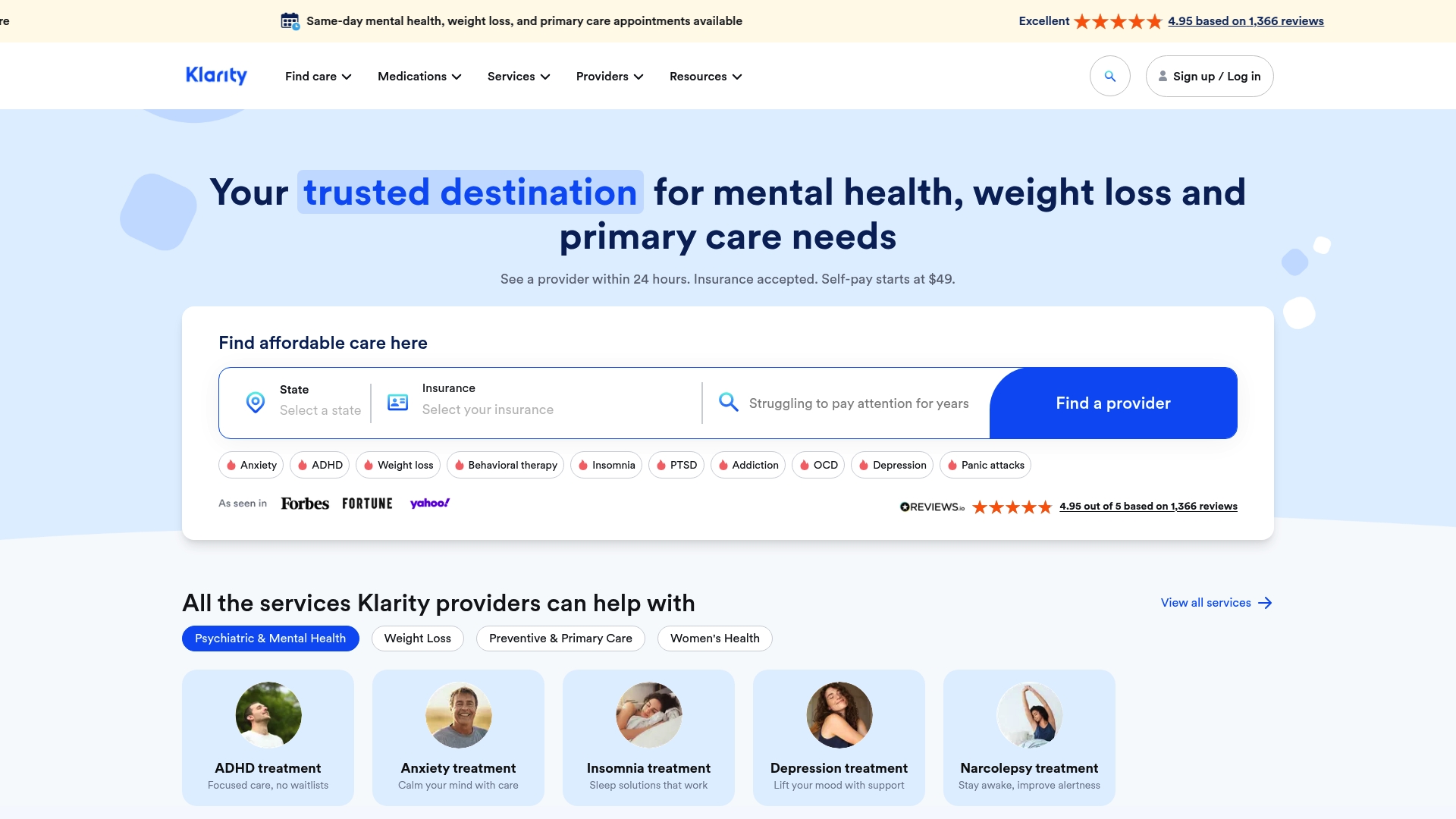
Whether you need medication management, therapy, or a diagnostic evaluation, Helloklarity matches you to the right provider for your condition. You can browse all treatable conditions on the platform or view available telehealth services to find the care that fits your situation. If you want to find a licensed provider in your state, Helloklarity makes that search straightforward at findByState.
FAQ
What mental health conditions can be treated online?
Major depressive disorder, generalized anxiety disorder, ADHD, PTSD, insomnia, and postpartum depression all have FDA-authorized digital treatment options available through telehealth platforms. Licensed providers manage both therapy and medication for these conditions entirely online.
Is online therapy as effective as in-person therapy?
Clinical research supports online CBT as equally effective to in-person CBT for depression, anxiety, and insomnia in mild to moderate cases. Severe conditions may still require in-person or intensive outpatient care.
Can I get a prescription for mental health medication online?
Yes. Licensed psychiatric providers, including psychiatrists and nurse practitioners, can evaluate your symptoms and manage prescriptions remotely through telehealth platforms. Helloklarity providers handle this process with appointments available within 24 hours.
What does FDA authorization mean for a digital mental health product?
FDA authorization means a digital product has met a defined regulatory standard for safety and effectiveness. The specific pathway, whether 510(k) clearance or De Novo classification, reflects the level of clinical evidence required and should be considered when choosing a treatment tool.
How much does online mental health treatment cost?
Costs vary by platform and service type. Helloklarity offers self-pay appointments starting at $49 and accepts major insurance plans and health savings accounts, making online mental health care accessible across a range of budgets.
Recommended
- Mental Health Awareness Month 2026: Why More Americans Are Turning To Telehealth For Anxiety And Depression | Klarity Health, Inc
- What Telehealth Services Can I Get Online? Medical Guide
- Common Primary Care Conditions Treated Online: 2026 Guide
- What Is Telehealth Mental Health? Your 2026 Guide
Get expert care from top-rated providers
Find the right provider for your needs — select your state to find expert care near you.
Related posts



— Monday to Friday, 7:00 AM to 4:00 PM PST
Join our mailing list for exclusive healthcare updates and tips.

— Monday to Friday, 7:00 AM to 4:00 PM PST



