 HSA & FSA accepted; best-value for top quality care
 Same-day mental health, weight loss, and primary care appointments available

 Accept major insurances and cash-payHSA & FSA accepted; best-value for top quality careSame-day mental health, weight loss, and primary care appointments availableAccept major insurances and cash-pay
Online Therapy for Depression and Anxiety: How to Find a Provider and Get Treated This Week
Written by Klarity Editorial Team
Published: Jun 11, 2026
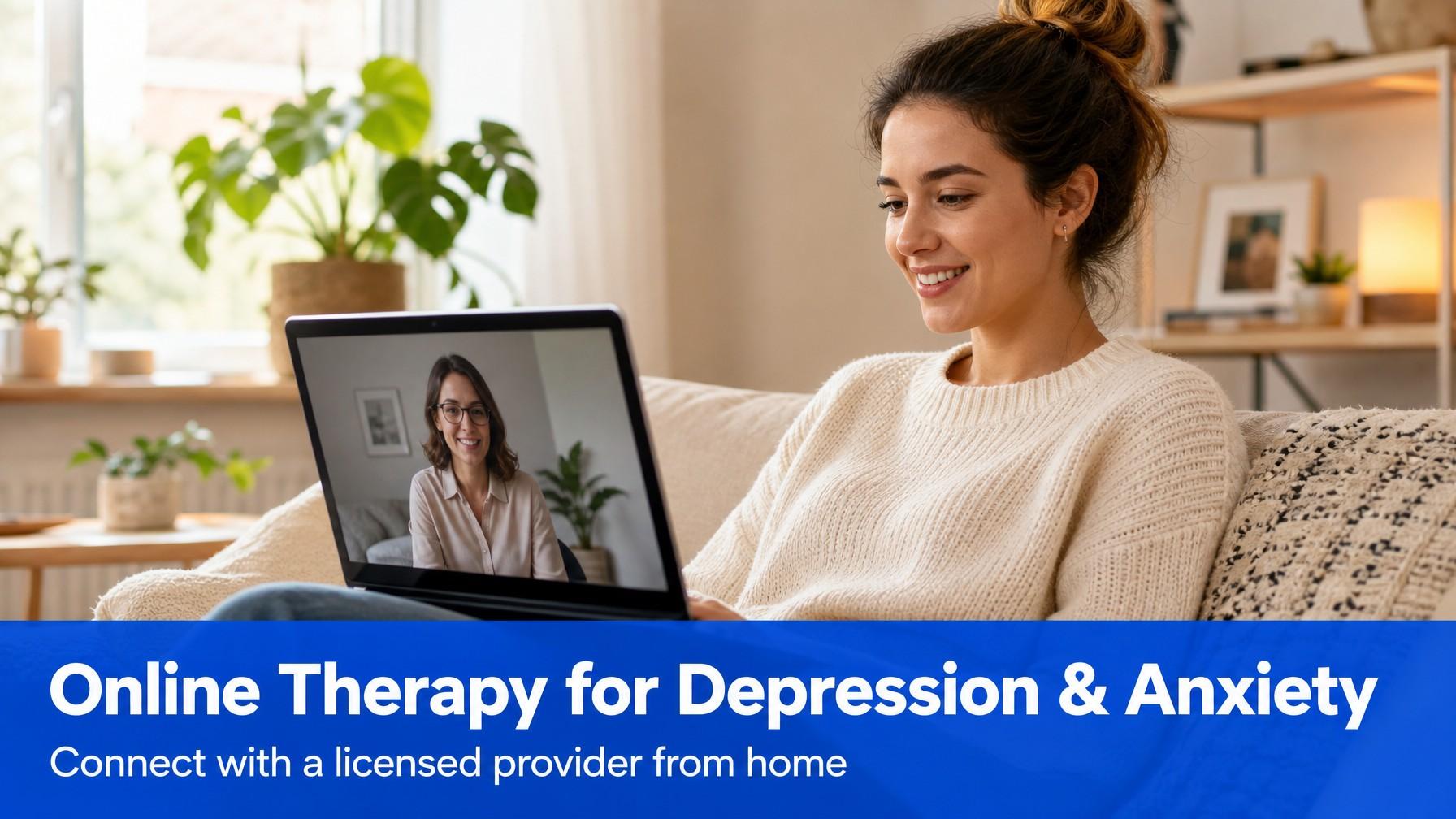
If you have been carrying the weight of depression, anxiety, or both, you already know how exhausting it is. Maybe you have spent months telling yourself it is not that serious, or that you will deal with it later. Maybe you have tried to find a therapist only to hit a wall of waitlists, confusing insurance forms, and appointments that are weeks away. Here is what you should know: online therapy for depression and anxiety is more accessible than it has ever been — and with the right telehealth provider, you can connect with a licensed professional in as little as 24 hours from your own home.
This guide walks you through how it works, what treatment options are available, what to expect at your first appointment, and how to check whether your insurance plan may cover the cost.
What Is Online Therapy for Depression and Anxiety?
Online therapy — also called teletherapy or telehealth mental health care — is exactly what it sounds like: you meet with a licensed provider over a secure video call instead of driving to a clinic. You get the same clinical care, the same credentials, and the same quality of conversation. The only difference is the commute (there is none).
Research backs this up. A review of more than 60 studies published by UCLA Health found that virtual therapy is just as effective as in-person sessions for most people with depression, anxiety, and PTSD. For many patients, removing the logistical friction of in-person care actually makes it easier to show up consistently, which is one of the most important factors in treatment outcomes.
Online care typically covers two types of services:
- Talk therapy (psychotherapy, CBT, DBT): sessions with a licensed therapist or counselor focused on identifying thought patterns, building coping tools, and processing emotions.
- Medication management: appointments with a licensed psychiatrist, psychiatric nurse practitioner, or other prescribing provider who can evaluate your symptoms and, when clinically appropriate, prescribe and manage medication.
Many people benefit from a combination of both.
Depression vs. Anxiety vs. Both: Understanding Comorbid Conditions
Depression and anxiety are distinct conditions, but they frequently occur together — a pattern clinicians call comorbidity. Studies suggest that roughly 60% of people with depression also experience significant anxiety, and vice versa.
Depression is characterized by persistent low mood, loss of interest in activities you once enjoyed, fatigue, difficulty concentrating, and in some cases, feelings of hopelessness. It is not the same as sadness, and it is not a character flaw. It is a medical condition with well-established, effective treatments.
Anxiety disorders — including generalized anxiety disorder (GAD), social anxiety, and panic disorder — involve chronic worry, physical tension, racing thoughts, and avoidance behaviors that interfere with daily life.
When both are present, they can feel like a loop: depression saps your motivation, anxiety fills the silence with worst-case thoughts, and the combination makes it hard to take any step at all. A skilled telehealth provider can assess both conditions together and build a treatment plan that addresses the full picture.
What Types of Providers Can Treat Depression and Anxiety Online?
Not all mental health credentials are the same. Here is a quick breakdown of who you might work with:
- Psychiatrists (MD/DO): Medical doctors who specialize in mental health. They can prescribe medication and provide therapy. Typically best for complex cases or when medication management is a priority.
- Psychiatric Nurse Practitioners (PMHNP): Advanced practice nurses who can prescribe medication, conduct assessments, and manage treatment plans independently in most states.
- Licensed Therapists and Counselors (LCSW, LPC, MFT): Trained to provide talk therapy and evidence-based interventions. They do not prescribe medication but are highly effective for therapy-focused care.
On Klarity Health, you can connect with licensed prescribers — psychiatrists and nurse practitioners — who specialize in depression and anxiety medication management and ongoing care.
Medication Options for Depression and Anxiety: What a Telehealth Provider May Prescribe
Medication is not right for everyone, and the decision always belongs to you and your provider together. That said, medication management is a core part of treatment for many people with moderate-to-severe depression or anxiety.
Common medication categories a provider may discuss with you include:
- SSRIs (Selective Serotonin Reuptake Inhibitors): Such as sertraline (Zoloft), escitalopram (Lexapro), and fluoxetine (Prozac). Often a first-line option for both depression and anxiety.
- SNRIs (Serotonin-Norepinephrine Reuptake Inhibitors): Such as venlafaxine (Effexor) and duloxetine (Cymbalta). Effective for depression with comorbid anxiety.
- Buspirone: Specifically used for generalized anxiety disorder, without the dependence risk associated with benzodiazepines.
- Bupropion (Wellbutrin): Often prescribed for depression, particularly when fatigue and low motivation are prominent symptoms.
Your provider will review your full medical history, current symptoms, and any prior treatment history before making any recommendation. Telehealth prescribers follow the same clinical standards as in-person providers.
How to Know If Your Insurance May Cover Online Mental Health Care
The Mental Health Parity and Addiction Equity Act (MHPAEA) requires most insurance plans to cover mental health benefits at parity with medical and surgical benefits. In practice, this means many major insurers — including Aetna, Cigna, Anthem, Blue Shield, and United Healthcare — often include telehealth mental health services in their plans.
That said, coverage details vary significantly by plan, state, and provider network. Here is what to check before your first appointment:
- Call the member services number on your insurance card and ask specifically whether telehealth mental health services are covered and whether the provider you are considering is in-network.
- Check your plan's online portal, which typically lists covered services and in-network providers.
- Use Klarity's insurance verification tool to see if your plan may cover care through our network.
Coverage may include video therapy sessions, psychiatric evaluations, and ongoing medication management appointments. Copays vary by plan, and some members pay little to nothing out of pocket for covered services.
Coverage varies by insurance plan. Patients should verify their specific benefits before booking an appointment.
What to Expect at Your First Telehealth Appointment
First appointments can feel a little nerve-wracking, and that is completely normal. Here is what typically happens so you know what to expect:
Before the appointment: You will complete an intake form covering your symptoms, medical history, and any current medications. This saves time and helps your provider prepare.
During the appointment (45-60 minutes): Your provider will walk through your history, ask about the onset and duration of your symptoms, how they are affecting your daily life, and what you have tried before. This is a conversation, not an interrogation. There are no wrong answers.
After the appointment: Your provider will discuss a treatment plan. If medication is appropriate, a prescription may be sent to your pharmacy the same day. Follow-up appointments are typically scheduled every 4-8 weeks for medication management, or weekly/biweekly for therapy.
The whole process happens from your phone, tablet, or laptop. No commute, no waiting room, no judgment.
How Klarity Connects You to Licensed Providers for Depression and Anxiety Care
Klarity Health is a telehealth platform that connects patients directly with 2,000+ licensed, independent providers across the United States, including psychiatrists and psychiatric nurse practitioners who specialize in depression and anxiety.
Here is how it works:
- Complete a brief assessment so Klarity can match you with a provider suited to your needs.
- Choose your appointment time — many patients can get a same-week appointment.
- Meet with your provider by video from anywhere in the US.
- Receive ongoing care: follow-up visits, prescription refills, and care coordination are all handled through the platform.
Klarity accepts many major insurance plans, and you can verify whether your plan may cover care before you book. For those paying out of pocket, transparent pricing is available upfront — no surprise bills.
Frequently Asked Questions
Can online therapy really treat depression and anxiety as effectively as in-person therapy?
Yes. Multiple peer-reviewed studies, including a meta-analysis of over 60 trials, show that telehealth therapy produces outcomes comparable to in-person care for depression and anxiety.
How quickly can I get an appointment?
Many Klarity patients connect with a provider within 24-48 hours of signing up, depending on availability and state.
Does insurance cover telehealth mental health care?
Many insurance plans include telehealth mental health coverage, but specifics vary by plan. Use Klarity's insurance check tool to see if your plan may cover care.
What if I need both therapy and medication?
Klarity's network includes prescribers who can manage medication as well as providers who offer talk therapy. Your care team can coordinate to address both.
Ready to Take the First Step?
You do not have to figure this out alone, and you do not have to wait months for help. Whether you are dealing with depression, anxiety, or both, a licensed provider is closer than you think.
Check if your plan may cover online depression and anxiety care at Klarity Health.
All providers on Klarity Health are independent licensed professionals. Klarity Health, Inc. does not provide medical services.
Looking for support with Anxiety? Get expert care from top-rated providers
Find the right provider for your needs — select your state to find expert care near you.
Related posts






— Monday to Friday, 7:00 AM to 4:00 PM PST
Join our mailing list for exclusive healthcare updates and tips.

— Monday to Friday, 7:00 AM to 4:00 PM PST



