 HSA & FSA accepted; best-value for top quality care
 Same-day mental health, weight loss, and primary care appointments available

 Accept major insurances and cash-payHSA & FSA accepted; best-value for top quality careSame-day mental health, weight loss, and primary care appointments availableAccept major insurances and cash-pay
Online Doctor Visit: How Telehealth Works, What to Expect, and How to Start
Written by Klarity Editorial Team
Published: May 20, 2026
Last updated: May 20, 2026
TLDR
An online doctor visit (also called a telehealth visit or virtual doctor visit) lets you consult a licensed medical provider over video, phone, or secure messaging — without leaving home. Most urgent, primary care, and mental health conditions qualify. Many insurance plans may cover telehealth visits at the same copay as an in-person visit, though coverage varies by plan. Without insurance, a typical online visit costs $50–$100.
Klarity connects you with 2,000+ licensed providers across all 50 states. Check your condition and see if you may qualify for an online visit today.
On This Page
- What is an online doctor visit?
- How does an online doctor visit work?
- What conditions can be treated?
- Can an online doctor prescribe medication?
- How much does an online doctor visit cost?
- Does insurance cover telehealth visits?
- How to prepare for your visit
- Is it as effective as in-person care?
- How to start your online doctor visit
- Frequently asked questions
What Is an Online Doctor Visit?
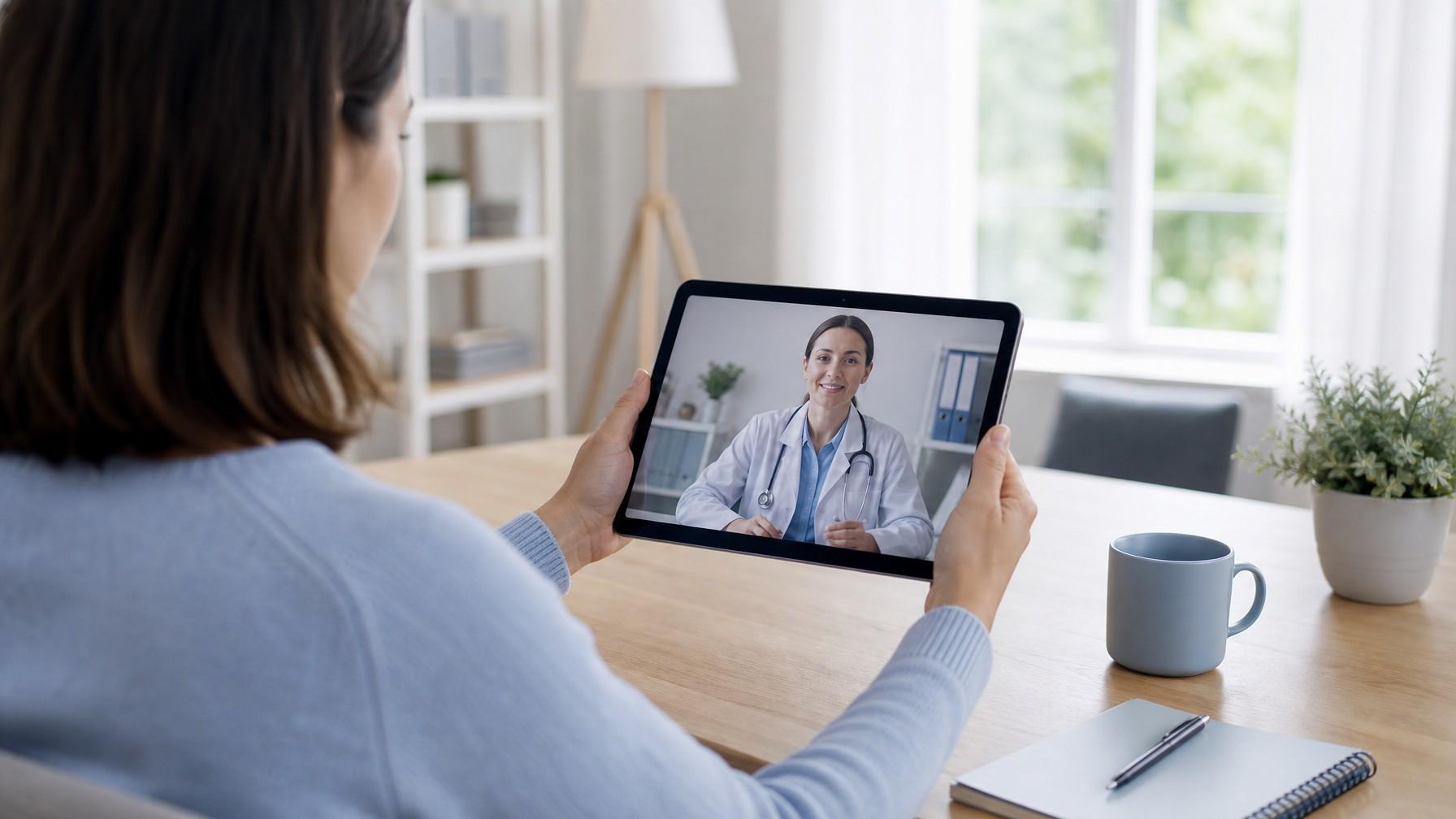
An online doctor visit is a medical appointment that takes place remotely — over a HIPAA-compliant video call, phone call, or asynchronous messaging platform. A licensed physician, nurse practitioner, or physician assistant evaluates your symptoms, reviews your medical history, and can diagnose and treat many common conditions during the session.
The terms “telehealth visit,” “virtual doctor visit,” and “e-visit” all refer to the same concept. The technology ranges from a dedicated telehealth app to a simple video call link sent to your email. What stays constant is that you receive care from a licensed clinical professional — not a chatbot or automated symptom checker.
According to the U.S. Department of Health and Human Services, all you need for most telehealth visits is a smartphone, tablet, or computer with a working camera and internet connection.
How Does an Online Doctor Visit Work?
The process follows five predictable steps:
- Select a condition or reason for your visit. Most telehealth platforms ask you to choose your primary concern — sore throat, anxiety, weight loss, UTI symptoms, prescription refill, and so on.
- Complete a pre-visit intake form. You answer questions about your symptoms, duration, current medications, and relevant medical history. This typically takes 5–10 minutes.
- Match with an available licensed provider. Depending on the platform, you may be scheduled for a specific time or connected within minutes. Klarity matches patients with licensed providers in their state for both same-day and scheduled appointments.
- Attend the video (or phone) consultation. The provider reviews your intake, asks follow-up questions, and conducts a visual assessment where clinically appropriate. Most visits last 15–30 minutes.
- Receive your care plan. After the visit, the provider may send a prescription to your pharmacy, order lab tests, provide a clinical note, or refer you to in-person care if your situation requires it.
What Conditions Can Be Treated During an Online Doctor Visit?
Online doctor visits cover a wide range of acute, chronic, and mental health conditions. Common categories include:
Acute / Urgent Conditions
- Sinus infections and upper respiratory infections
- Strep throat (clinical assessment + antibiotic prescription if appropriate)
- Urinary tract infections (UTI)
- Bacterial vaginosis (BV)
- Ear infections
- Pink eye (conjunctivitis)
- Cold and flu symptoms
- Minor skin conditions and rashes
Chronic and Primary Care
- Hypertension management
- Diabetes management
- Thyroid conditions
- Prescription refills for ongoing conditions
- PCOS management
- Insomnia and sleep issues
Mental Health
- Anxiety and generalized anxiety disorder (GAD)
- Depression
- ADHD evaluation and treatment
- Stress and burnout
- Medication management for psychiatric conditions
Preventive and Other
- Weight loss management (including GLP-1 medication evaluation)
- STI consultation and treatment
- Doctor’s notes and work excuse letters
- Referrals to specialists
Conditions that typically require in-person evaluation include chest pain, difficulty breathing, suspected fractures, acute abdominal pain, and emergencies. A telehealth provider will always refer you to an emergency room or urgent care clinic if your situation falls outside the safe scope of remote care.
See if your condition qualifies for an online visit with a Klarity provider.
Can an Online Doctor Prescribe Medication?
Yes. Licensed physicians, nurse practitioners, and physician assistants who conduct online visits can prescribe most non-controlled medications during a telehealth session, including:
- Antibiotics (amoxicillin, azithromycin, doxycycline, and others)
- Antidepressants (SSRIs, SNRIs)
- Anti-anxiety medications (non-controlled options including SSRIs and buspirone)
- Blood pressure medications
- Topical treatments for skin conditions
- Hormonal medications including birth control
- GLP-1 receptor agonists for weight management (where clinically appropriate)
Controlled substances (such as Schedule II stimulants for ADHD) require stricter federal prescribing rules. In many cases, a telehealth provider may be able to evaluate and initiate treatment, though state-specific rules and DEA regulations apply. Ask your provider about the specific medication you need before your visit.
Prescriptions are sent electronically to your preferred pharmacy — or in some cases delivered directly to your door.
How Much Does an Online Doctor Visit Cost?
Cost depends on whether you use insurance and which platform or provider you choose.
| Visit Type | Typical Cost |
|---|---|
| Telehealth visit with insurance (in-network) | $0–$50 copay (varies by plan) |
| Telehealth visit without insurance | $50–$100 per visit |
| Telehealth mental health visit (therapy/psychiatry) | $100–$300 without insurance |
| Urgent care clinic (in-person) | $100–$250 without insurance |
| Primary care in-person visit | $150–$300 without insurance |
| Emergency room visit | $1,500–$3,000+ without insurance |
For many patients, a telehealth visit costs less than an in-person urgent care or primary care visit — even before insurance. The absence of facility fees and reduced overhead makes virtual care structurally cheaper in most non-emergency scenarios.
Does Insurance Cover Online Doctor Visits?
Most major insurance plans — including Medicare, Medicaid, and many commercial plans — may cover telehealth visits. Coverage expanded significantly under federal parity laws, and many insurers now treat telehealth at the same benefit level as in-person visits for qualifying services.
That said, coverage varies by plan, insurer, state, and the type of visit. Your specific copay, deductible, and whether the provider is in-network all affect your out-of-pocket cost.
Important: Insurance coverage for telehealth varies by plan and provider. Always verify your benefits directly with your insurer before booking a visit to confirm your expected cost. Klarity’s team can help you check if your plan may cover your visit.
Check if your plan may cover care through Klarity’s 2,000+ licensed providers.
How to Prepare for an Online Doctor Visit
A five-minute prep routine makes your telehealth visit more efficient and productive. Here is what to do before you log in:
- List your current medications. Include the name, dose, and frequency of everything you take — prescription drugs, over-the-counter medications, and supplements.
- Write down your symptoms. Note when they started, how severe they are, and whether anything makes them better or worse.
- Check your technology. Confirm your camera and microphone work. Test your internet connection. Close any unused browser tabs to maintain a stable video feed.
- Choose a private, well-lit space. Good lighting lets your provider see you clearly. A quiet room protects your privacy.
- Have your insurance card ready. If you plan to use insurance, locate your member ID and group number before the session.
- Know your pharmacy. If you anticipate a prescription, confirm the name, address, and phone number of your preferred pharmacy so the provider can send it immediately.
According to HHS Telehealth, taking notes during the visit and asking your provider for a follow-up summary helps you track your care plan accurately.
Is an Online Doctor Visit as Effective as In-Person Care?
For the majority of conditions it treats, yes. Multiple clinical studies confirm that telehealth delivers equivalent diagnostic accuracy and patient outcomes for acute infections, mental health conditions, chronic disease management, and prescription refills.
A 2023 meta-analysis in the Journal of Medical Internet Research found telehealth and in-person care produce comparable outcomes for primary care and mental health services in most patient populations. Patient satisfaction scores for telehealth consistently match or exceed those for in-person visits, largely because of convenience and reduced wait times.
Where in-person care remains necessary: conditions requiring hands-on physical examination, imaging (X-ray, MRI), lab work drawn on-site, or emergency intervention. A skilled telehealth provider will tell you immediately if your situation exceeds the boundaries of safe remote care and direct you appropriately.
How to Start an Online Doctor Visit with Klarity
Klarity offers online doctor visits across a wide range of conditions through its network of 2,000+ licensed providers in all 50 states. Here is how to get started:
- Visit helloklarity.com/condition and select your condition or reason for the visit.
- Complete a short intake form — typically 5–10 minutes.
- Choose your appointment time — same-day slots are often available.
- Attend your video consultation with your assigned licensed provider.
- Receive your care plan, prescription (if applicable), and any referrals.
Frequently Asked Questions
How long does an online doctor visit take?
Most telehealth visits last 15–30 minutes. The intake form you complete beforehand (usually 5–10 minutes) reduces the amount of time spent on administrative questions during the session itself.
Can I get a doctor’s note from a telehealth visit?
Yes. A licensed provider who evaluates you during a telehealth visit can issue a clinical note or work excuse letter in most cases, just as an in-person physician would.
Do I need to be an existing patient to book an online visit?
No. Most telehealth platforms, including Klarity, accept new patients. You complete your medical history intake during the booking process, so no prior relationship with the provider is required.
What if my condition requires lab tests?
Your telehealth provider can order lab tests electronically. You then visit a local lab (Quest Diagnostics, LabCorp, or your local hospital system) to have the sample collected. Results are reviewed by your provider and discussed in a follow-up visit or through your patient portal.
Is telehealth secure and private?
Legitimate telehealth platforms operate on HIPAA-compliant infrastructure, meaning your personal health information has the same legal protections as any in-person medical visit. Always confirm that your chosen platform is HIPAA-compliant before sharing health information.
Can children use telehealth visits?
Yes, with some restrictions. Pediatric telehealth is widely available for common childhood illnesses, behavioral concerns, and mental health. A parent or guardian typically must be present and provide consent for minors.
Get expert care from top-rated providers
Find the right provider for your needs — select your state to find expert care near you.
Related posts

— Monday to Friday, 7:00 AM to 4:00 PM PST
Join our mailing list for exclusive healthcare updates and tips.

— Monday to Friday, 7:00 AM to 4:00 PM PST



